Escaped youth tracked by Eagle helicopter, found hiding in New Brighton
The young person who escaped from a youth justice facility in Rolleston has been located...


The young person who escaped from a youth justice facility in Rolleston has been located...

A person has been seriously injured on State Highway 75, Christchurch Akaroa Road. A police...

BodyFix Gym Christchurch in Phillipstown has taken out two major honours at the Exercise New...

Local MPs have found areas of agreement on major Resource Management Act reforms, during a...

A series of public events have been organised across Christchurch and Lyttelton over the coming...

A woman was taken to hospital after a ‘water incident’ at Parakiore Recreation and Sport...

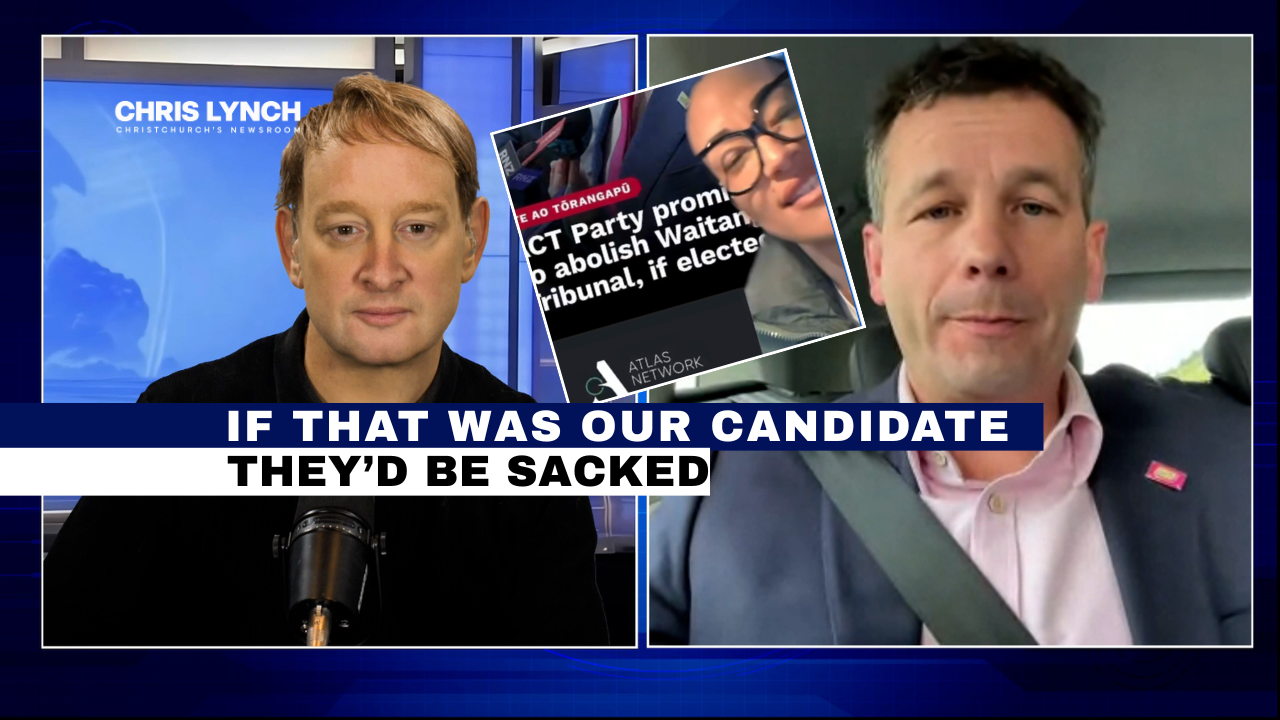
Deputy Prime Minister David Seymour has pushed back against opposition claims the Government is asleep at the wheel on New Zealand’s fuel supply concerns, saying the country is better placed than many fear and accusing Labour of fuelling public anxiety.
Speaking to chrislynchmedia.com, Seymour rejected Labour leader Chris Hipkins’s claim the Government was unprepared, pointing to international shipping data he said showed supply remained steady.
“Over the last 12 months on average there’s been about 180 million barrels of crude taken to Singapore, Japan and Korea,” Seymour said.
“They forecast that this April, 190 million barrels is on track to be delivered into those countries that supply New Zealand with refined product. So that would tell me that we’re actually in a pretty good space.”
Hipkins this week questioned what would happen if shortages hit New Zealand.
But Seymour said, “What might be confusing for Chris Hipkins is that we’re not jumping up on the podium and shooting our mouths off every day.”
“We’re just monitoring the situation, preparing for the worst, hoping for the best, which is what we should do, instead of indebting the country, shutting it down, dividing it, which is what he did.”
Seymour said the Government was using data from Wellington based firm Starboard Maritime Intelligence, which tracks global shipping movements, to monitor supply.
He acknowledged fuel prices remain high but said market forces were working.
“The price is high and the supply has arrived because the price is high. These countries are now getting crude from the Americas, from West Africa, from places that they didn’t previously get it. So the market is functioning. The prices sting, there’s no question about that. It’s putting people in really difficult situations. But we are not running out.”
Asked whether the Government should ease pressure through fuel tax cuts or removing road user charges, Seymour said, “We could do all that but we still need to build and maintain the roads. This country has a long future and going into debt and putting off a whole lot of other things now will cast a long shadow if we don’t stay the course.”
He said contingency plans were in place if the situation worsened, including phased rationing prioritising emergency services, food production and public transport, but said there was no need to alarm the public.
“We want ordinary people who are going to work, sending their kids to school next week, and basically just trying to get by. We want any crisis to have as minimal impact on everyday people as possible.”
Seymour also outlined changes to expand the role of community pharmacists, with new powers from June allowing them to prescribe and dispense several common treatments free of charge.
“At the same time people are really struggling to get appointments and the GPs and the emergency rooms are overloaded because people don’t know where to go. We’re just asking the simple question: if we’ve got these people that are under utilised but skilled, are there more things they could be doing in order to take the pressure off the others?”
He said the move would help families access care more quickly.
“There’ll be a chance for some people to skip the doctor, go to the pharmacy, get the same advice, the same treatment, the same level of clinical care, but obviously a whole lot less cost and a whole lot less waiting for the family and the taxpayer. That’s a win win win.”
On concerns about large pharmacy chains affecting smaller operators, Seymour said the Government’s role was to set the rules, not pick winners.
“I can’t control that. But what I can control as a politician is the ground rules and the environment that these businesses operate in. If there’s a massive shortage of health care professionals there’s going to be a shortage of health care. We can’t just keep throwing more money. How can we make it more efficient?”
Asked about instability in the Middle East and global tensions, Seymour said long term incentives suggested supply would continue.
“Just look at the overall pattern and the incentives people have over time. It does seem to be getting better. In the end, everybody has an incentive for the oil to flow through that strait. The Iranians do, the Chinese do, the Americans do. There’s no one that really has an incentive for it to get worse.”
“I know crazy stuff seems to happen every day. But just look at the overall pattern and the incentives people have over time. It does seem to be getting better. I don’t know 100% that I’m right about that but I hope I am.”