Escaped youth tracked by Eagle helicopter, found hiding in New Brighton
The young person who escaped from a youth justice facility in Rolleston has been located...


The young person who escaped from a youth justice facility in Rolleston has been located...

A person has been seriously injured on State Highway 75, Christchurch Akaroa Road. A police...

BodyFix Gym Christchurch in Phillipstown has taken out two major honours at the Exercise New...

Local MPs have found areas of agreement on major Resource Management Act reforms, during a...

A series of public events have been organised across Christchurch and Lyttelton over the coming...

A woman was taken to hospital after a ‘water incident’ at Parakiore Recreation and Sport...

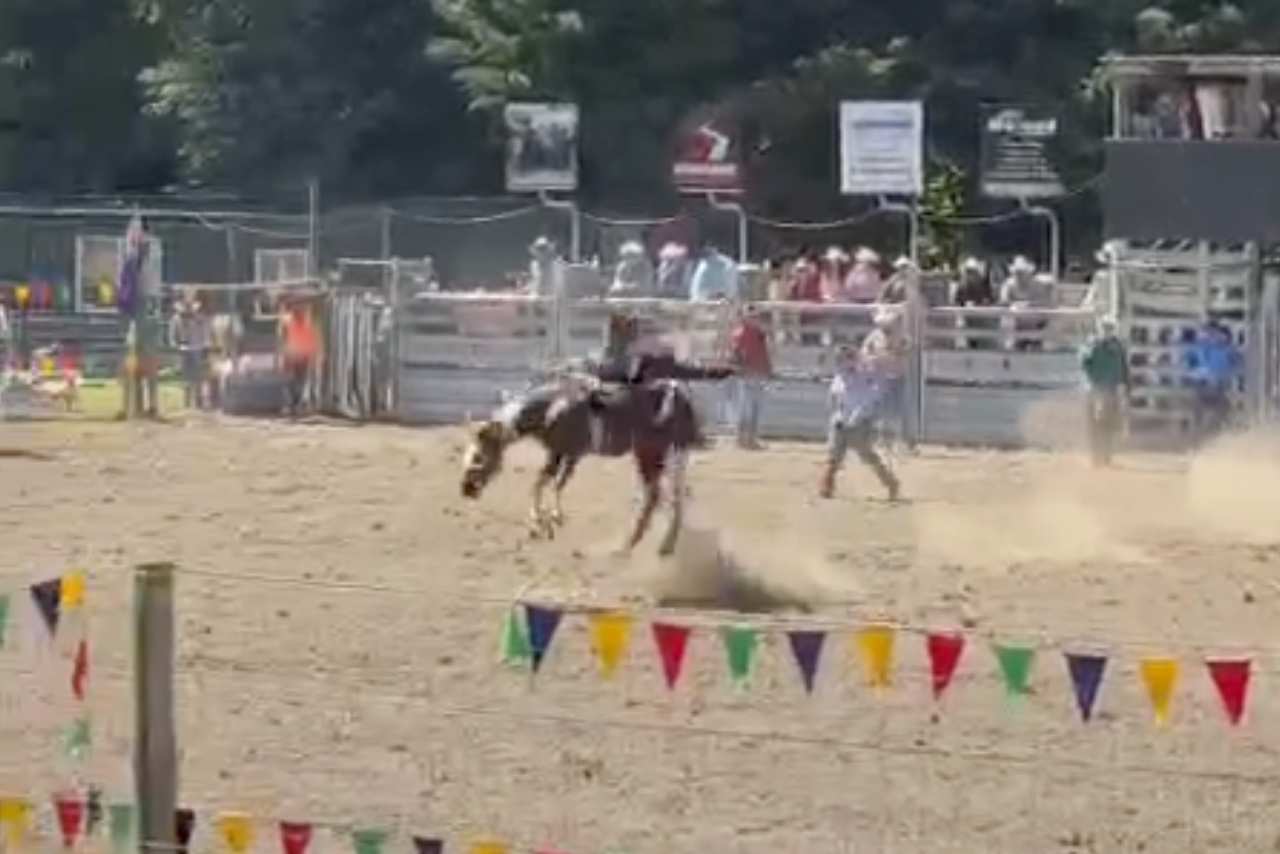
A spectator who witnessed a horse suffer a fatal injury at a Canterbury rodeo says the experience has changed their view of the sport.
The horse broke its right front leg during the open bareback bronc event at Winchester Showgrounds on Saturday 24 October and was euthanised at the scene by the attending veterinarian.
The spectator, who contacted chrislynchmedia.com, said: “I wasn’t intentionally filming what happened, I was just taking a video to send to someone to show them I was at the rodeo, and by chance, I captured the whole thing.”
They described people holding up a large blue tarpaulin around the injured horse before it was covered, removed from the arena using a tractor and placed on a truck.
The spectator said they were initially unaware the animal had been euthanised.
“I love a good day out just like anyone else, and when we first arrived, we were caught up in it too, thinking what a cool atmosphere it was. But after witnessing what happened to that horse, it completely changed my perspective.”
They have since lodged a complaint with the Ministry for Primary Industries (MPI) and said they would not attend another rodeo.
“I understand that not every injury can be prevented, but I believe we need to question whether putting horses, bulls and calves in these situations for entertainment is fair or necessary.”
Tom Davidson, who runs the NZ Anti Rodeo Coalition, reviewed the footage and believes the injury was caused by the way the horse was ridden.
He said the rider’s final spur strike appeared to land low on the horse’s left leg, causing the mare to lose her footing.
Davidson believes she then extended her right front leg to regain balance, which broke under her weight.
An average bucking horse weighs between 400 and 500 kilograms, excluding the rider, he said.
“This was not an accident and was totally avoidable.”
Davidson said the horse had been spurred, fitted with a flank strap and “marked out”, a requirement in bareback riding where competitors must position their spurs against the horse’s shoulders as it leaves the chute or face disqualification.
He claimed riders delivered an average of about 13 full force spur strikes during a ride, followed by raking movements that could cause bruising and haematomas, which were difficult to detect on dark coated horses.
“It is systemic, targeted animal abuse. And yet it is invisible to the public as it’s so fast and far away.”
Davidson said he used slow motion filming and a telephoto lens at rodeos to examine what happened in the arena.
He also criticised MPI’s handling of animal welfare complaints, alleging the ministry had previously declined to prosecute incidents despite being provided with footage.
Davidson said a private prosecution using the same footage had subsequently succeeded.
“MPI is not doing its job,” he said.
However, MPI rejected suggestions that the Winchester incident involved an animal welfare breach.
MPI compliance and response director Glen Burrell said two animal welfare inspectors witnessed the incident and determined it was an accident, with no breaches of the Code of Welfare for Rodeos or the Animal Welfare Act.
“The horse emerged cleanly from the chute, bucked and then went down with a rider on its back. When the horse got back to its feet, it was clear that its right front leg was broken.”
“The two MPI animal welfare inspectors who observed this determined there was nothing unusual in the manner the horse bucked or how it was being ridden that contributed to the leg breaking.”
Burrell said the attending veterinarian assessed the horse immediately and euthanised it without delay.
All animals used at the rodeo had been inspected beforehand by a veterinarian and an MPI animal welfare inspector, with every horse considered fit to compete, he said.
Bareback bronc riding involves a flank strap fitted around the horse’s body, just in front of its hind legs, to encourage bucking.
The current Rodeo Code of Welfare permits the equipment but requires it to be fitted without restricting the animal’s movement.
Animal welfare organisation SAFE said five animals died during the 2024/25 rodeo season and two during the 2025/26 season.
The incident comes as the National Animal Welfare Advisory Committee (NAWAC) seeks public feedback on proposed changes to the Rodeo Code of Welfare.
The revised code proposes significant changes to cattle events, including rope and tie and steer wrestling.
Under the proposals, cattle would be required to remain standing after being brought to a stop, rather than being pulled or thrown to the ground.
Davidson argued the review failed to address bucking horse events, with no structural changes proposed to spurring or flank straps despite submissions from the SPCA and others.
NAWAC is an independent advisory body responsible for developing animal welfare codes and advising the Government, but it cannot ban rodeos itself.
According to MPI, animal welfare inspectors attended almost 30 rodeo events during the previous season.
The existing code requires every rodeo to have an appointed animal welfare officer and a veterinarian present throughout the event, with veterinary reports compiled for the New Zealand Rodeo Cowboys Association.
Public consultation on the proposed changes opened on 14 October and closes at 5pm on 9 December.
Winchester Rodeo Club did not respond to written questions about the circumstances of the horse’s injury, the veterinary response or whether the incident had been reviewed.
“It’s made me realise how easy it is to overlook what’s happening behind the entertainment when you don’t really question it,” the spectator said.