Escaped youth tracked by Eagle helicopter, found hiding in New Brighton
The young person who escaped from a youth justice facility in Rolleston has been located...


The young person who escaped from a youth justice facility in Rolleston has been located...

A person has been seriously injured on State Highway 75, Christchurch Akaroa Road. A police...

BodyFix Gym Christchurch in Phillipstown has taken out two major honours at the Exercise New...

Local MPs have found areas of agreement on major Resource Management Act reforms, during a...

A series of public events have been organised across Christchurch and Lyttelton over the coming...

A woman was taken to hospital after a ‘water incident’ at Parakiore Recreation and Sport...

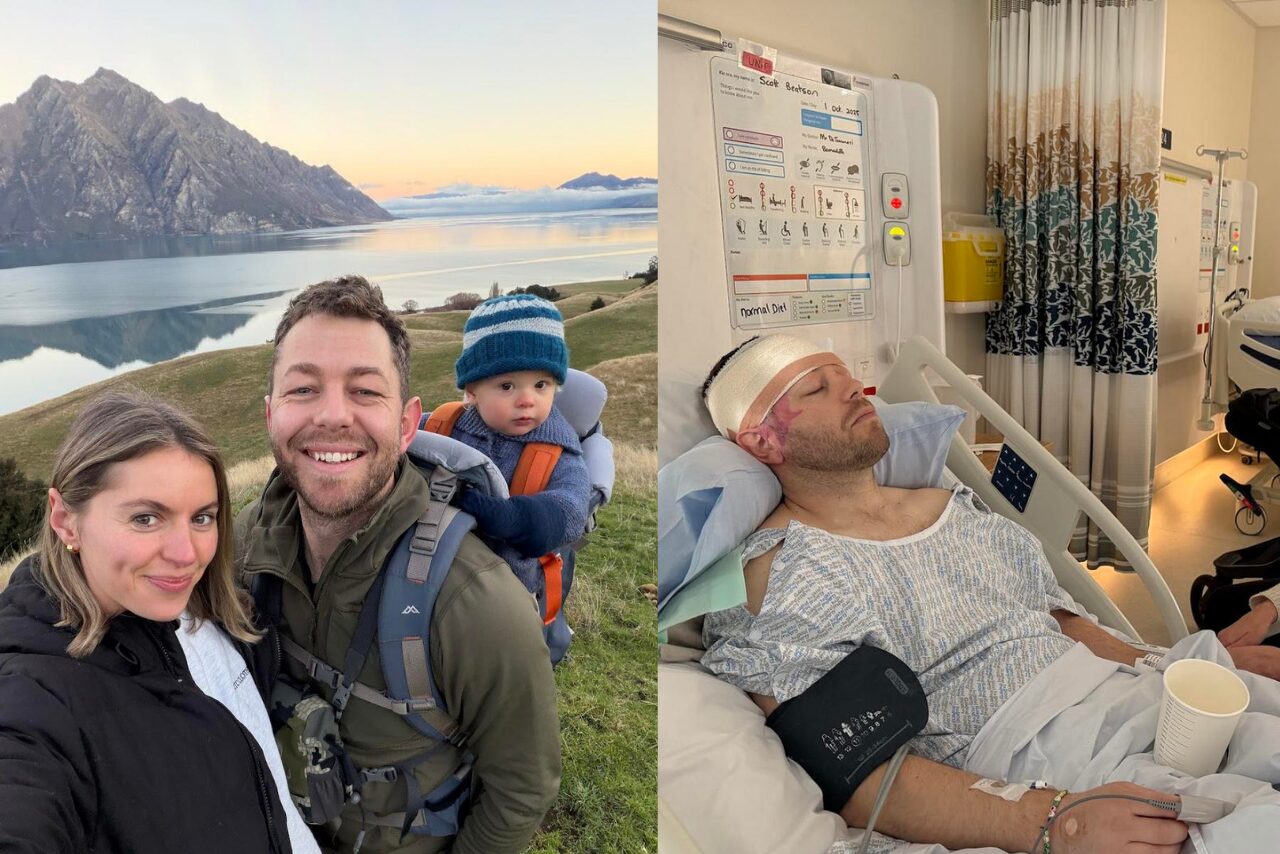
A routine concussion check after a Sunday football game ended with a Christchurch father and Air New Zealand captain being told he would never fly again. Almost a year on, he is preparing for the surgery that could decide what comes next.
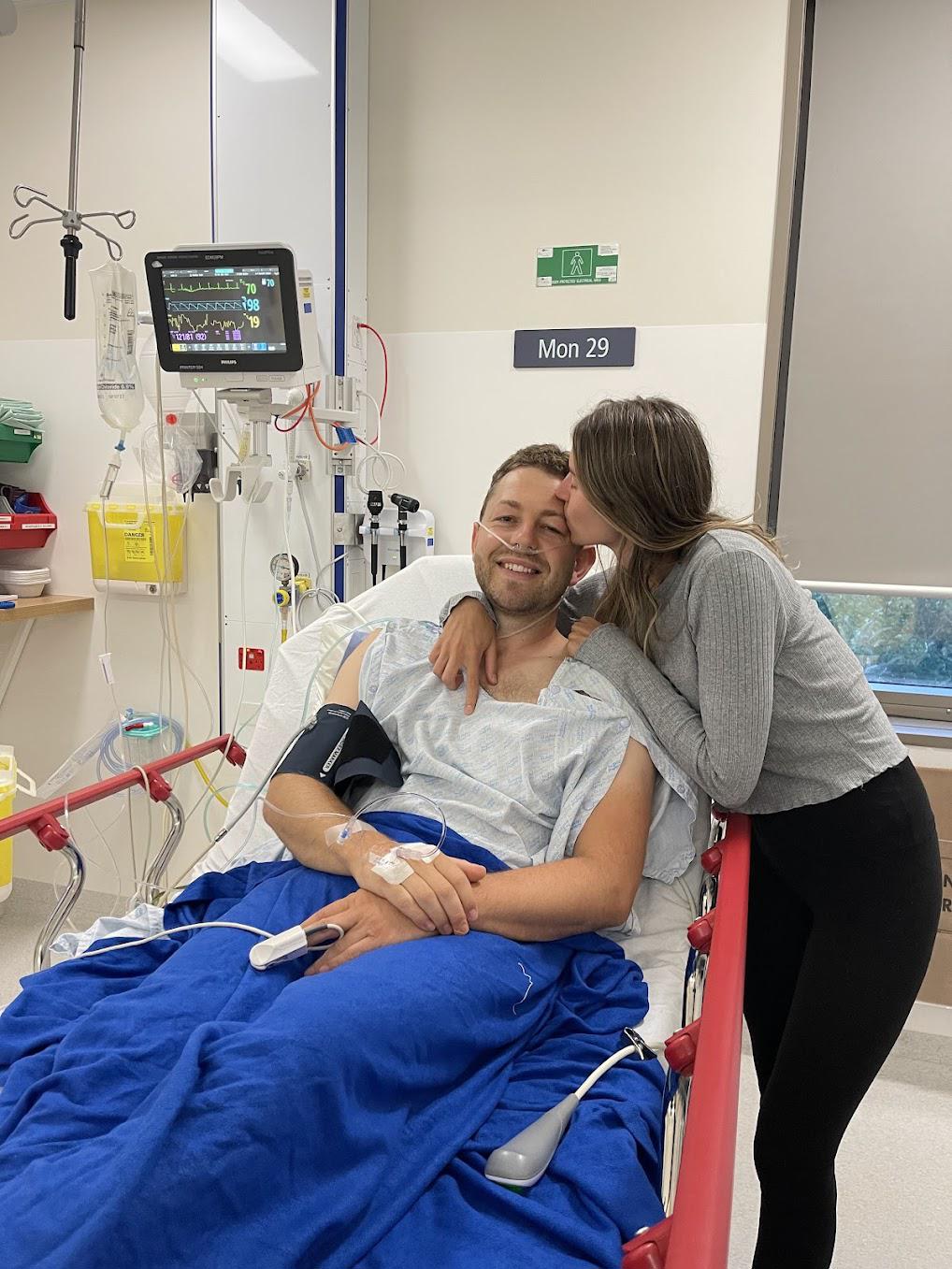
Scotty Beatson expected a routine concussion check to end with a pat on the back and a return to the cockpit. Instead, a doctor leant through the curtain and told him he had a brain tumour, and that he would never fly a plane again.
The Christchurch father and Air New Zealand captain had gone to hospital after a heavy knock to the head playing for his local football club on a Sunday. As a pilot, he was required to rule out concussion before he could return to work.
“With my career as a pilot, I have to be very careful around that sort of thing,” Beatson said. “I popped into the hospital to do a routine concussion check, thinking nothing of it. I honestly assumed I’d get cleared, tell work, and carry on flying the following week.”
A CT scan changed everything. “A doctor leant through the curtain and said, ‘I’m really sorry to tell you, it doesn’t look like you’re concussed, but unfortunately we’ve found a brain tumour,'” Beatson recalled.
At the time, doctors described it only as a lesion. “He said, ‘First things first, I’ll rip the Band-Aid off. You won’t fly a plane again.’ And straight away he told me that translates to driving as well.”
Supplied
It would be three or four hours before a neurologist arrived to explain further. “It was utter shock in that moment,” he said. “My world flipped upside down.” The strangest part, he says, is that he had no symptoms at all.
That was August 4 last year, almost a year to the day before his second brain surgery, scheduled for August 3. Beatson, 33, was diagnosed with a grade 3 tumour sitting hard against his motor cortex, one of the most sensitive parts of the brain to operate near.
His first surgery, in October, aimed for what surgeons call a maximal safe resection. “They were only able to get 30 percent of it,” he said. “A neuro monitoring team was feeding back to the surgeons that they were getting very close to my cortex, and that it risked permanent damage. So they took the conservative approach and stopped.”
Since then has come a long run of scans, appointments and second opinions from surgeons and oncologists around the world, before the decision to operate again in Christchurch. “My surgeons have been wonderful, and so have the oncologists,” Beatson said. “So here we go. Round two is happening on the third of August.”
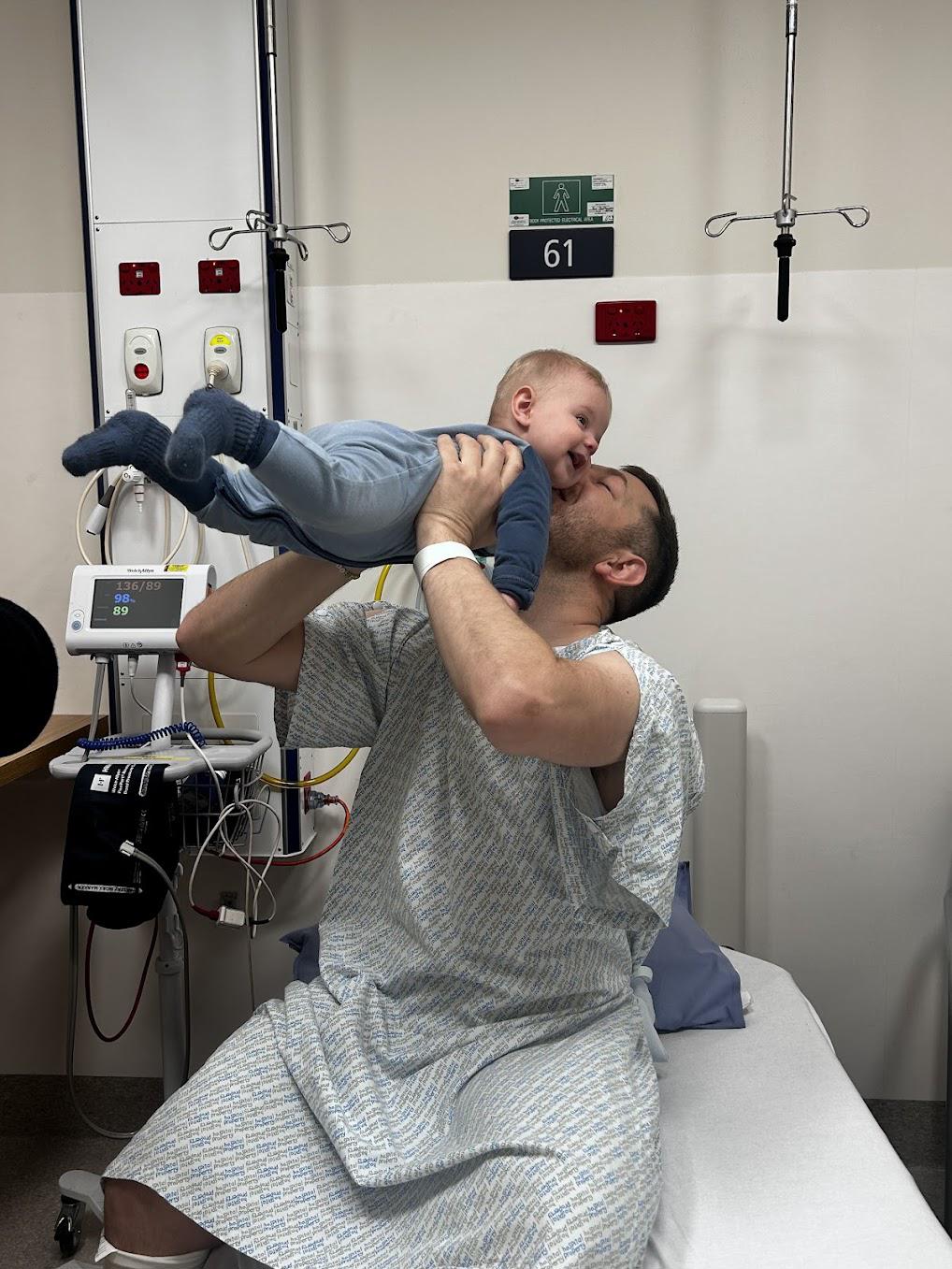
Removing the tumour entirely isn’t on the table. “It’s simply too risky to get it all out,” he said. “If I told them to go in and risk everything, I’d have to accept I’d likely be paralysed down my left side. So the realistic goal is somewhere between 60 and 90 percent.” Surgeons plan to use a new ultrasound assisted technique during the operation, which Beatson hopes will make whatever comes next, chemotherapy, radiation or immunotherapy, more effective.
Supplied
He credits his outlook, in part, to his father. “When I was a teenager, my father nearly died from a cardiac arrest,” Beatson said. “That’s probably had a huge impact on my life, just living each day and not planning too far ahead. I hear the term terminal brought up. My tumour hasn’t been classed as terminal yet, but I almost laugh at that, because we’re all on a terminal journey, aren’t we? This is my journey, and why not me? I don’t deserve this any less, or any more, than anyone else.”
Being open about it has helped too. “I’ve used social media more than ever as a tool,” he said. “Being vulnerable and talking about the good days and the bad days has helped. When I say I’m having a bad week, people check in. It’s given everyone an understanding, and a lot of support has come from that.” His employer has stood by him as well, keeping him on in an office based role since he can no longer fly.
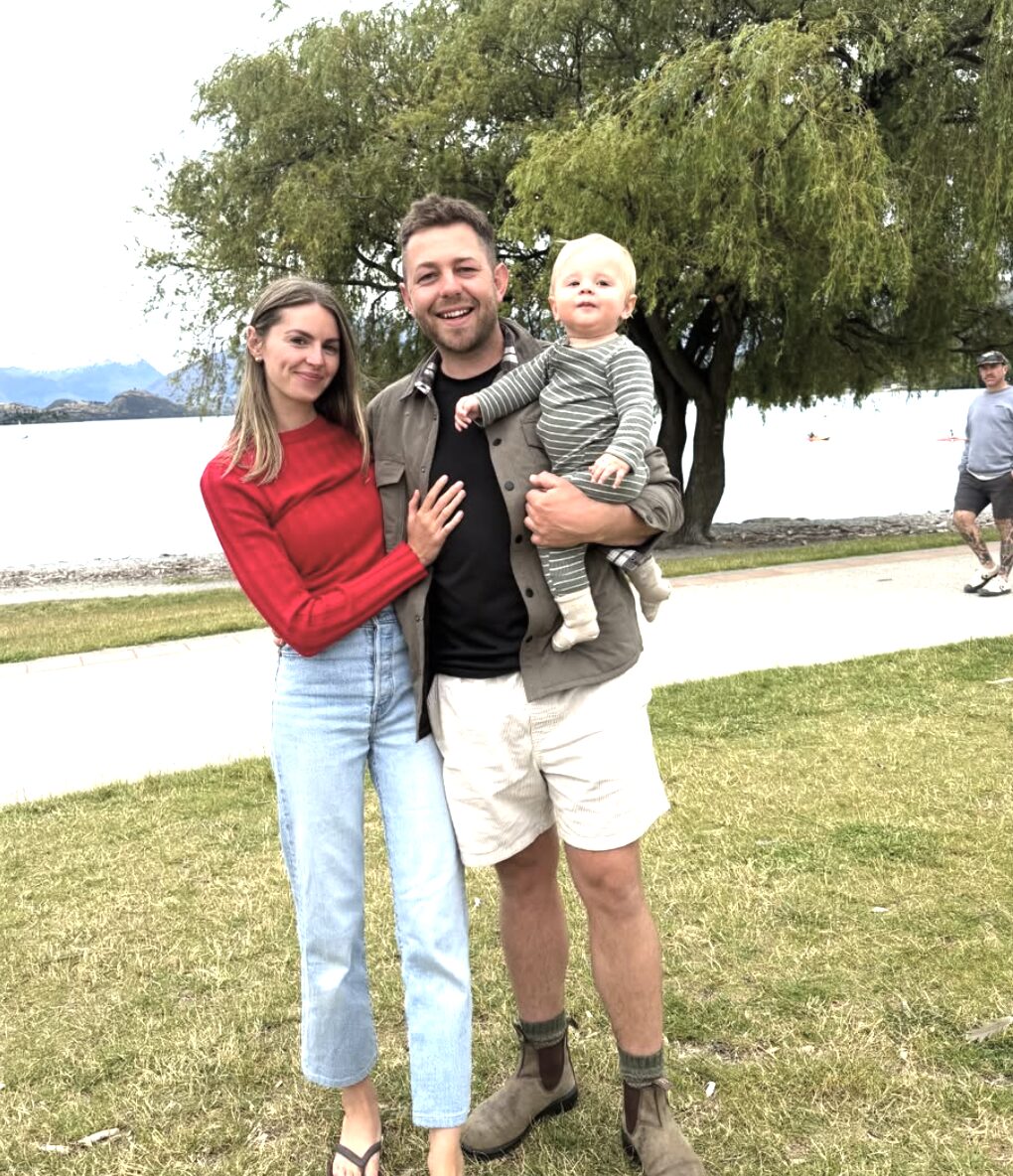
At home, his fiancée Mia and their son are never far from his thinking. Kipp was born in March last year, just months before his father’s diagnosis. “He’s been a wonderful distraction for us,” Beatson said. “He gives me the whole reason to be around for a lot longer. Kipp’s a huge motivator, and gives me a lot of determination to do what I can to be here.”
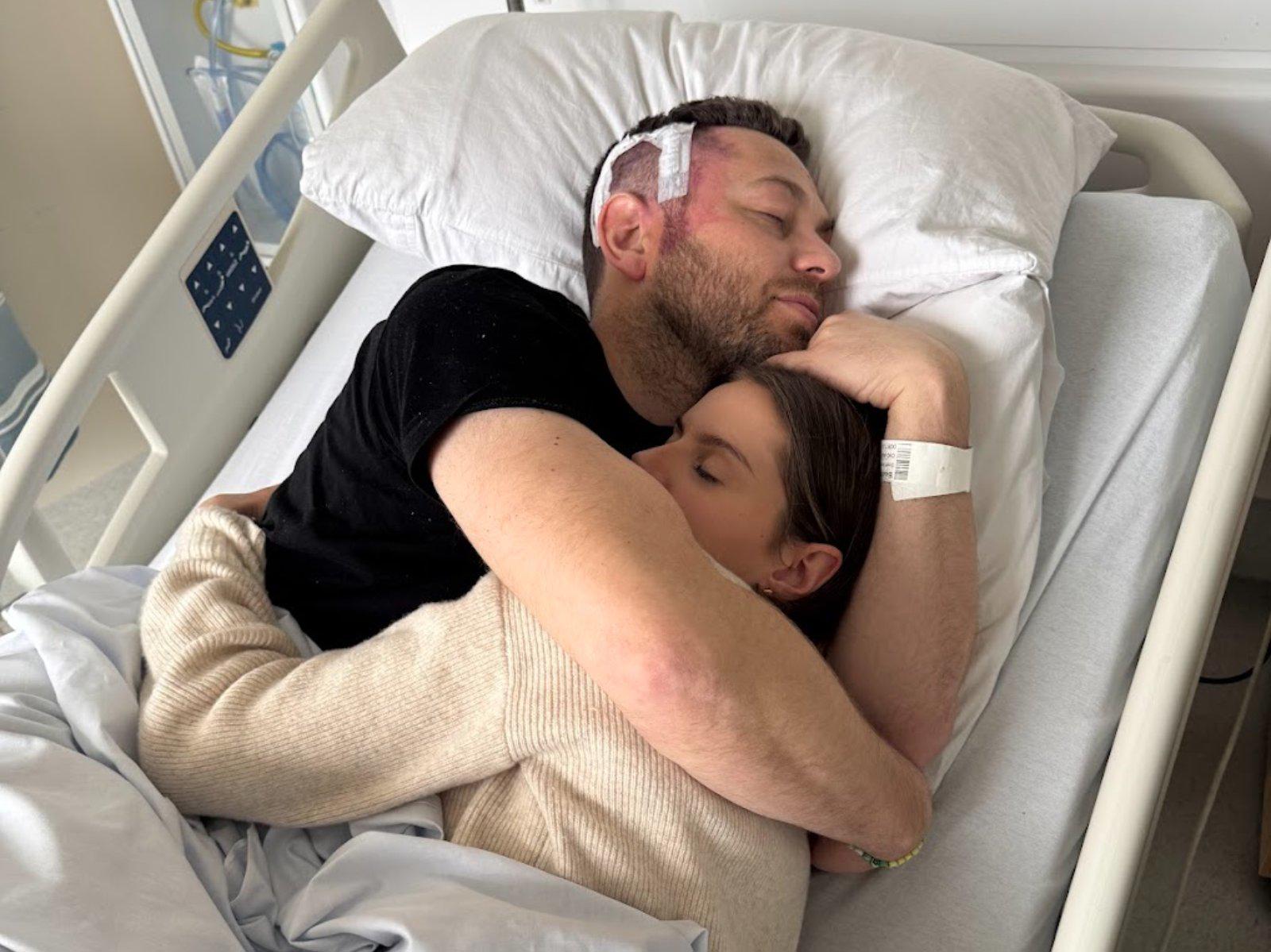
Mia has carried a heavy load of her own, raising Kipp while supporting Beatson through fatigue and seizures, and chasing treatment options in whatever spare time she finds. “Mia’s been incredible, being a wonderful mum to Kipp and supporting me physically and mentally, day to day,” he told me. “She’s sent hundreds of emails all around the world researching treatment, on top of everything else. I’m incredibly grateful.”
Supplied
That research has turned up options not available at home. “There are other treatments we’re keen to explore, like stem cell therapy or CAR T cells,” Beatson said. “Most of those are overseas and cost several hundred thousand dollars. There are unfunded medications that would really help me too. One of them is $52,000 a month. That’s simply unaffordable.”
The medication he’s referring to is vorasidenib, a drug known as an IDH inhibitor. “Part of the molecular makeup of my tumour has this gene mutation,” he explained, “and the drug targets that and prolongs life. It’s been incredibly beneficial in overseas studies. Some countries have managed to get it funded. New Zealand isn’t one of them yet.” Vorasidenib has already been approved for public funding in England.
“I was reading some stats last week,” Beatson said. “I believe there are 250 New Zealanders right now who could have their lives saved if this was funded. And the number of people being diagnosed with brain tumours each year keeps increasing.”
A Givealittle page set up has already reshaped what is possible for his treatment. Beatson admits he and Mia were reluctant to ask for help at first.
“It is frustrating that the drug isn’t funded, but what we have here has been wonderful,” he said. “My surgeons, Christchurch Hospital, the oncologists, they’ve all been fantastic.
“Organisations like Brain Tumour Support NZ and the Cancer Society have been incredibly supportive too. I’m thankful they’re pushing to get it funded. It’s just a matter of time.”
His case adds to renewed calls for the government to fund the drug.
Associate Health Minister David Seymour holds ministerial responsibility for Pharmac, and the funding gap facing patients like Beatson is among the issues being put to him directly in the coming days by Chris Lynch Media.
Supplied
For all the uncertainty, Beatson takes some comfort in how his tumour was found. “The doctors told me there’s a chance I could have lived with this for years and never known,” he said. “Equally, if nothing had been done, I could have been on my deathbed within a year.
“There’s no way of telling. Part of me sometimes wishes it was never found, but overall I’m glad it was. At least we can take measures to try to stop it progressing.”
Day to day, he says, little has visibly changed. “I feel completely normal, day to day,” Beatson said. “I still play sport, sometimes against the advice of my surgeons. I love the outdoors, tramping and fishing, but I have to be careful where I go in case I have a seizure and no one’s around. It’s affected my independence and freedom more than anything. I’m not playing the victim. I’ve had a wonderful life apart from this. It’s just a real bump in the road, and quite a big one.”
What lies ahead still weighs on him. “The fear of what the next year, five years, twenty years looks like is pretty overwhelming at times,” he said.
“There have been a lot of tears, fear and anxiousness about how long I’ll be here, and in what state. They’ve told us there’s a risk of deficit down my left side, it could be numbness in one finger or paralysis down my whole left side.
But in terms of preserving my life, the surgery just has to be done.”