Escaped youth tracked by Eagle helicopter, found hiding in New Brighton
The young person who escaped from a youth justice facility in Rolleston has been located...


The young person who escaped from a youth justice facility in Rolleston has been located...

A person has been seriously injured on State Highway 75, Christchurch Akaroa Road. A police...

BodyFix Gym Christchurch in Phillipstown has taken out two major honours at the Exercise New...

Local MPs have found areas of agreement on major Resource Management Act reforms, during a...

A series of public events have been organised across Christchurch and Lyttelton over the coming...

A woman was taken to hospital after a ‘water incident’ at Parakiore Recreation and Sport...

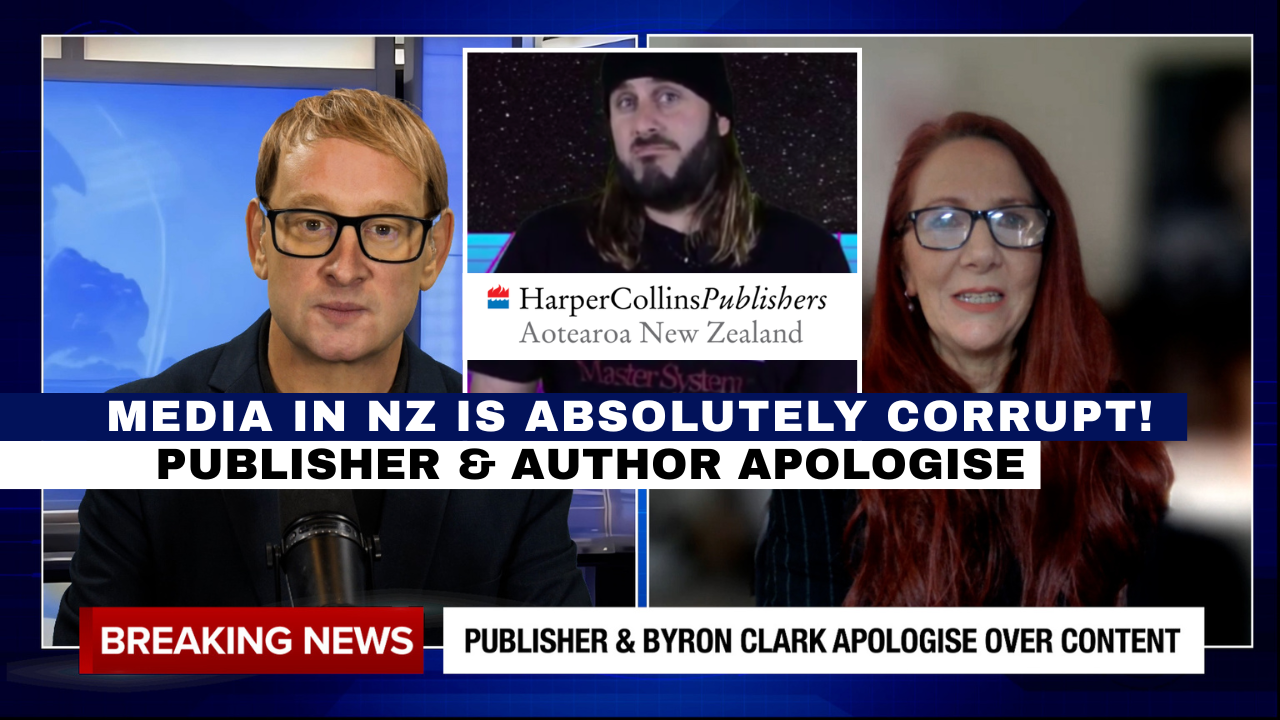
A British author and broadcaster says the public apology Conservative Party leader Helen Houghton secured from HarperCollins and author Byron Clark is not an attack on free speech, but the predictable cost of branding people extremists without the evidence to back it.
Andrew Doyle, whose latest book is The End of Woke, was in Christchurch this week on a New Zealand tour with the Free Speech Union.
Houghton, a recently qualified lawyer, who came into politics opposing gender identity ideology, objected to being named in a chapter titled Women and the Alt Right in Clark’s book Fear: New Zealand’s hostile underworld of extremists.
HarperCollins and Clark said they never intended to defame her and apologised for the hurt and distress caused.
Some have put it to Houghton that a supporter of free speech should not be using defamation law against a writer.
“Free speech is not a licence to defame somebody,” Doyle said.
There were many ways to break the law using speech as the mechanism, including espionage, blackmail and perjury, he said. Nobody claimed a free speech right to blackmail, because the offence was the blackmail rather than the words used to carry it out.
“If he’d have just slagged her off and said ‘I think she’s an awful, horrible harridan’ or whatever, and then she sued, I would have a problem with that, because he has every right to be as abusive and as insulting as he wants to be. But he published something that was factually wrong.”
The fact an apology had been made at all suggested the book had gone beyond a smear, Doyle said.
“That would suggest that there is something in the book that isn’t just smearing, that it’s a bit more defamatory in the nature of its insinuation.”
He also questioned how Clark came to be presented in New Zealand media as an authority on right wing extremism. “He has no expertise in extremism as far as I’m aware, other than the fact that he’s read a lot about it. Well, I could read a lot about any subject. That doesn’t make me an expert in it.”
The technique of mapping out networks showing how one person was connected to another, and how those connections led somewhere sinister, was an old one, Doyle said. “Very sort of tinfoil hat kind of stuff. It’s been going on for years.”
A journalist who needed a guest to talk about extremism was unlikely to test the credentials of someone already published by a major international house, he said. It was also a story that sold.
“It’s a very alarmist, tabloid friendly thing to do, to get someone to say, oh, there’s so many far right, fascist, alt right people about. I’ve never met a fascist. I’m told they’re everywhere. I don’t know where they are.”
Doyle pointed to a 1944 essay by George Orwell asking people to stop using the word fascist to mean anything they disliked, written while there were still actual fascists to describe. The word now carried a settled meaning that placed the person it was attached to outside ordinary debate.
“You are effectively monstering them and saying, that is not someone that I have to talk to or even consider. It’s a strategy to disoblige you from having to engage with an opposing point of view.”
He was not convinced Houghton’s position was conservative at all. Opposing gender identity ideology meant opposing the medicalisation of children who did not conform to stereotype, and defending the basic premise of gay rights, that a small percentage of any population is attracted to their own sex, he said.
“If you say there is no such thing as sex, but that people are attracted to a kind of gendered essence, you are demolishing gay rights as well.”
Asked about a 2021 Stuff headline reading “Not all pregnant people are women or mothers”, Doyle said it was of its moment and not unusual for the period. “I’ve seen worse headlines.”
He listed British and American equivalents from the same years, including pieces asking whether mathematics was racist. Air conditioning and salt had received similar treatment, he said.
“Only women can get pregnant. That’s not a controversial thing to say.”
Doyle said he doubted the headline would run today, and that future historians would find the period baffling. Some of the machinery built in those years is still standing in New Zealand workplaces. Kiwibank issues new staff with a pride badge during induction.
Doyle called it exclusion rather than inclusion. “What it’s saying is, if you don’t satisfy the tenets of this creed, you don’t belong here. It’s very dangerous to be giving out ideological symbols to staff members, new staff, and saying, this is what we believe and you must believe it too.”
He accepted some of it was well intentioned, while arguing the progress pride flag itself worked against gay people by treating attraction as a matter of gendered essence rather than sex.
The comparison he reached for was closer to home for anyone who has walked past a shop window sticker.
“I remember being in a restaurant in London. They had signs everywhere saying we welcome gay people here. I thought, well, my default expectation would be that you would.”
Doyle defines woke in his book as a cultural revolution seeking equity according to group identity through authoritarian means. He argues the movement has been fatally wounded rather than finished, pointing to the rollback of diversity, equity and inclusion programmes at Walmart, Google and Disney, the United Kingdom Supreme Court ruling that sex in the Equality Act means biological sex, and the British ban on puberty blockers.
“It could stagger on for decades.”
Wokeness was the latest form of what he called a default authoritarian impulse, and something similar would return under another name, he said.
Four or five days into his first visit, he was more direct about where New Zealand law is heading.
Roughly 30 people a day are arrested in the United Kingdom for offensive speech, he said, citing a Big Brother Watch report published last week that counted about 62,000 arrests over five years.
“I don’t think that you’re anywhere near that here. But you’re probably closer than you think.”