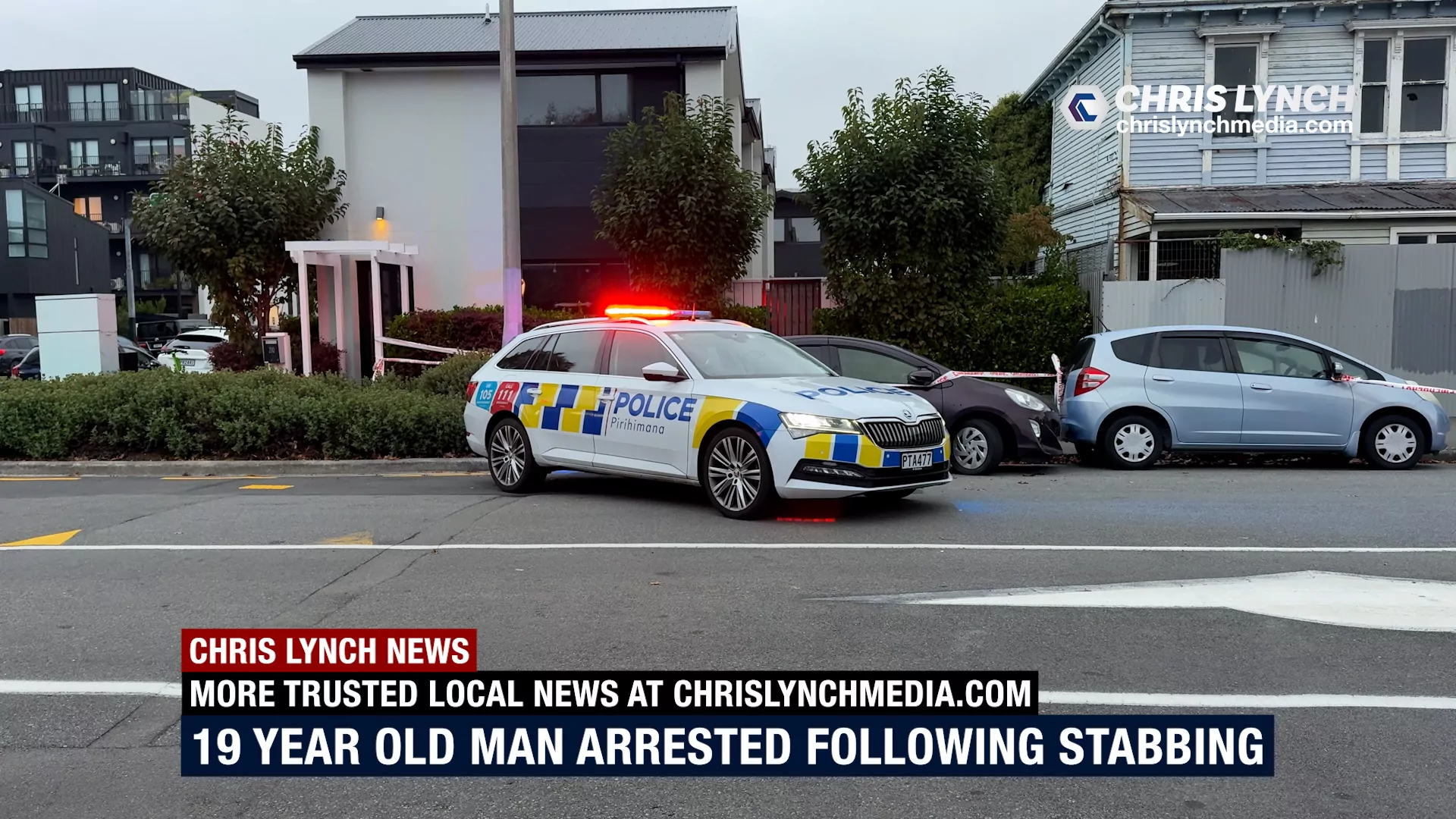
Escaped youth tracked by Eagle helicopter, found hiding in New Brighton
The young person who escaped from a youth justice facility in Rolleston has been located...
Proudly powered by VAST – NZ’s leading digital advertising billboard company. FIND OUT MORE

The young person who escaped from a youth justice facility in Rolleston has been located...

A person has been seriously injured on State Highway 75, Christchurch Akaroa Road. A police...

BodyFix Gym Christchurch in Phillipstown has taken out two major honours at the Exercise New...
Local MPs have found areas of agreement on major Resource Management Act reforms, during a...
A series of public events have been organised across Christchurch and Lyttelton over the coming...

A woman was taken to hospital after a ‘water incident’ at Parakiore Recreation and Sport...
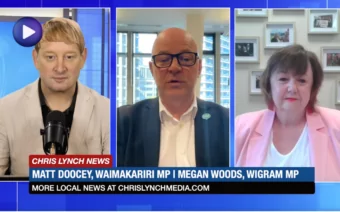
Local MPs have found areas of agreement on major Resource Management Act reforms, during a wide ranging discussion with Chris Lynch.
National MP Matt Doocey and Labour MP Megan Woods debated the Government’s sweeping overhaul of planning and consenting laws, which ministers have said will reduce costs, accelerate development, and refocus the system around property rights.
Doocey said the reforms delivered on a clear election mandate and would be welcomed by homeowners, businesses, and developers who had long struggled with delays and costs under the existing framework.
He said the changes would strip out more than $13 billion in costs, lift GDP by around half a percent, and remove the need for consents for up to 50 percent of activities currently regulated.
“Anyone who has ever had to go to council for a consent to do something they should reasonably be allowed to do in their own home will see this as a win,” Doocey said.
He said the Government had built on previous work while being bolder in its approach, arguing that the scale of the problem required decisive action.
Woods said many of the principles behind the reforms were similar to changes Labour had already pursued while in government, but criticised the National led Government for scrapping existing legislation rather than amending it.
She said two years had been lost unnecessarily and warned that constant legislative resets undermined certainty for developers and communities.
“What people really want is certainty,” Woods said. “They want to know they can get on with their developments without every change of government ripping up the rules and starting again.”
Both MPs acknowledged there was more common ground than might be expected, with Woods saying bipartisan agreement was essential if long term reform was to succeed.
The discussion then moved to broader local government reform, with Doocey signalling that consolidation of councils across greater Christchurch was likely over time.
He said population growth and overlapping responsibilities had created duplication, cost, and delays, and suggested fewer councils could deliver services more efficiently.
“People look at how many councils we have across greater Christchurch and shake their heads,” Doocey said. “That duplication adds cost and slows things down.”
Woods pushed back, saying those issues were separate from RMA reform and accused the Government of conflating different policy areas.
She said councils such as Selwyn were performing strongly and warned against forced mergers that could undermine effective local governance.
Attention then turned to a recent Auditor General report examining school spending on leadership development courses, including expenditure by several schools on travel and accommodation.
Doocey said the report raised legitimate questions about the use of public money and supported further scrutiny where evidence was lacking.
“When the Auditor General says there is not enough evidence linking spending to its intended purpose, that is something that needs to be answered,” he said.
Woods said the report demonstrated the importance of independent oversight, but cautioned against singling out individual schools when multiple institutions were identified.
She said it was important schools were not unfairly targeted for unrelated reasons and stressed that the Secretary for Education was best placed to follow up.
The conversation also covered policing in Christchurch, including the increased use of police helicopters across the region.
Doocey said helicopters were a valuable operational tool, allowing police to cover large geographic areas quickly as the city continued to expand.
He said helicopters complemented beat policing, which had already led to reductions in antisocial behaviour in the central city.
Woods agreed visible policing made people feel safer, but said helicopters could not replace officers on the ground.
She said concerns remained about the delivery of additional police numbers promised by the Government, particularly as crime appeared to be shifting into suburban areas.
Both MPs acknowledged helicopters could be unsettling for some residents given Christchurch’s recent history, and said police needed to balance operational effectiveness with community sensitivity.
The discussion concluded with a look ahead to the next election and recent political polling.
Woods said Labour’s focus was on maximising its party vote and responding to concerns about the cost of living, healthcare, and job security.
She said polling trends showed voters reassessing the Government’s performance compared with expectations set during the last election.
Doocey said National remained focused on delivery and economic reform, dismissing leadership speculation and arguing elections were decided on party votes rather than personalities.
He said while polling fluctuated, the overall trend continued to favour a return of a centre right Government.
Both MPs agreed the next election would be closely contested, with coalition arrangements likely to determine the final outcome.