Escaped youth tracked by Eagle helicopter, found hiding in New Brighton
The young person who escaped from a youth justice facility in Rolleston has been located...


The young person who escaped from a youth justice facility in Rolleston has been located...

A person has been seriously injured on State Highway 75, Christchurch Akaroa Road. A police...

BodyFix Gym Christchurch in Phillipstown has taken out two major honours at the Exercise New...

Local MPs have found areas of agreement on major Resource Management Act reforms, during a...

A series of public events have been organised across Christchurch and Lyttelton over the coming...

A woman was taken to hospital after a ‘water incident’ at Parakiore Recreation and Sport...
There is something unhealthy happening in New Zealand’s political media landscape.
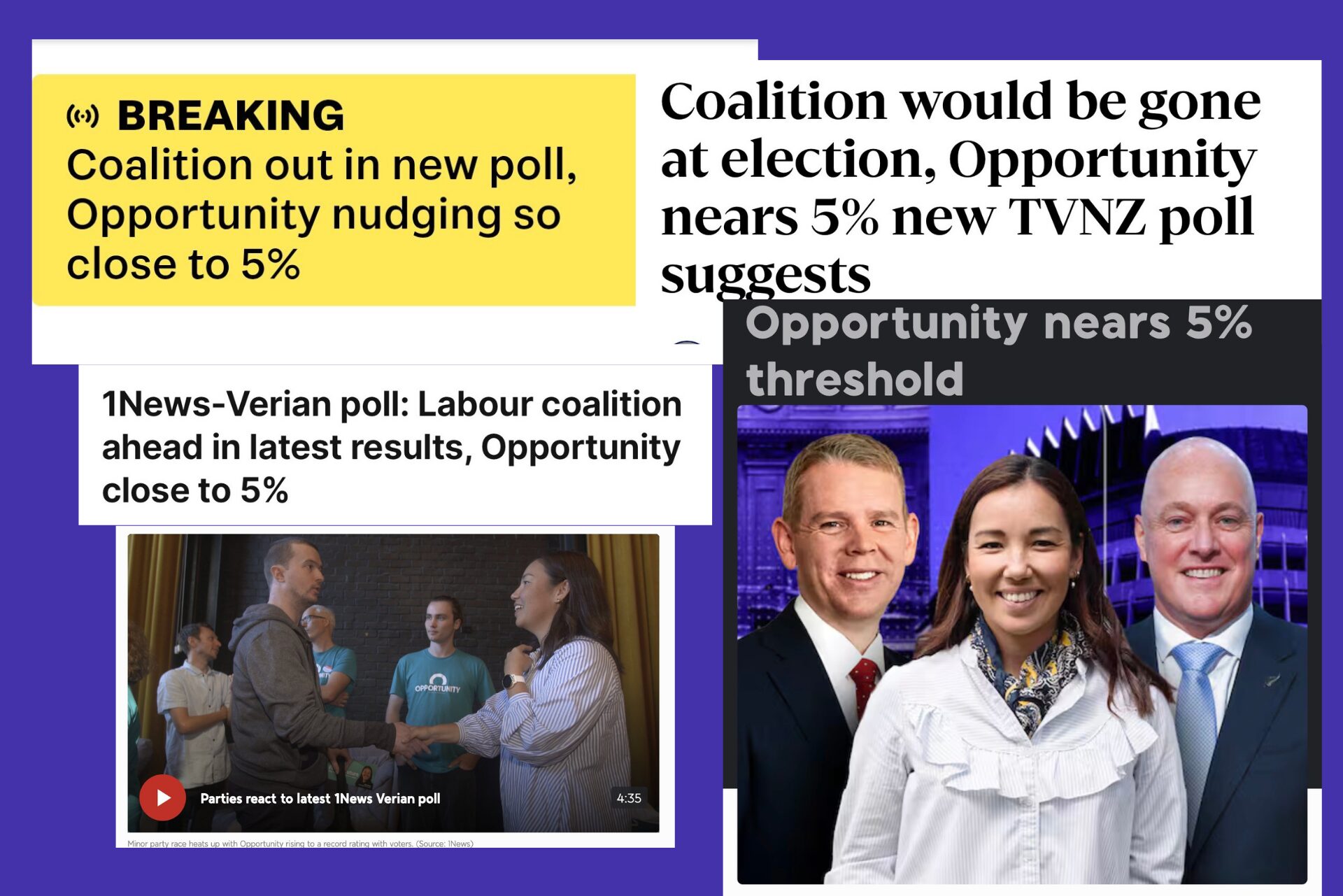
For weeks now, mainstream media outlets have been giving The Opportunities Party a level of attention that appears wildly disproportionate to its actual public support. TOP is not in Parliament. TOP has never won a seat. TOP polls below the threshold required to enter Parliament through the party vote.
Yet if you consumed a steady diet of mainstream political coverage, you could easily conclude that TOP was on the verge of becoming a major political force.
Why? It is a question journalists should be asking themselves. Plenty of political parties, lobby groups, community organisations, and policy advocates struggle to get media attention despite representing far larger constituencies.
The explanation is far simpler. TOP has become the media’s favourite political project. Not officially, of course. No newsroom would ever admit that.
But the pattern is difficult to ignore. Every poll that shows the party nudging upward receives excited coverage. Every policy announcement is treated as worthy of serious national discussion. Appearances by the party leader is framed as though New Zealand is witnessing the emergence of a major political movement. It might be? But who’s pushing it and why?
The people producing political content are increasingly drawn from a narrow social, educational, and ideological class. They live in major cities. They work alongside people who share their worldview. They consume similar media. They attend the same events. They move in similar circles. When a party emerges that reflects many of those values, it attracts attention.
TOP is socially liberal. Even the Greens co-leader joked on tv tonight suggesting TOP’s policies were similar.
But TOP speaks the language of policy reform rather than political tribalism. It appeals to those who see themselves as pragmatic, educated, and above the traditional left right divide.
In other words, it appeals to exactly the kind of people who populate many newsrooms. That does not mean journalists are secretly campaigning for TOP. It means they are more likely to find it interesting. And what journalists find interesting often becomes what gets covered.
The result is a feedback loop. TOP gets coverage because journalists find it interesting. That coverage creates the impression the party is gaining momentum.
The momentum becomes a story in itself. Then the cycle repeats. Meanwhile, the public keeps voting. And the public keeps reaching a different conclusion.
I remember watching political coverage when Mark Sainsbury was TVNZ’s editor. Polls were reported as polls. Political parties were covered according to their significance.
Journalists understood the difference between reporting developments and trying to create them. Today, too much political journalism feels like an attempt to manufacture relevance rather than measure it.
The clearest example was the reaction to polling that showed TOP nearing the 5 percent threshold. Nearing the threshold is not the same as reaching it.
Almost making Parliament is not making Parliament. Yet some coverage gave the impression that a political breakthrough was already underway. Imagine if the same enthusiasm was applied consistently across the political spectrum. It is not.
That is why audiences are becoming sceptical. People can sense when coverage is becoming aspirational rather than analytical. They can sense when journalists are rooting for a particular outcome. And they can sense when a political party is receiving treatment that others would never receive under the same circumstances.
The media spends a great deal of time wondering why trust in journalism continues to decline.
Perhaps one reason is they no longer recognise the difference between observing politics and participating in it. Credit must go to RNZ, which at least managed to report the poll in a refreshingly unfashionable way: by simply telling readers what it said.
But it won’t last. Having worked as a daily television currently affairs producer, I know how it works.
Newsroom bookers will already be scrambling to secure the TOP leader for tomorrow’s programmes, adding another turn to a media machine increasingly determined to talk the party into relevance.
When a party polling below the threshold repeatedly receives glowing coverage, favourable framing, and endless attention, people start asking an obvious question:
Is this what voters are interested in? Or is this what journalists wish voters were interested in?
That is a question the industry should answer honestly.