Escaped youth tracked by Eagle helicopter, found hiding in New Brighton
The young person who escaped from a youth justice facility in Rolleston has been located...


The young person who escaped from a youth justice facility in Rolleston has been located...

A person has been seriously injured on State Highway 75, Christchurch Akaroa Road. A police...

BodyFix Gym Christchurch in Phillipstown has taken out two major honours at the Exercise New...

Local MPs have found areas of agreement on major Resource Management Act reforms, during a...

A series of public events have been organised across Christchurch and Lyttelton over the coming...

A woman was taken to hospital after a ‘water incident’ at Parakiore Recreation and Sport...


Around 35,000 of the country’s smallest operators would no longer be required to register for GST under a Labour government, while large firms would have to pay small suppliers within 15 days.
Labour’s Small Business Action Plan, released on Thursday, would lift the GST registration threshold from $60,000 to $80,000. Labour estimates the change would remove the requirement for about 35,000 operators, although businesses below the threshold could still register voluntarily.
The threshold has remained at $60,000 since 2009.
Large businesses would have to settle invoices worth $25,000 or less within 15 days and publish information showing how quickly they pay suppliers.
The threshold for immediately writing off low-value assets would rise from $1,000 to $10,000 for businesses with annual turnover below $10 million. That would allow eligible businesses to deduct the full cost of qualifying equipment from their taxable income immediately, rather than depreciating it over several years.
Small businesses contribute about 42% of New Zealand’s total economic value, Labour leader Chris Hipkins said.
“Small business owners take the risks, put in the hours, employ locally and keep our communities running. But under National, they’re being squeezed by rising costs and falling demand,” Hipkins said.

Photo supplied
The changes are aimed at the tradie waiting months for a corporate customer to pay, the café owner replacing an oven and the mechanic upgrading equipment, Labour small-business spokesperson Dan Rosewarne said.
“Running a small business should mean building something of your own, not spending your evenings chasing overdue invoices and filling in forms,” Rosewarne said.
The package is costed at $1.56 billion. Labour would pay for it by scrapping National’s Investment Boost, which is forecast to cost about $6.6 billion across the Government’s forecast period. That would leave roughly $5 billion available for Labour’s other priorities.
BusinessNZ backs the proposed GST change, which it had already called for in its election priorities, and says every party should adopt it. Australia’s comparable registration threshold is A$75,000.
“There is real substance here, and some of it lines up with positions we’ve held for some time. But the detail, and what’s missing, matters just as much as the headline,” BusinessNZ chief executive Katherine Rich said.
BusinessNZ’s principal objection is Labour’s decision to scrap Investment Boost.
The scheme allows businesses to deduct 20% of the cost of eligible new assets from taxable income upfront, before depreciating the remaining 80% as usual. It has applied to eligible assets available for use since 22 May 2025. There is no business-size restriction, value cap or application process.

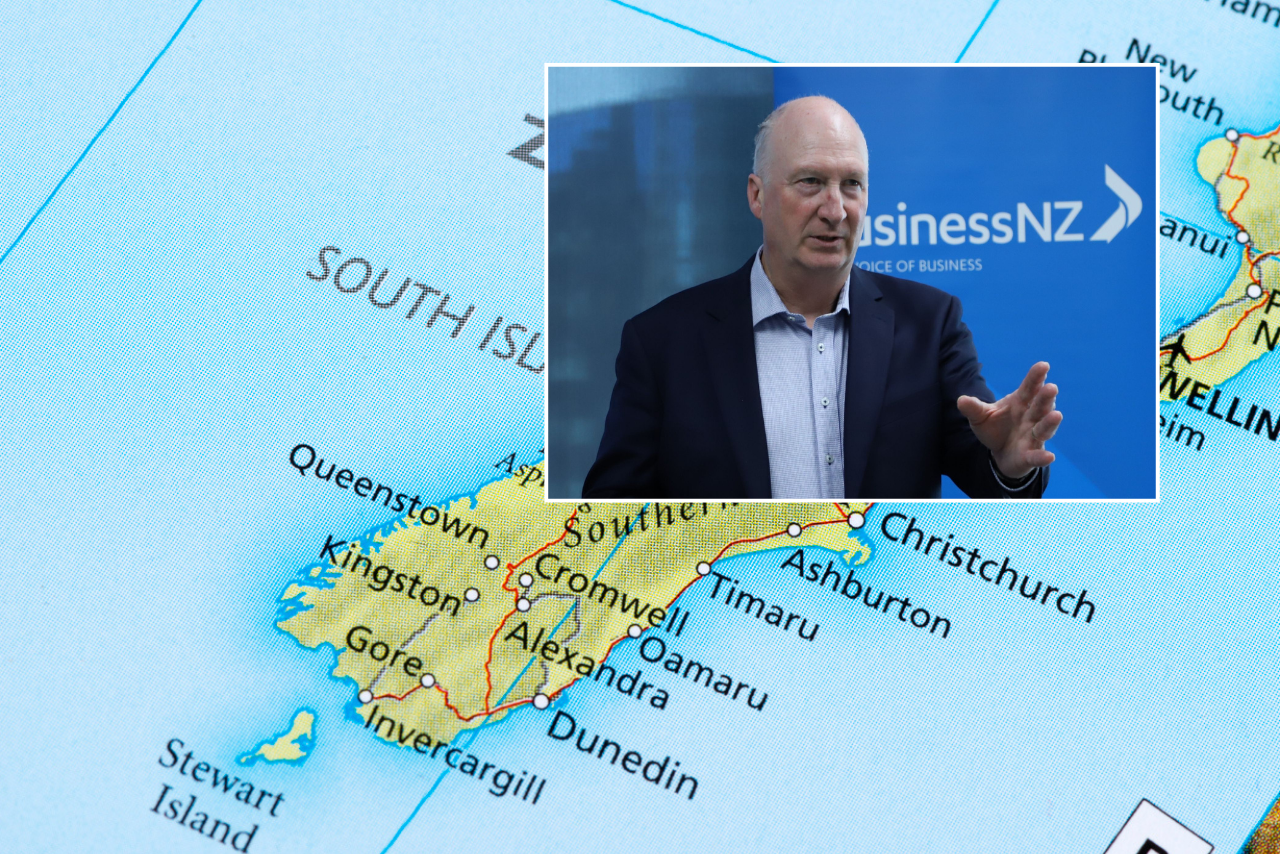
BusinessNZ chief executive Katherine Rich
“Investment Boost is one of the most important productivity policies New Zealand has introduced in years, and BusinessNZ would be very opposed to seeing it curtailed,” Rich said.
Investment Boost is forecast to cost about $6.6 billion through the 2028/29 financial year.
Treasury and Inland Revenue modelling estimates that, over 20 years, the policy could lift GDP by 1%, wages by 1.5% and the country’s capital stock by 1.6%, with about half of those gains occurring in the first five years. The forecasts are modelled estimates, and officials have cautioned that the margins of error around investment responses are large.
An Inland Revenue survey found 40% of businesses that knew about Investment Boost and had invested during 2025 said the policy had increased their spending. Across the complete survey sample, including firms that were unaware of the scheme or had not invested, the figure was 24%.
Big firms carry out much of the country’s capital investment, and spending on plant, technology and equipment can lift productivity and wages while creating work for smaller suppliers, Rich said.
She said any replacement for Investment Boost should remain available to businesses of every size.
Rich said lifting the GST threshold addressed a symptom rather than the underlying problem. New Zealand has no automatic mechanism for adjusting the threshold in line with inflation, meaning it changes only when a government chooses to amend it.
She said the same problem affected personal income-tax thresholds. As wages rise while thresholds remain fixed, workers can move into higher tax brackets without receiving an equivalent increase in real purchasing power.
Inland Revenue analysis estimated that fiscal drag had lifted average personal tax rates by about 1.65 percentage points after accounting for the Government’s 2024 threshold adjustments. Separate reporting on that analysis estimated middle-income earners were collectively paying about $2 billion more annually than they would under inflation-adjusted thresholds.
Rich said tax thresholds should be indexed automatically to avoid long periods without adjustment.
She also said Labour’s announcement did not address New Zealand’s 28% company-tax rate.
International comparisons require qualification. Australia’s standard company-tax rate is 30%, although eligible smaller companies pay 25%. The United Kingdom’s main rate is 25%, while Canadian businesses generally pay federal and provincial corporate taxes, with the combined rate varying by province and eligibility for small-business concessions.
BusinessNZ’s strongest concern is Labour’s proposed 15-day payment requirement.
Rich said reliable cash flow was critical to small businesses but warned that a single payment rule across different industries could have unintended consequences.
Government departments generally operate under similar payment processes, while private-sector terms vary considerably between businesses and industries, she said.
New Zealand previously introduced the Business Payment Practices Act 2023, which would have required large organisations to disclose information about their payment times and practices. It did not impose a compulsory 15-day payment deadline.
The legislation was repealed in 2024 before the disclosure regime took effect. The Government instead pursued non-regulatory measures, and BusinessNZ has worked with its members on a voluntary payment code.
Rich said faster payment was already becoming more common without legislation. eInvoicing had been available for years, and many large firms had adopted it partly to pay smaller suppliers more quickly.
“It takes time for businesses to change internal systems to accommodate a new requirement, and legislating a blunt, universal rule ahead of that transition is a heavy-handed way to get there,” she said.
Labour has not yet publicly defined what would qualify as a large business under the proposed payment rule.
Rich said a poorly designed threshold could capture medium-sized firms facing the same cash-flow pressures the policy was intended to address.