Escaped youth tracked by Eagle helicopter, found hiding in New Brighton
The young person who escaped from a youth justice facility in Rolleston has been located...


The young person who escaped from a youth justice facility in Rolleston has been located...

A person has been seriously injured on State Highway 75, Christchurch Akaroa Road. A police...

BodyFix Gym Christchurch in Phillipstown has taken out two major honours at the Exercise New...

Local MPs have found areas of agreement on major Resource Management Act reforms, during a...

A series of public events have been organised across Christchurch and Lyttelton over the coming...

A woman was taken to hospital after a ‘water incident’ at Parakiore Recreation and Sport...

Former One News Europe correspondent Joy Reid has built a charity that now sends almost 8,000 care packages a year to parents in hospital with sick children, a calling she says only became her full focus after a debilitating illness ended her journalism career.
Reid spent more than 15 years in news. She began in radio at Radio New Zealand and Newstalk ZB before joining Television New Zealand in Christchurch in 2009. Her path into the industry started as a teenager living overseas on a student exchange.
“I was that typical 17 year old who had no idea what they wanted to do,” Reid said. “I was living overseas in Germany. I did an AFS exchange for a year and I used to write letters home to my grandma who lived here in Christchurch.”
Her grandmother spotted something in those letters.
“She said to me one day, ‘Man, I feel like I’m with you in Germany when I get your letters. You’re so good at taking me to a place and describing stuff. You should be a journalist.'”
The suggestion took root. “The more I thought about it, the more it kind of aligned with my desire to tell the truth and stand up for people that couldn’t stand up for themselves.”

Supplied
By the time she joined TVNZ, Reid had already reported from Myanmar on human rights issues. “I really honed my craft of storytelling while at national radio. I had grasped that passion for telling stories for the voiceless.”
Then came the Canterbury earthquakes.
“That really probably changed the course of my life and also the course of my career,” she said.
Reporting on the disaster while living through it took a heavy toll.
“We’d go home to our broken homes with no showers and no toilets and stuff, chuck a bit of dry shampoo in your hair and come back to work a few hours later and hope that we could do the best job we could of telling the rest of the world what was happening in our city.”
“By being exposed to all of that death and destruction there was a cost,” Reid said. “That for me personally resulted in quite a long post traumatic stress journey.”
Unlike other major events, the story did not end after a single news cycle.
“It wasn’t just one earthquake or thousands of earthquakes. I guess you could say it was the two, three years of subsequent reporting on the earthquake day in day out. If you wanted to escape it you couldn’t. You were reporting on it at work and then you were coming home to your insurance claims and your battles and getting your water back on.”
She said the experience collapsed the boundary journalists usually maintain when covering tragedy.
“Usually you can put up an internal mental block, that, well, this is a story, this is someone else’s journey that I need to do my very best at reporting. But that boundary wasn’t there because we were living it the same way as we were reporting it.”
Reid defends journalism’s role in covering hard news.
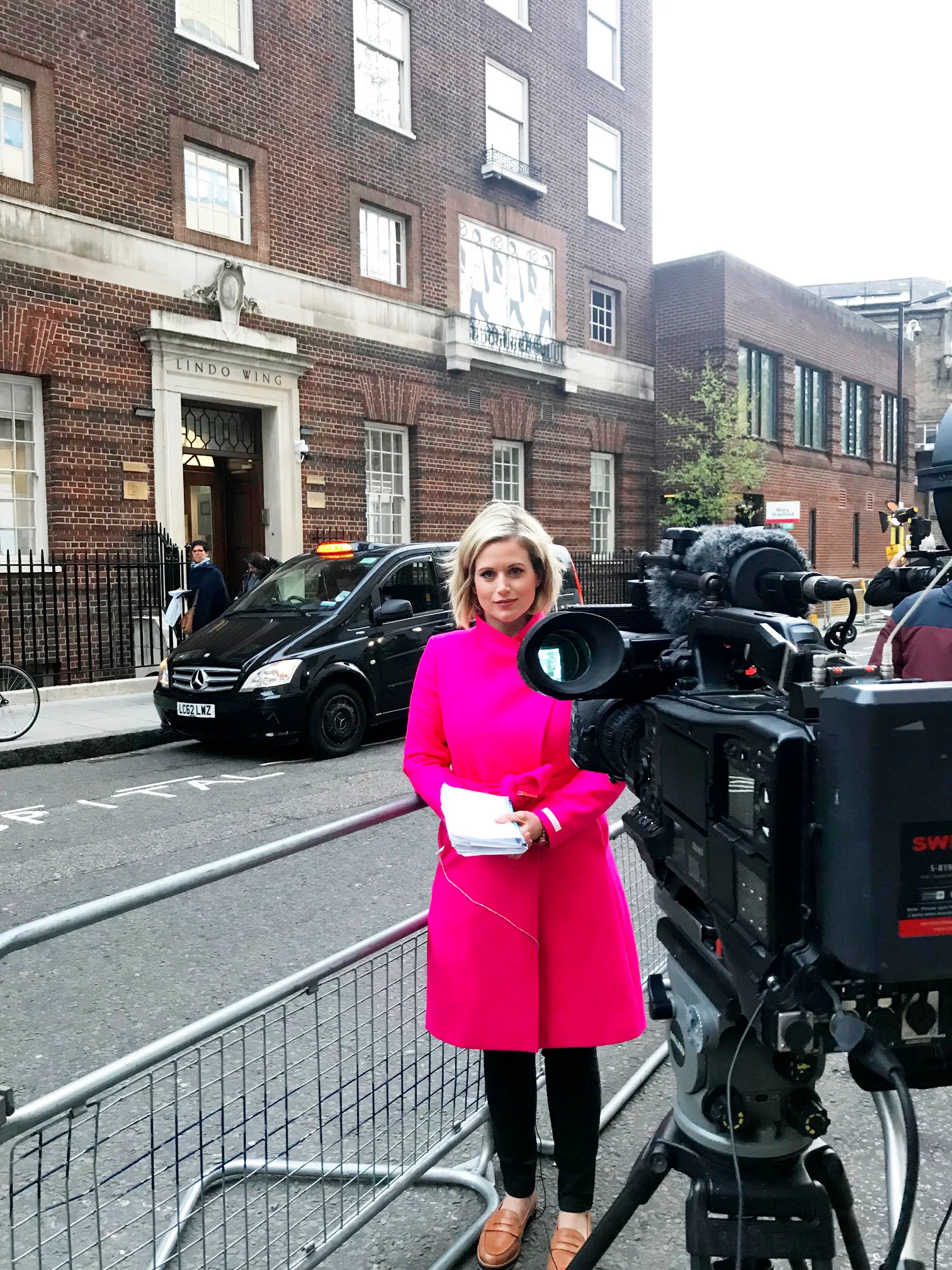
Joy on location in London
“I don’t think mass change happens without some level of cost. Look at how much our nation has changed since March 15. If reporters had only decided to tell that story for a day or two, the huge change in culture wouldn’t have existed within New Zealand.”
“Journalists have a role to advocate and to tell stories that wouldn’t necessarily get done. Change would not happen if you only ever did one story.”
In 2018 she took on what she calls her dream job, Europe correspondent for One News, a posting based in London.
“I had what I would call the dream stint as Europe correspondent because during my two years, it’s a two year job, I didn’t have to cover any wars.”
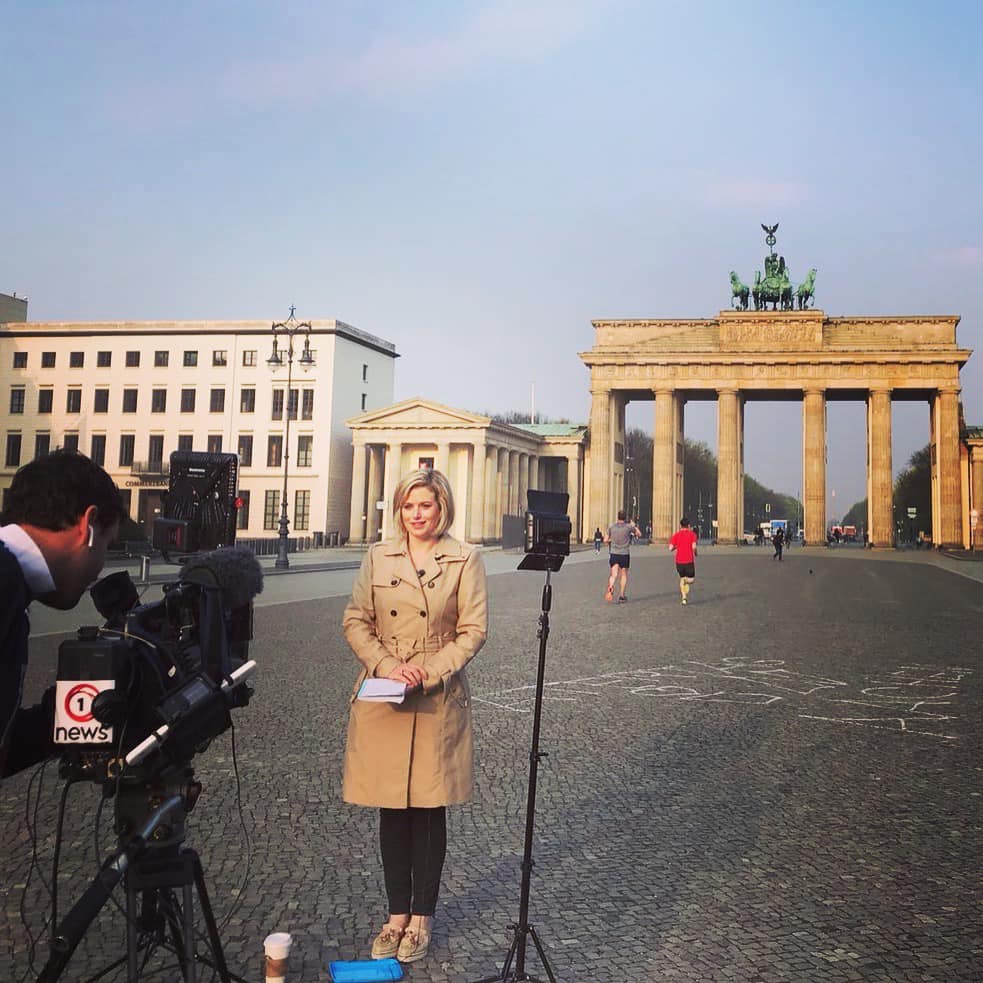
Supplied
She covered Harry and Meghan’s wedding, royal babies and centenary commemorations of World War One battles.
“While of course there’s a lot of death and destruction that happened with that, the learnings that have come out of that in the hundred years and looking back at the sacrifice that was made and witnessing that was just really special.”
A career highlight came when she interviewed Cher in a room she described as costing $20 million, full of chandeliers.
“She was more down to earth than I’d given her credit for,” Reid said. “I had heard that if she thinks you haven’t done your research she’s just going to give you blah answers. So I had, let’s say, over researched.”
It was the accent that broke the ice.
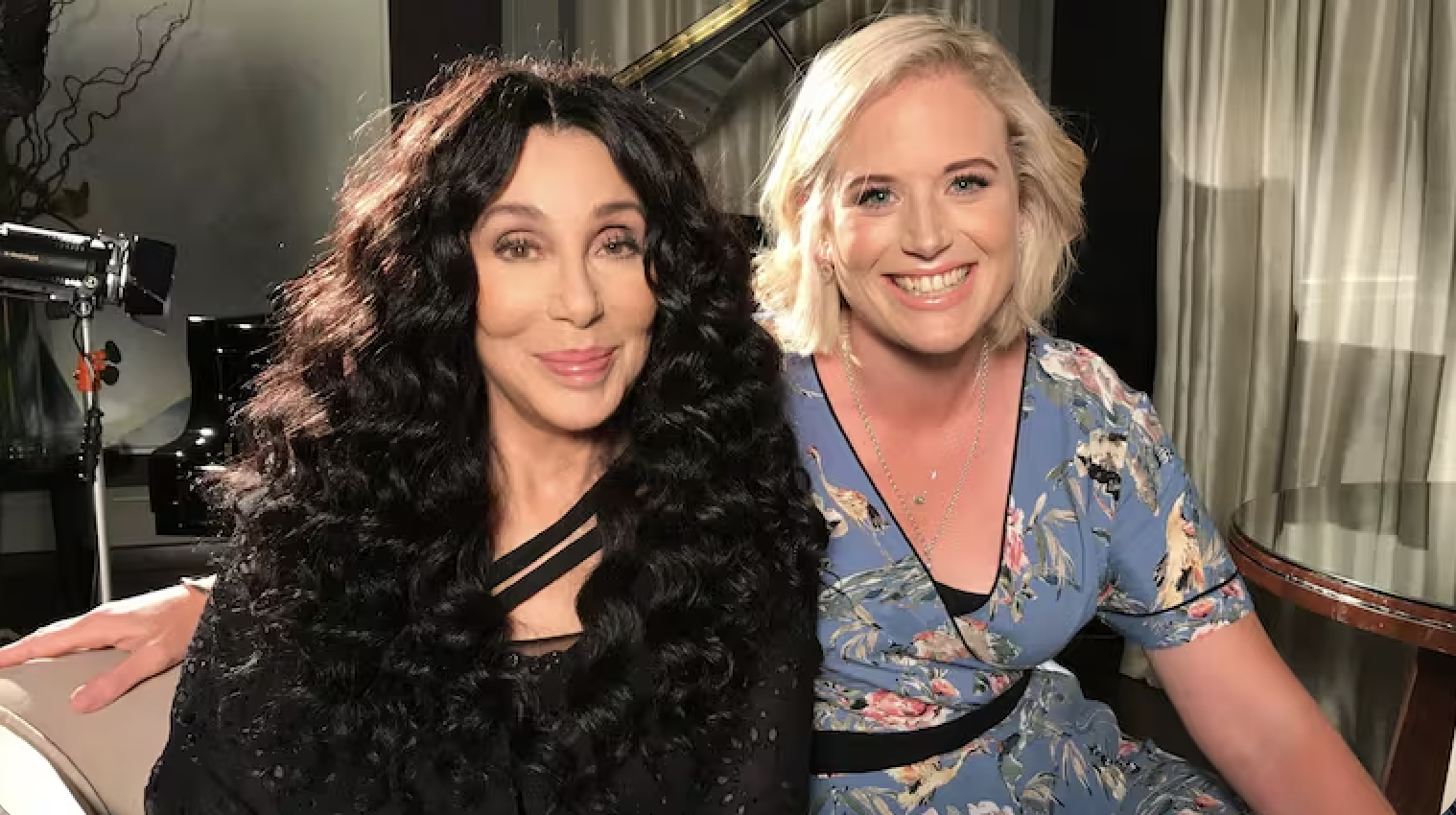
Joy Reid with mega-star Cher
“She loved my Kiwi accent, like, loved it. So she warmed into it within a couple of minutes. She was so gracious and we had great fun. It was an amazing life highlight event.”
Reid was also part of TVNZ’s planning for the death of Queen Elizabeth II, an internal operation known as London Bridge. Although she was back in New Zealand when the Queen died in 2022, she travelled to London for the funeral.
“That would by far be my career highlight. It was one of the most privileged positions to be in to watch history happen and get a front row seat in it. I saw her lying in state. I saw the grief happen. I saw the transition with the King coming into that role.”
Soon after returning home, everything changed.
A bout of Covid combined with undiagnosed coeliac disease left Reid with long Covid that progressed over more than two years.
“My brain function stopped. I wasn’t able to, you know, noise, like the noise of this cafe would have ruined me. Noise, light, any type of memory.”
For long stretches she could not leave the house.
“I couldn’t walk past the end of the driveway. I’d have to use a wheelchair if I ever went past out of the house. There was a period where I wouldn’t even be able to go out of the house even in a wheelchair because the stimulation of that was terrible.”
She remembers her daughter pushing her in a wheelchair through The Warehouse so she could buy Christmas presents in person.
“I felt like I lost just my ability to function as a human. I couldn’t parent my kids. I couldn’t walk them to school. I couldn’t be on their sidelines. I couldn’t even cook.”
Reid said long Covid sufferers around the world had a name for people in her position.
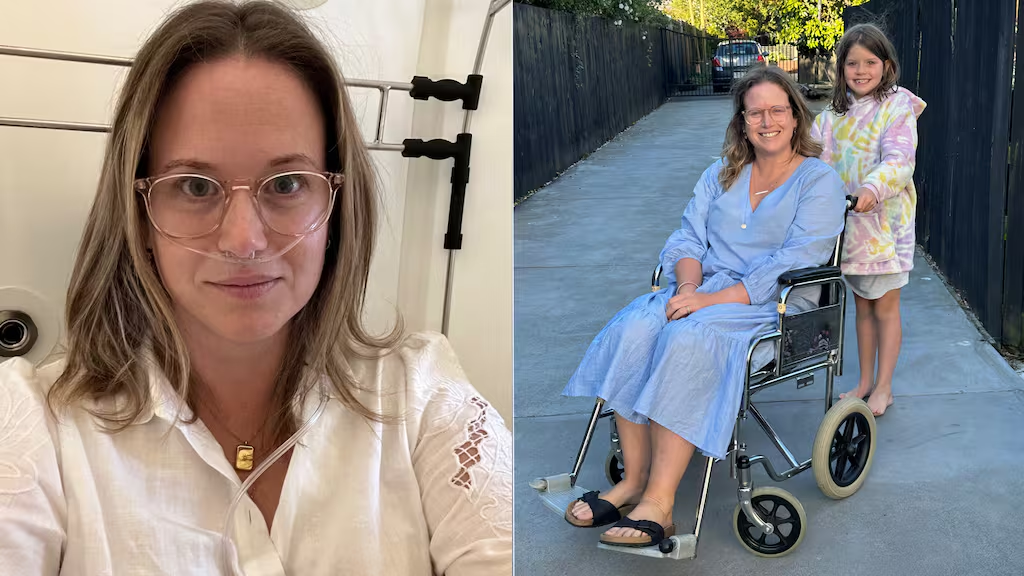
Supplied
“They call it the missing millions, because there are millions of them around the world. The reason they’re missing is because you just can’t function. So you just hibernate back into your room and you just don’t engage in life anymore. So you’re essentially missing.”
She said acceptance was the turning point.
“Acceptance was actually part of my recovery.”
The hardest part was losing her career.
“I felt that my purpose was to be a journalist. So when I got so sick that I couldn’t be a journalist anymore I went through a really deep grief period. I really struggled with my identity. What am I supposed to do?”
Counselling helped.
“Realising that actually my body would not allow me to fulfil what I had thought was my purpose was a really tough decision. However, accepting that was a really big part.”
Through it all, one project remained. Ten years ago Reid and a friend, Christina, set up From One Mother to Another, a charity that delivers care packages to parents and caregivers of sick children in hospital, and to mothers in mental health crisis.
“We didn’t want any other parent to feel as lonely and as isolated as we felt. So a small care package seemed like a really small thing that we could do.”
The first packages went out in May 2016. This year the charity expects to deliver close to 8,000, going to more than 30 wards across the South Island. Each package contains around $100 of practical and wellbeing items together with a handwritten note.
“It’s the handwritten note of encouragement and connection that goes in every single care package,” Reid said.
“You can be in a room full of people. You’ve got nurses, you’ve got babies, you’ve got visitors. But you can feel so isolated in that space and just so full of fear, and having someone come alongside you and say, ‘Hey, we’ve sat in your chair, or a chair like your chair, and we know how it feels, but you can do this. You can get out the other side and there is light at the end of the tunnel.'”
As her health improved, the charity grew.
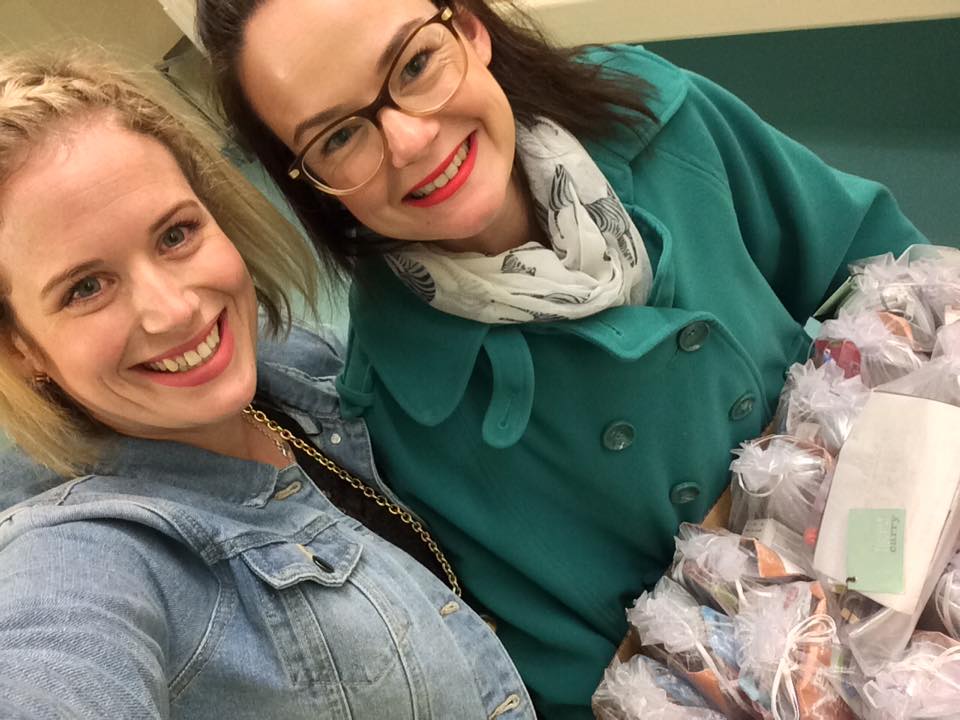
Joy Reid and Christina Buckland, co-founders of the New Zealand charity One Mother to Another
“As my health has increased, so too has One Mother to Another. So too has our team. So too has our volunteer base. And now I genuinely think that I am living my god given purpose today.”
Reid has had two unexpected neonatal stays with her own children. Her oldest son, now almost 13, was the first.
“I never expected to be in there and so I was just like, whoa, what is happening, is my baby going to survive.”
She is candid about the long shadow these stays cast over parents.
“Maternal mental health is a big conversation within New Zealand. Around 15 percent of women do get postnatal depression. That is three to four times higher for parents who are having a neonatal experience. And I say parents because men are also affected by this.”
“Having your baby in the neonatal unit massively increases the risk of psychological trauma that you will have as a parent.”
She said the impact does not stop at the hospital door.
“It can be just as high up to a month after coming home from hospital because it doesn’t leave the day your child leaves hospital. You are still carrying that anxiety and that fear and running on adrenaline.”
Reid said she would not change what happened to her family.
“I would have given my left arm, probably my right arm too, to have not had to go through that. It was horrific, and the years of trauma that came with that. But I would say I would do it again so that this beautiful organisation would exist today.”
She wants the charity to outlast her involvement.
“I want One Mother to Another to be around in 30 years, 40 years, 50 years. I want it to have nothing to do with me one day. I would love to think that this kaupapa and this mahi will extend far greater than however it started.”