Escaped youth tracked by Eagle helicopter, found hiding in New Brighton
The young person who escaped from a youth justice facility in Rolleston has been located...


The young person who escaped from a youth justice facility in Rolleston has been located...

A person has been seriously injured on State Highway 75, Christchurch Akaroa Road. A police...

BodyFix Gym Christchurch in Phillipstown has taken out two major honours at the Exercise New...

Local MPs have found areas of agreement on major Resource Management Act reforms, during a...

A series of public events have been organised across Christchurch and Lyttelton over the coming...

A woman was taken to hospital after a ‘water incident’ at Parakiore Recreation and Sport...
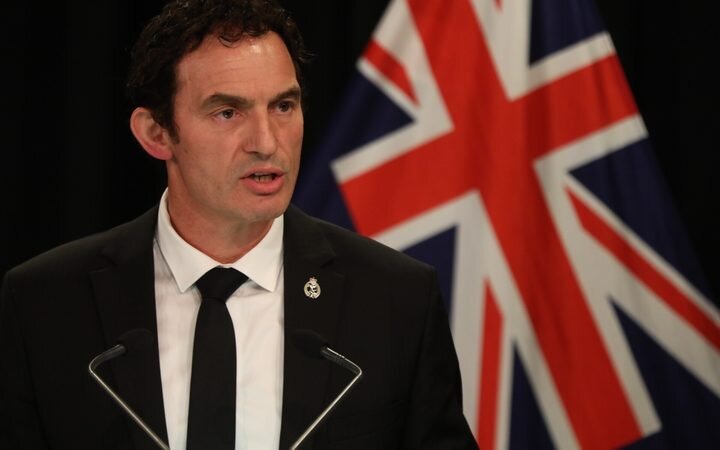
Police Minister Stuart Nash Photo: RNZ / Ana Tovey
Tougher gun laws will take effect across New Zealand this week in response to the March 15th terror attacks in Christchurch.
Police Minister Stuart Nash says “we know we always have more work to do to make New Zealand a safer place. This is another significant step along the way.”
The most significant change is a new firearms registry. The Government says this will track how many firearms are in legal circulation, who holds them, who is selling them, and who is buying them.
Mr Nash says “once it’s established, every licence holder will need to keep updating the registry as they buy or sell guns.
They will have just over five years to register all their guns.
“The registry allows us to link firearms to licence holders, return stolen firearms to the legitimate owner, and hold licence holders to account for the safe storage and possession of firearms.”
Christchurch Gun City owner David Tipple says the new laws are an absolute travesty, because it was police who wrongly granted a firearms licence in the first place.
Last week Stuff reported last week “the terrorist who pleaded guilty to New Zealand’s worst mass shooting, was not properly inspected by police vetting staff.
It was reported that police failed to interview a family member as required, instead relied on two men who met the terrorist through an internet chatroom.
Mr Tipple says “the new laws are an absolute waste of police time and effort.”
He says New Zealand tried a gun registry in the 1960s and the Government eventually threw it out in 1983, because the country realised it never helped solve a crime.
Other changes include reducing the length of firearms licence from 10 to 5 years for first time licence holders and those who have previously had their licence revoked or allowed it to expire.
Mr Nash says “offences and penalties have changed to better reflect the seriousness of offending.”
Those possessing a firearm without a licence now face one year in prison or a $15,000 fine (3 months or $1,000 under old system); and selling a firearm to an unlicensed person now carries up to a two year jail sentence or $20,000 fine (3 months or $1,000 under old system)
Further high-risk firearms are prohibited including short (pistol-length) semi-automatic rifles.
There are new requirements for lawful possession of a pistol carbine conversion kit which converts a pistol into a shoulder-fired firearm.
Endorsements for pest control now have a shorter duration and will need to be renewed before the firearms licence expires.
More people involved in agricultural and similar businesses can obtain endorsements to possess prohibited firearms where it can be clearly demonstrated these are needed for pest control purposes.
Those who come to New Zealand who are issued a licence for up to a year will no longer be able to purchase and take ownership of a firearm in New Zealand.
·A Ministerial Arms Advisory group will be established to ensure there is ongoing support and advice on firearms matters.
Some changes will follow over a three year period.
These include new rules will take effect in six months to determine who is “fit and proper” to possess firearms and who will be disqualified from holding a firearms licence.
The “fit and proper” person status is at the core of any application for a firearms licence. Every person applying must be responsible and trustworthy enough to earn the privilege of holding a firearms licence; there will be new rules in one year governing a gun dealer’s licence, to recognise the range of dealer activities and associated risks of theft or misuse of firearms;
·In six months’ time anyone who sells ammunition will need a firearms licence.
After two years there will be new requirements for shooting clubs and ranges, which previously were not governed by law.
It gives all club committees (including those of pistol clubs) the statutory ability to enforce their own rules around membership and use of ranges.
Police Minister Stuart Nash says “the 15th of March 2019 is a devastating date in our history. But it does not define us. What defines us is the actions we took to stop such a terror attack happening again.”
“Our first set of firearms changes banned assault rifles and military style semi-automatics. As at 3 June almost 62,000 prohibited firearms have been collected, destroyed or modified.
“A further 2,200 have been collected from dealer stock. We have also destroyed more than 227,500 prohibited parts and large capacity magazines.”
“We need to ensure that every part of our risk-management system – from licensing processes, to security requirements, and the firearms themselves – is robust. We have achieved what others could not while enabling continued safe use of firearms for work, hunting and recreation.
“Combined with other initiatives, such as record numbers of new Police on the frontline, and a big investment in specialist organised crime investigators, we are also going hard against the most dangerous offenders who operate outside the firearms licensing system.”
“Police intelligence indicates that the firearms used by criminals are most often stolen from legitimate owners, sometimes unfortunately through poor storage practices.”