Escaped youth tracked by Eagle helicopter, found hiding in New Brighton
The young person who escaped from a youth justice facility in Rolleston has been located...


The young person who escaped from a youth justice facility in Rolleston has been located...

A person has been seriously injured on State Highway 75, Christchurch Akaroa Road. A police...

BodyFix Gym Christchurch in Phillipstown has taken out two major honours at the Exercise New...

Local MPs have found areas of agreement on major Resource Management Act reforms, during a...

A series of public events have been organised across Christchurch and Lyttelton over the coming...

A woman was taken to hospital after a ‘water incident’ at Parakiore Recreation and Sport...

A Royal New Zealand Air Force C-130J Hercules has completed a successful medical evacuation from Antarctica, arriving back in Christchurch as the continent slipped into months of winter darkness.
The aircraft touched down last night after the round trip, safely returning a patient who required a higher level of medical care.
No. 40 Squadron received the request from McMurdo Station on Wednesday afternoon. With weather conditions suitable, the Hercules departed Christchurch just before 5am yesterday and landed about midday, around the time of the season’s last sunrise.
The crew left the ice about 2pm in twilight after the final sunset, returning to New Zealand about 9pm.
Air Component Commander Air Commodore Andy Scott said any flight to the ice carried challenges, even when the aircrew arrived during the last hours of daylight.
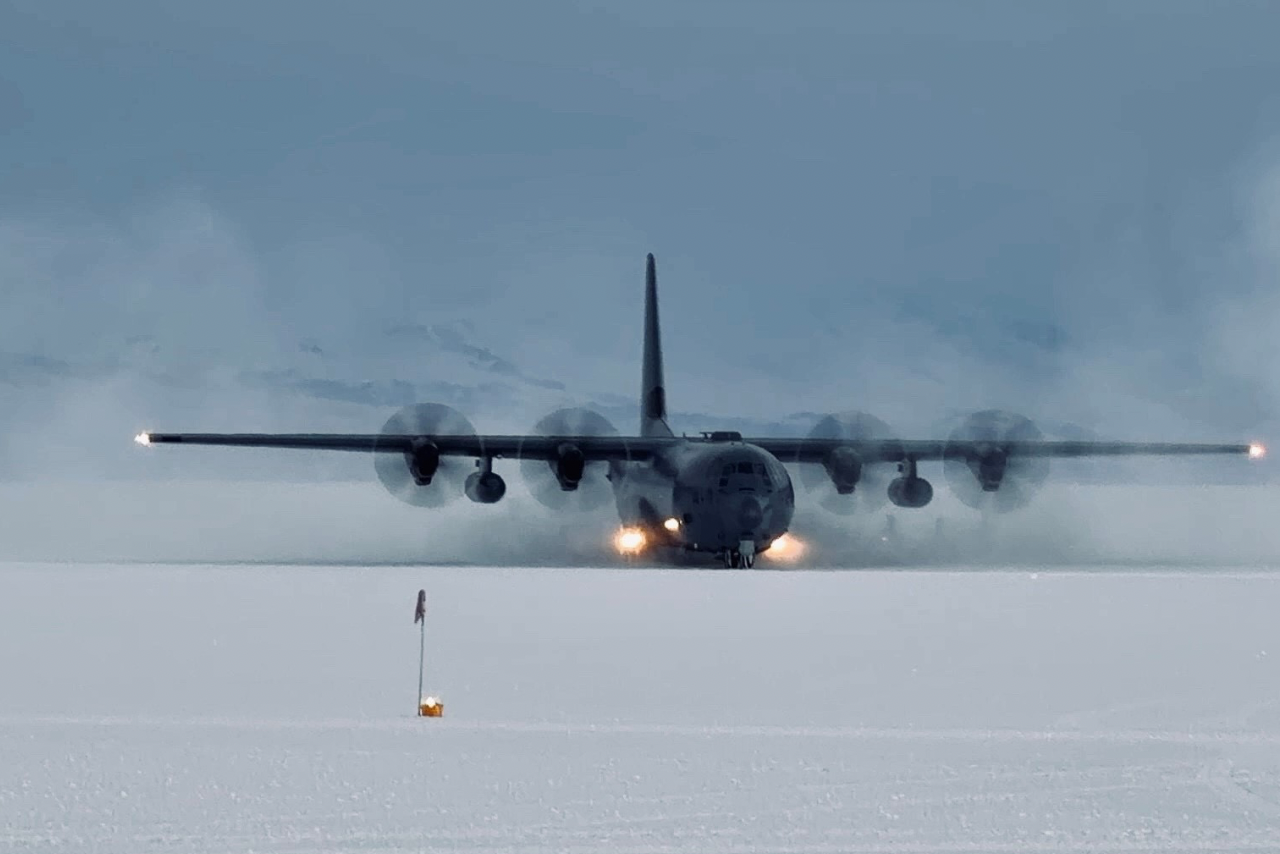
An RNZAF C-130J Hercules at Phoenix Airfield, Antarctica during a medical evacuation mission
“At this time of the year there are very narrow windows of favourable weather conditions, so the crew threaded the needle between weather systems and dwindling daylight to land at the Phoenix Airfield on the Ross Ice Shelf, near McMurdo Station.”
“For the crew to be able to see the final sunrise and sunset before the winter darkness set in, was a pretty special moment for them. And safely bringing home a person in need of medical help, was extremely satisfying.”
C-130J Hercules co-pilot Flight Lieutenant Aaron Kurte said the crew was lucky with the weather and the views on the flight in were stunning.
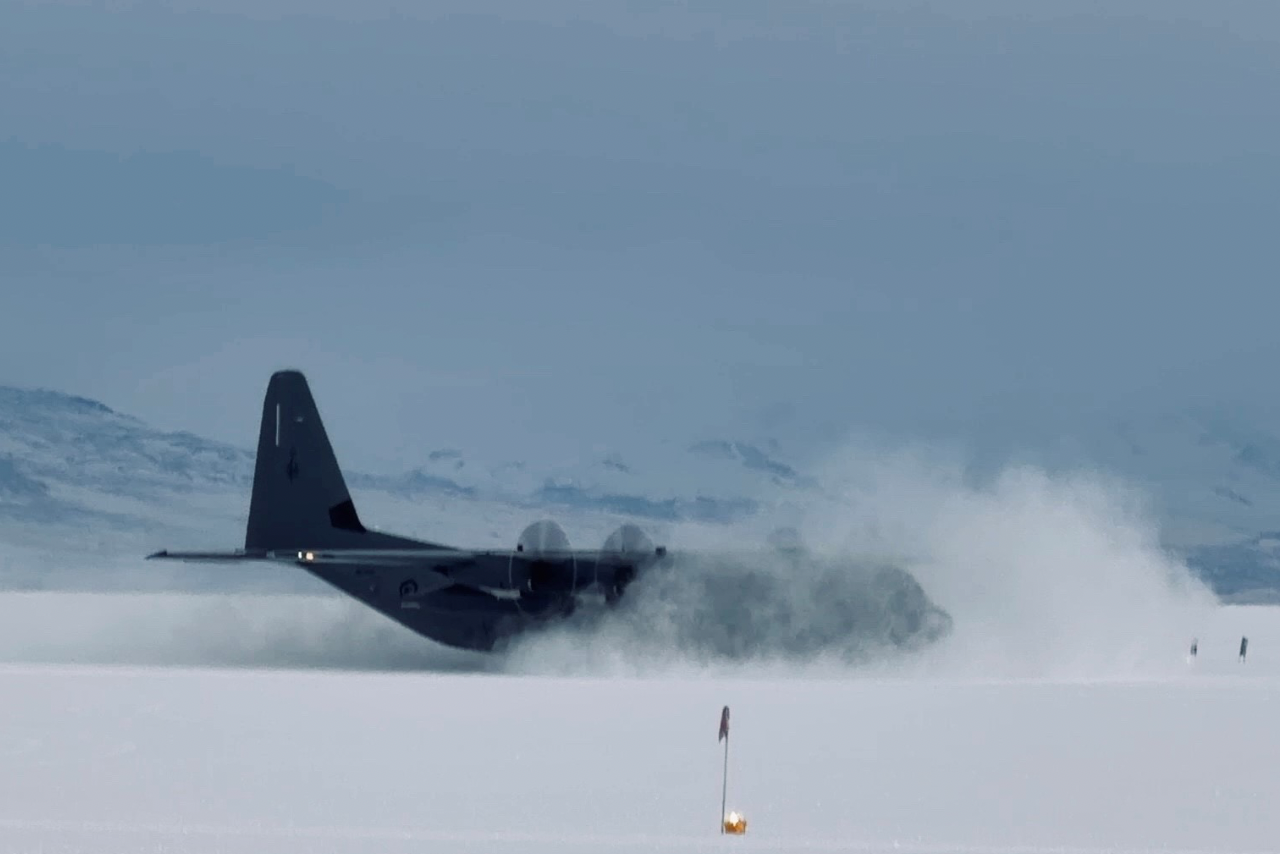
An RNZAF C-130J Hercules at Phoenix Airfield, Antarctica during a medical evacuation mission
“There are also challenges though. In those low light conditions it is difficult to discern between the ground and the horizon. When we were coming into land there are none of the visual references we would normally be able to rely on.”
He said having daylight to land in was far preferable to flying to Antarctica during the dark winter months.
“Everyone felt really lucky that we managed to complete the flight yesterday. When you have to fly in full time night, it gets a lot trickier with managing the weather and needing to use night vision goggles.”
Air loadmaster Sergeant Emma Porritt said the mission began at 2am yesterday with pre-flight work and loading medical supplies on board. Once they had landed on the ice, the team needed to hot refuel the aircraft, which involved keeping the engines running to stop the C-130J freezing up.
“It was about -33˚C and in the extreme temperatures everything wants to freeze, lock up and seize. There are also a lot of considerations around fuelling the aircraft with flammable fuel and having the engines running.”
“But loading the patient went smoothly and the medics made sure they were comfortable on a stretcher for the flight home.”
Sergeant Porritt said seeing the final sunset was a special moment.
“Normally we would go down when there are polar days, or polar nights in winter. It was cool to catch the shoulder season. There were lovely soft pink and orange hues to see.”
Detachment Commander Squadron Leader Adam Palmer said it was the second medical evacuation flight for the C-130J Hercules, following a successful winter mission last August.
“The difference between this mission and the one we did in August was they were still able to fly in the light, so the timing was perfect considering the slim window at this time of the year.”
Scott Base and McMurdo Station are not expected to see proper sunlight again until August 19.