The review said “there is a need to better coordinate and align the efforts of all agencies and to establish clear lines of authority, delegation and accountability to aid decision-making at all levels.”
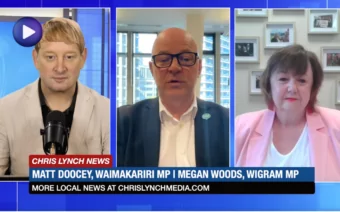
Yesterday, Minister Megan Woods told Chris Lynch “People can’t just leave the hotel. You wouldn’t get out, and if you do there’s a four thousand dollar fine or six months imprisonment.”
She says there are four New Zealand Defence Force at each site, there are non-uniformed operational police staff, aviation security staff – AVSEC, there’s hotel staff security, you can’t just wander in and out.
Megan Woods says there’s about 600 people employed across 20 or so facilities, but it does actually require some personal responsibility.
Head of Managed Isolation and Quarantine Air Commodore Darryn Webb says significant changes have already been introduced and work is urgently underway to address other issues raised in the review report.
Last week Air Commodore Webb announced a doubling of the on-the-ground Defence Force staff of 32, across 18 facilities. As of today, we have 168 NZDF personnel across 21 facilities providing 24/7 coverage.
There are also more government and defence staff across the end-to-end system.
“This increased resourcing has had an immediate impact on the ground in terms of making sure our people are well supported to carry out their roles and ensure the safe transfer of returnees into managed isolation.”
“The increase in resourcing will form the backbone of further changes that are being made to ensure the system is robust and fit-for-purpose.”
“We have also increased oversight of the transfer of returnees from aircraft through to Managed Isolation and Quarantine facilities so they are escorted by government staff.”
Minister Megan Woods says “there is no play book for this kind of pandemic. We’re one of only a handful of countries in the world to require managed isolation at the border with compulsory testing, making our existing system one of the strictest globally.”
“The review found that the system is not broken but does need additional resourcing to respond to the increasing demands placed upon it as growing numbers of New Zealanders come home from global COVID-19 hotspots.”
Other improvements rolling out now include:
-
Increased security for transferring returnees to managed isolation facilities
-
The standardisation of procedures across all facilities
-
The introduction of better information for returnees – from flight boarding through to entry into New Zealand and their exit from Managed Isolation.
-
Better information to communities where those facilities are located.
-
Strengthening of demand forecasting, reporting functions and coordination between agencies.
Health responses include:
-
More staff in facilities
-
Improved model of care – including taking into account issues like mental health and addiction issues
-
More clinical oversight to ensure a consistent quality of service in facilities
-
Monitoring to ensure there is consistency across facilities
“All staff supporting this process are performing to a very high standard, and have been doing so over a long period of sustained and increasing pressure. I would like to acknowledge and thank them for their ongoing work and dedication to the job. I am committed to ensuring they have the support and structures that they need to deliver well- functioning Managed Isolation and Quarantine for all New Zealanders,” The government has today released the review of the Managed Isolation and Quarantine and outlined the actions that are being taken to respond to issues highlighted by the review.
Head of Managed Isolation and Quarantine Air Commodore Darryn Webb says significant changes have already been introduced and work is urgently underway to address other issues raised in the review report.
Last week Air Commodore Webb announced a doubling of the on-the-ground Defence Force staff of 32, across 18 facilities. As of today, we have 168 NZDF personnel across 21 facilities providing 24/7 coverage. There are also more government and defence staff across the end-to-end system.
“This increased resourcing has had an immediate impact on the ground in terms of making sure our people are well supported to carry out their roles and ensure the safe transfer of returnees into managed isolation.
“The increase in resourcing will form the backbone of further changes that are being made to ensure the system is robust and fit-for-purpose.
“We have also increased oversight of the transfer of returnees from aircraft through to Managed Isolation and Quarantine facilities so they are escorted by government staff.”
Other improvements rolling out now include:
-
Increased security for transferring returnees to managed isolation facilities
-
The standardisation of procedures across all facilities
-
The introduction of better information for returnees – from flight boarding through to entry into New Zealand and their exit from Managed Isolation.
-
Better information to communities where those facilities are located.
-
Strengthening of demand forecasting, reporting functions and coordination between agencies.
Health responses include:
-
More staff in facilities
-
Improved model of care – including taking into account issues like mental health and addiction issues
-
More clinical oversight to ensure a consistent quality of service in facilities
-
Monitoring to ensure there is consistency across facilities