Escaped youth tracked by Eagle helicopter, found hiding in New Brighton
The young person who escaped from a youth justice facility in Rolleston has been located...


The young person who escaped from a youth justice facility in Rolleston has been located...

A person has been seriously injured on State Highway 75, Christchurch Akaroa Road. A police...

BodyFix Gym Christchurch in Phillipstown has taken out two major honours at the Exercise New...

Local MPs have found areas of agreement on major Resource Management Act reforms, during a...

A series of public events have been organised across Christchurch and Lyttelton over the coming...

A woman was taken to hospital after a ‘water incident’ at Parakiore Recreation and Sport...


A 32 year old Timaru mother says her severe and worsening pain was attributed to psychological causes just weeks before doctors discovered cancer had spread extensively through her bones.
Kathryn Stevens, who has metastatic medullary thyroid cancer and is receiving palliative treatment, has lodged a formal complaint over the care she received in the months leading up to her diagnosis.
Stevens has complained to the Health and Disability Commissioner about care she received from GPs and Timaru Hospital during May and June.
She said her progressively worsening physical symptoms were not adequately investigated and became increasingly attributed to psychological or psychosocial causes.
Medical records supplied to chrislynchmedia.com confirm doctors considered psychological explanations for Stevens’ symptoms before her cancer diagnosis.
On 6 May, Stevens had been experiencing back pain for more than 10 weeks. A GP recorded there was no known injury or strain and that previous blood tests had been normal. The same clinical record described a “large” mass on the right side of her neck, thought at the time to be an enlarged lymph node.
Her gait and stance were described as “markedly affected” by her back pain and a lower back X ray was ordered. By 13 May, Stevens had returned to the GP in a wheelchair with what the clinical record described as “intractable, unresolving” lower back pain and left leg weakness.
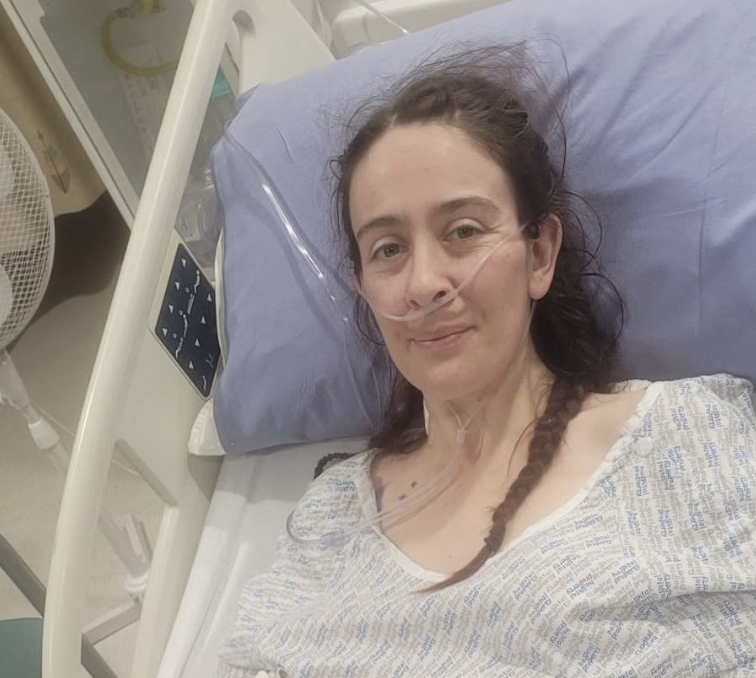
Kathryn Stevens, who has metastatic medullary thyroid cancer, was told the pain was all “in her head.”
She had recently attended an emergency department and had been prescribed pregabalin and codeine. The GP also recorded Stevens reporting new urinary incontinence.
The doctor wrote that her presentation did not correspond with a clinical condition familiar to him and recorded that he suspected a “psychosocial issue.” His assessment included the possibilities of “Somatization? Malingering? Depression? Co dependency?”
The record also said her laboratory results had been normal and had provided no indication at that stage of a condition such as multiple sclerosis or cancer. Stevens returned on 20 May with pain extending through her left hip, buttocks, thigh and groin, with shooting pain reaching towards her ankle.
The records document weakness affecting her gait and stance and say she was again brought into the clinic in a wheelchair. A lower back X ray had shown mild narrowing of the L3 to L4 and L4 to L5 disc spaces and lower lumbar disc changes.
The GP recorded that his examination had found no objective pathology to explain the severity of Stevens’ reported symptoms. His assessment included “Somatization” and consideration of a possible mood disorder. The doctor recorded telling Stevens he suspected her presentation was “largely a psychiatric phenomenon.”
The same clinical entry acknowledged the possibility of an undetected physical condition. “It is possible there could be some rare or unusual medical condition affecting you in this way, but we have no indication of any such,” the record said.
By 4 June, Stevens had sought another GP opinion. That consultation documented severe pain which had spread to her right lower back, groin and buttock and was radiating down her right leg.
The clinical record also documented weakness affecting her gait and stance, occasional “urinary accidents” and one episode of bowel incontinence during the previous month. Stevens was using a walking frame.
During the examination, the doctor recorded Stevens was unable to perform a straight leg raise with her left leg, but had full extension strength and was able to actively flex her left hip.
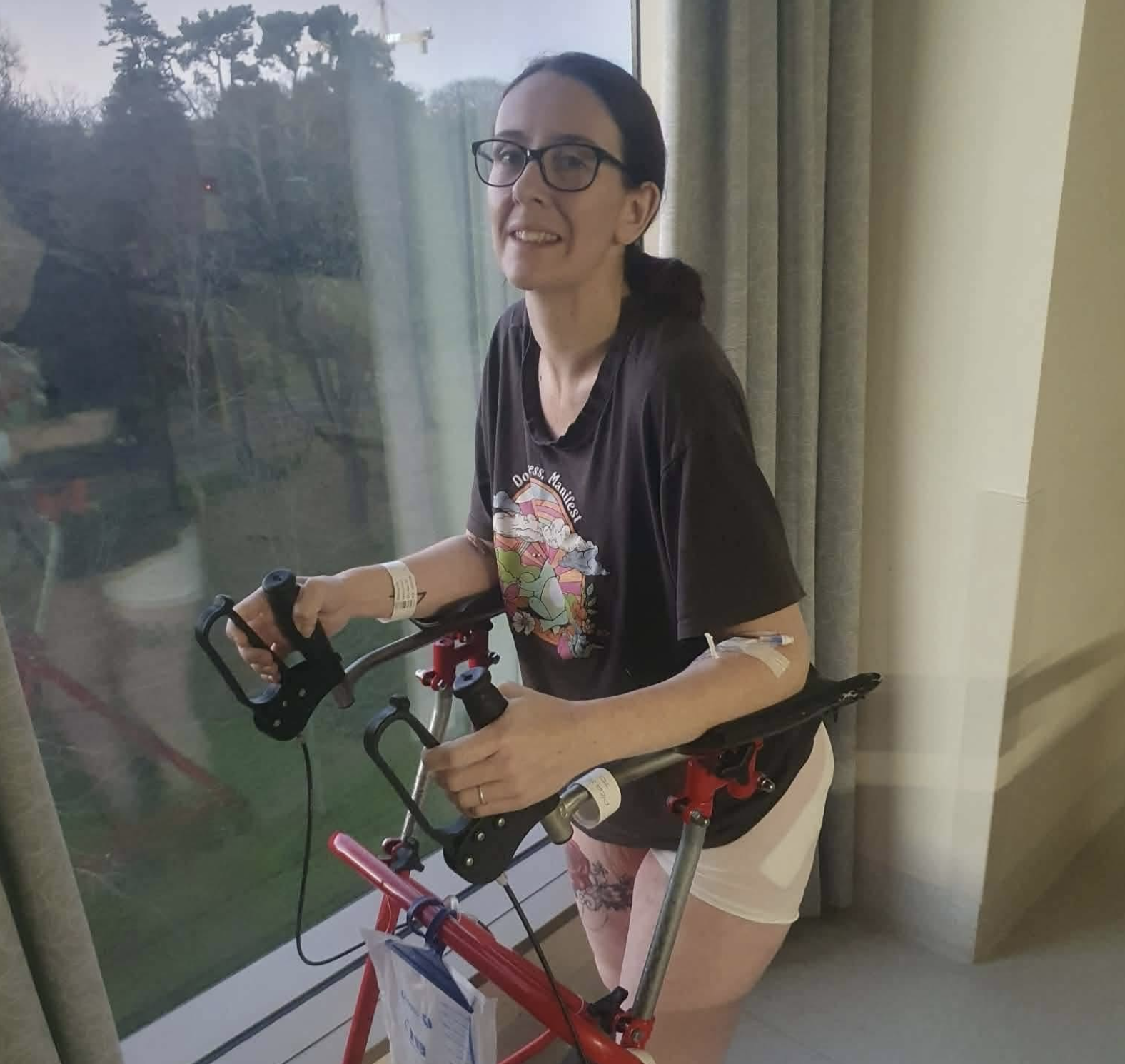
Kathryn Stevens / Supplied
The assessment recorded was chronic back pain. The doctor recorded that Stevens had deliberately not made another appointment with the previous GP because she did not believe her pain was functional or associated with her mood.
The GP said she was unwilling to alter Stevens’ medication regimen or prescribe further analgesics or benzodiazepines.
Stevens said she repeatedly asked for further investigation, including imaging of her hip and an MRI, and offered to pay privately.
Those requests are detailed in her complaint, but chrislynchmedia.com has not independently established from the clinical records supplied whether each request was made as described.
On 12 June, Stevens was taken to hospital by ambulance during what she described as an acute pain crisis.
According to medical information supplied by Stevens, an MRI showed a probable compression fracture of the L3 vertebra with extensive marrow oedema and abnormalities suspicious for malignancy.
Further imaging found numerous destructive bone lesions involving areas including her femur, pelvis and vertebrae, as well as a displaced pathological fracture of her left femur.
A thyroid nodule was identified as a possible primary source.
A subsequent biopsy confirmed metastatic medullary thyroid cancer with a RET M918T mutation.
Stevens underwent embolisation of metastatic disease affecting her proximal femur and a total left hip replacement on 19 June.
Her treatment plan is now palliative.
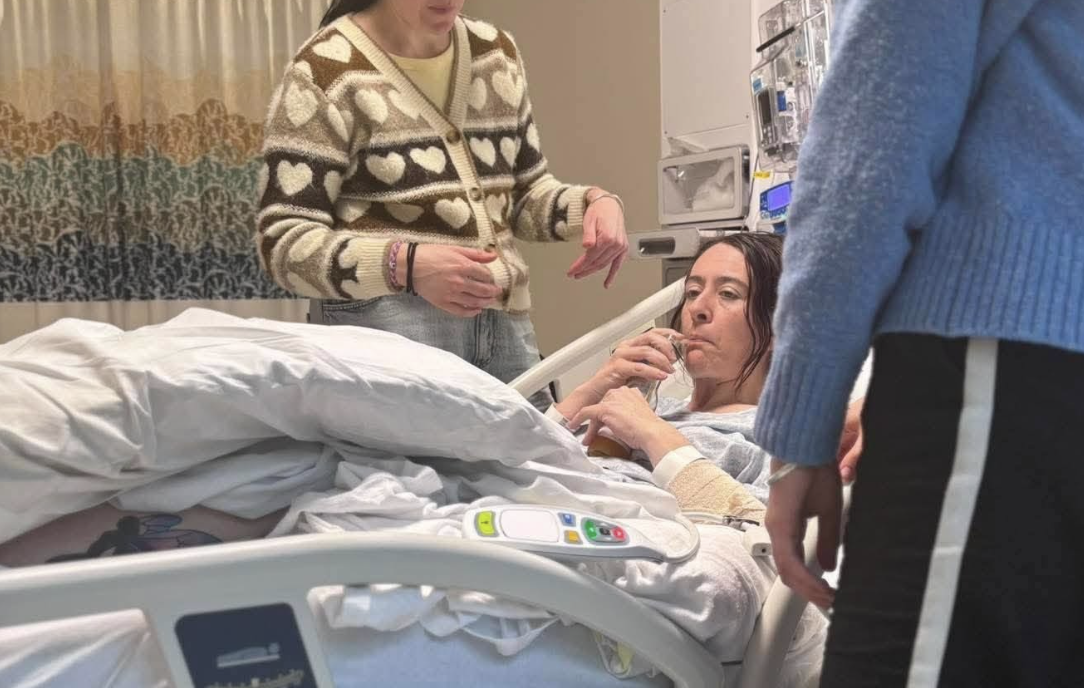
Supplied
Stevens described how dramatically life had changed for her and her family.
“I was a healthy 32 year old a few months ago, I’d just married the love of my life and we were happily raising our young children together,” Stevens said.
“My babies are too young to lose their Mum, my youngest is just 6 years old and it breaks my heart that I won’t be there for them all as they grow up.”
Stevens said her family was now concentrating on making their time together meaningful and creating happy memories.
Stevens’ complaint does not argue that doctors should necessarily have immediately diagnosed cancer.
“I appreciate that metastatic cancer can be difficult to diagnose,” she wrote.
Instead, Stevens wants the Health and Disability Commissioner to examine whether her increasingly severe and unexplained symptoms were adequately investigated before a psychological explanation became prominent.
She said she experienced severe pain, weakness, difficulty bearing weight and walking, and later bladder and bowel symptoms before the underlying disease was discovered.
Stevens also believes the delay in diagnosis contributed to the pathological fracture of her femur.
That allegation has not been independently established, and the documents supplied to chrislynchmedia.com do not contain an independent expert opinion establishing whether earlier investigation would have prevented the fracture.
Stevens is seeking a formal investigation by the Health and Disability Commissioner, a review of the care she received and written apologies from those involved.
She also intends to pursue an ACC treatment injury claim.
Health NZ South Canterbury Acting Group Director of Operations Rene Templeton said “we acknowledge the concerns raised by Kathryn Stevens and extend sincere sympathy to her and whānau at what is clearly a very difficult time. We recognise the impact and distress that a negative outcome like this can have on patients and their whānau.
“We are committed to engaging directly with Kathryn and her whānau to fully understand what has occurred.
“This will ensure we have a clear and accurate picture of the situation, including whether appropriate clinical pathways and procedures were followed.
“We encourage any patient or whānau member with concerns about their care to contact us directly so those concerns can be properly considered and responded to.
“Our priority is to ensure people receive safe, respectful and timely care, and that patients feel heard when they raise concerns about their health” Templeton said.
“There is no cure for my cancer, I don’t know how long I have, I am hopeful for many years but it will eventually take me,” she said.
“I do not want anyone else to have to go through what I experienced with these medical professionals, especially the months of pain with no real answers.”
Stevens said if scrutiny of her case resulted in another patient being listened to more carefully or receiving further testing, “then that’s a legacy I’m happy to leave behind.”