Escaped youth tracked by Eagle helicopter, found hiding in New Brighton
The young person who escaped from a youth justice facility in Rolleston has been located...


The young person who escaped from a youth justice facility in Rolleston has been located...

A person has been seriously injured on State Highway 75, Christchurch Akaroa Road. A police...

BodyFix Gym Christchurch in Phillipstown has taken out two major honours at the Exercise New...

Local MPs have found areas of agreement on major Resource Management Act reforms, during a...

A series of public events have been organised across Christchurch and Lyttelton over the coming...

A woman was taken to hospital after a ‘water incident’ at Parakiore Recreation and Sport...

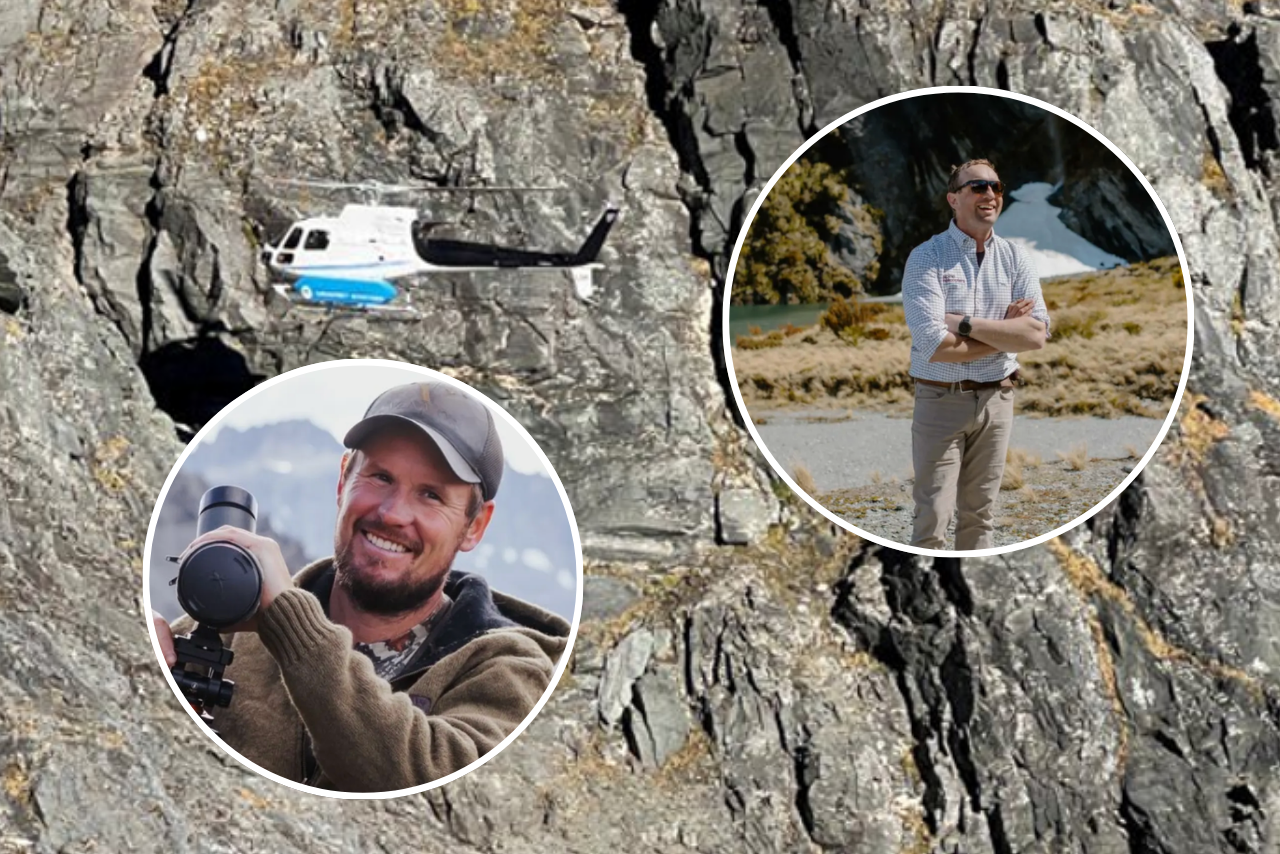
A helicopter’s main rotor blades struck a mountain face and were destroyed before the aircraft fell about 30 metres, killing pilot Tim Brown and hunting guide Sean Roach in Mount Aspiring National Park.
An interim report from the Transport Accident Investigation Commission detailed the moments surrounding the 17 May crash, drawing on cockpit footage, a passenger’s photograph and evidence from the accident site.
Brown, 36, and Roach were retrieving a chamois that had fallen into a narrow ravine after being shot during a trophy hunting trip.
The commission said cockpit footage showed the helicopter hovering beside a rocky ledge, with the guide getting out through the front left door when the accident sequence began.
Marks on rocks and tussock grass showed the main rotor blades had contacted the mountain face. The wreckage came to rest at an altitude of about 5700 feet.
The Alpine Group Limited, trading as Alpine Helicopters, was operating the trip using two helicopters carrying two pilots, two guides, one hunter and six passengers who were observing the hunting.
Aerial assisted trophy hunting involves using a helicopter to locate an animal before dropping off a hunter and guide to shoot it. The animal is then recovered for mounting by a taxidermist.
The objective that morning was to shoot a tahr and a chamois.
The operator had positioned both helicopters at a private property near Mount Barker the previous day because low cloud or fog was forecast at Wanaka Aerodrome.
The pilots began preparing the aircraft at about 7am. Conditions were frosty, but the forecast was for a fine day with clear skies and little or no wind.
The hunting party received a safety briefing before the helicopters departed at about 7.35am.
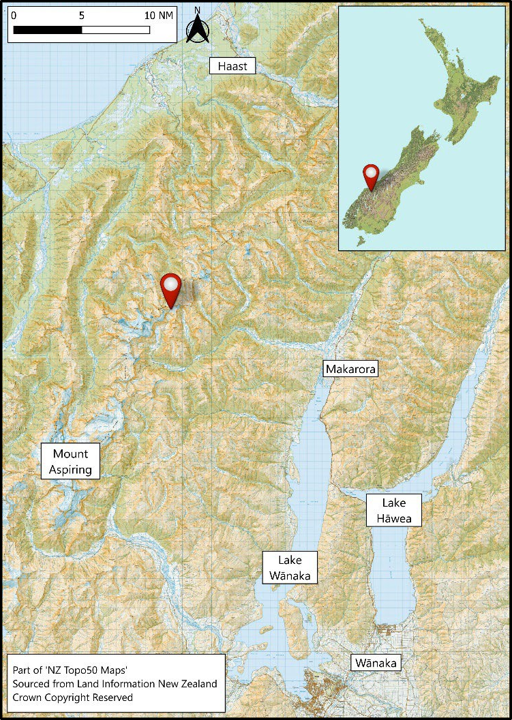
Location of accident
A tahr was located and shot in the Landsborough area, north of the Haast River. Both helicopters landed and shut down while photographs were taken, before the animal was placed in the external cargo pod of Brown’s helicopter.
The party then flew to an area about 24 kilometres west of Makarora, where a chamois was found on the north face of Mercury Peak.
Brown dropped off the hunter and Roach nearby, then moved the helicopter a safe distance away. The second helicopter also remained clear.
After being shot, the chamois fell into a narrow, deep ravine.
Brown collected the hunter and Roach and flew them to a large flat area. The hunter and two passengers got out to await the second helicopter, while Brown and Roach returned up the mountain face to retrieve the animal.
One of the passengers watching the recovery took a photograph moments before the crash, then saw the helicopter fall down the mountain face.
The commission used that photograph and footage from the recovered cockpit camera to establish that the accident happened at 9.35am.
The second helicopter landed a few seconds later in an area just out of view of the crash. The hunter and passengers alerted its pilot and guide.
The second pilot manoeuvred above the wreckage and directed the guide on the ground to Brown and Roach. The guide radioed back that neither had survived.
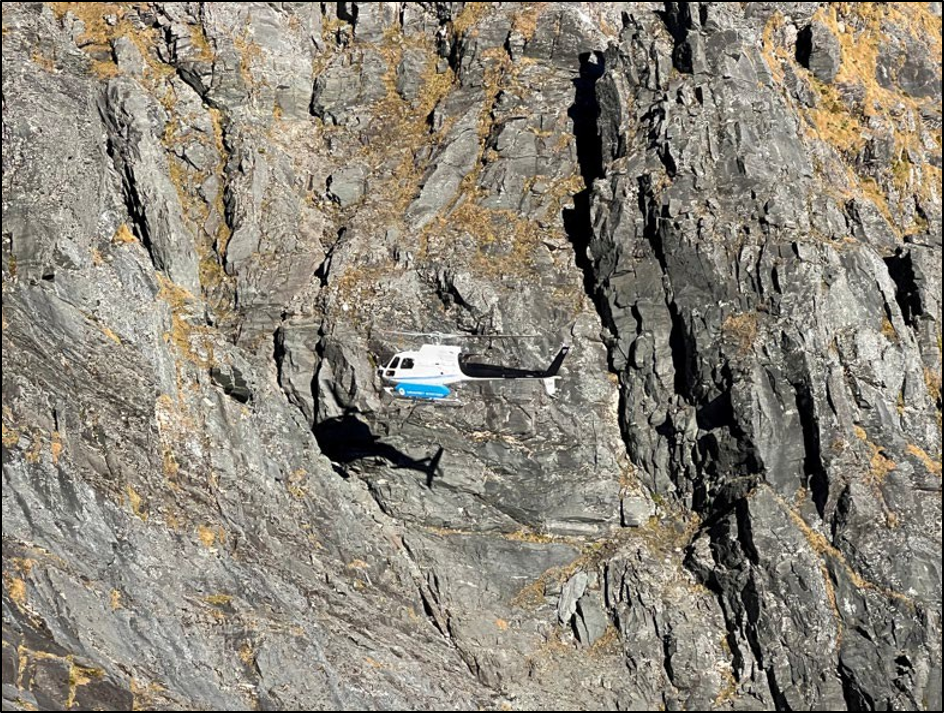
Witness photograph
pilot immediately notified the operator, which activated its emergency response plan and contacted emergency services. The Rescue Coordination Centre New Zealand was advised at 9.47am.
Five passengers were flown back to Wanaka in the second helicopter, after which the operator stood down that aircraft and its pilot.
The second guide, hunter and remaining passenger stayed on the mountain until responding helicopters collected them and flew them to a vehicle waiting at Makarora.
Alpine cliff rescue personnel and police recovered the bodies later that day.
The commission said no emergency locator transmitter signal had been received from the crashed helicopter. Examination found the transmitter had activated, but a broken aerial prevented a signal from being sent.
The Airbus helicopter was built in 2009 and had accumulated 8618 airframe hours. Its annual airworthiness review had been completed on 7 August 2025.
Brown held a commercial helicopter licence and current Class 1 and Class 2 medical certificates. He had about 6625 hours of flying experience, including approximately 3570 hours on the helicopter type.
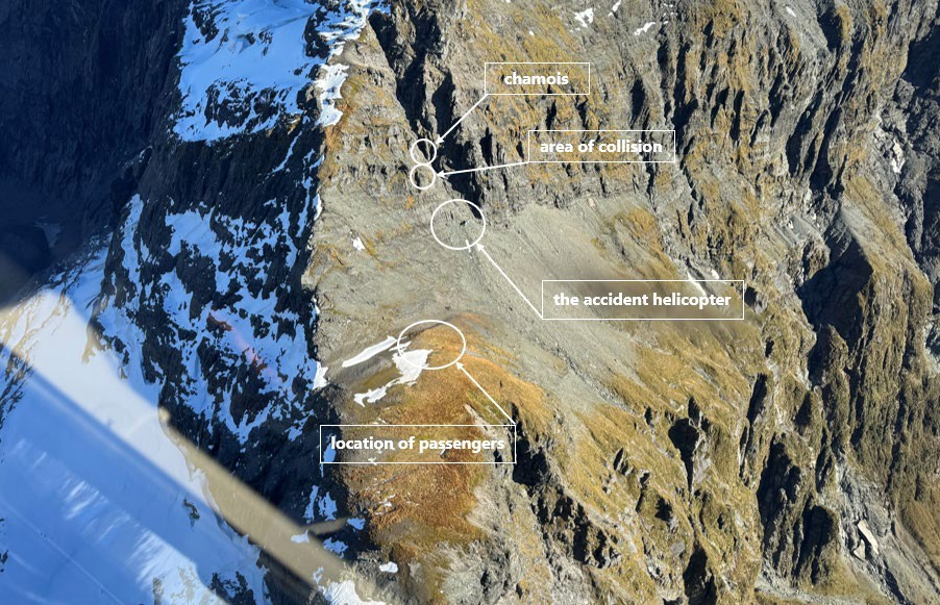
Accident site
Commission investigators travelled to the accident site on 18 May to secure evidence and interviewed witnesses and other relevant people.
The wreckage was removed under investigators’ supervision on 23 May and taken to a secure facility.
That day, the operator found the cockpit camera some distance from the wreckage while searching outside the main debris trail. It was handed to the commission the following day.
A draft interim report was circulated to six interested parties for comment. One provided a detailed submission, one had no comment and four did not respond despite attempts to contact them.