Escaped youth tracked by Eagle helicopter, found hiding in New Brighton
The young person who escaped from a youth justice facility in Rolleston has been located...


The young person who escaped from a youth justice facility in Rolleston has been located...

A person has been seriously injured on State Highway 75, Christchurch Akaroa Road. A police...

BodyFix Gym Christchurch in Phillipstown has taken out two major honours at the Exercise New...

Local MPs have found areas of agreement on major Resource Management Act reforms, during a...

A series of public events have been organised across Christchurch and Lyttelton over the coming...

A woman was taken to hospital after a ‘water incident’ at Parakiore Recreation and Sport...
The government has signed a deal with Z Energy to procure an additional 90 million litres of diesel as New Zealand braces for the possibility of a prolonged global fuel shortage triggered by the closure of the Strait of Hormuz.
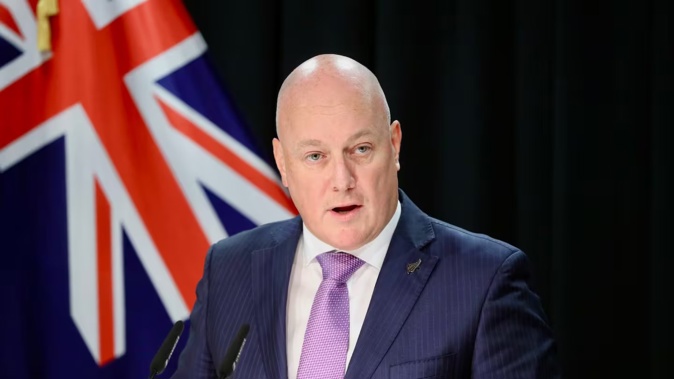
Prime Minister Christopher Luxon announced the agreement at a press conference today, describing it as a significant step in protecting New Zealand’s fuel security amid what he called the most serious fuel crisis in a generation.
“Reliable fuel supply is essential for our households and our businesses,” Luxon said.
“We have prioritised securing additional diesel because it is the fuel that drives the economy, and that will boost New Zealand’s diesel reserves and make the country more resilient at a time of global fuel market uncertainty.”
Finance Minister Nicola Willis said the stockpile was equivalent to roughly nine days of supply, adding around 50 percent to New Zealand’s existing reserve buffer on top of the approximately 21 days of diesel already held in storage.
“This government is being proactive,” Willis said. “We are preparing for the possibility of fuel supplies being disrupted by a prolonged conflict in the Middle East.
“The deal we are announcing today beefs up the buffer.
“We are taking a belt and braces approach, on the one hand ensuring that we are prepared for disruptions, and on the other hand ensuring we have deeper reserves should that happen.”
Willis said “I think of this as an insurance policy to ensure that if the worst happens, New Zealand is prepared.”
The fuel will be stored in diesel tanks at Marsden Point, operated by Channel Infrastructure, following an $22 million government investment earlier this month to accelerate refurbishment of those tanks. Delivery is expected in late June or early July.
Z Energy was selected through a competitive procurement process. Willis said a number of bidders had put forward proposals, which were ultimately whittled down to two preferred entities, with Z Energy coming out on top.
“The Z proposal provided the strongest value for money and the most flexibility about when and how the fuel could be used,” she said.
“Under the terms of the deal, Z Energy will procure, own and manage the fuel. This is something that they are already experts at, and not something the government is an expert at.”
Willis said protecting taxpayers from the risk of falling fuel prices had been a central consideration in negotiations.
“You can imagine that purchasing fuel at a particular point in time, and then that fuel reducing in value by the time it’s delivered, could potentially expose the taxpayer to risk,” she said. “Our intent has been to limit the taxpayers’ exposure to any reduction in price that could occur.”
Responding to comparisons with Australia’s fuel reserve efforts, Willis said “Australia already had storage up and running. We’ve had to go out and secure storage first. I understand that to date Australia has secured around 400 million litres of fuel, equivalent to six to seven days of supply in Australia. Our deal equates to around nine days. It’s a good deal for the taxpayer.”
The agreement runs until the end of December, with the option to extend if needed.
Luxon also confirmed he will travel to Singapore on Sunday to formally sign a separate trade and essential supplies agreement with Prime Minister Lawrence Wong, which guarantees Singapore will not place export restrictions on fuel to New Zealand in exchange for New Zealand keeping food exports to Singapore flowing.
“We couldn’t have foreseen that just over four months later, the world would enter the most significant fuel crisis in a generation,” Luxon said. “This agreement was set up exactly for this kind of crisis.”
“Singapore is already supplying a third of New Zealand’s fuel,” he said.
“Prime Minister Wong assured me at the very start of this crisis that Singapore will not restrict exports to New Zealand. That demonstrates the impact of maintaining and strengthening our international partnerships for the benefit of New Zealanders.”
On current stock levels, Luxon said New Zealand continues to hold sufficient petrol, diesel and jet fuel, with fuel importers reporting no material issues with shipments and expressing confidence about planned orders through to June.
The country remains at phase one of its national fuel response plan.
“The situation in the Middle East remains uncertain and unpredictable,” Luxon said. “The ceasefire is fragile, and the Strait of Hormuz remains closed. It has resulted in a major disruption to global fuel supply and directly led to higher fuel prices here at home.”
The government stopped short of announcing a similar intervention for jet fuel, though Resources Minister Shane Jones indicated officials were actively considering options.
He acknowledged a lack of domestic storage capacity presented a significant obstacle.
“Sadly, we don’t have the necessary storage capacity in New Zealand, and that may require us to be very innovative,” Jones said.
“We’re not blind or deaf to that request, but it has to follow a formidable set of processes where we look at risk assessment, the cost to the Crown, and obviously, going forward for as long as the Strait of Hormuz remains closed, this is a challenge.”
Jones said “I think this is an overdue addition to what industry asks for. New Zealand remains a place where the hands are clean and we have the ability to pay, painful though it may be.”
Willis said the government was looking at a range of possibilities for jet fuel, including securing additional dispersed storage domestically, holding reserves offshore, or working with existing jet fuel suppliers to increase their procurement capacity.
Luxon sought to reassure the aviation sector, saying there was no current risk of disruption to jet fuel supply and that airlines and airports had been engaged from the start of the crisis.
“They all acknowledge that they’re still getting supply of aviation fuel, which is good. They’re obviously dealing with high prices, but they’re still getting supply,” he said. “What we’d be wanting to do is look for optionality to procure some extra. We’ll look at that.”
On crude feedstock, Luxon said refineries in Singapore and South Korea were successfully sourcing oil from alternative markets including the United States, Canada, West Africa, Oman and parts of South America, reducing dependence on Gulf supplies.
“They are experts at actually trying to find alternative sources of crude and bring it into their refinery,” he said. “We remain very confident with the upstream sourcing of crude feedstock into the refineries that we deal with.“