Escaped youth tracked by Eagle helicopter, found hiding in New Brighton
The young person who escaped from a youth justice facility in Rolleston has been located...


The young person who escaped from a youth justice facility in Rolleston has been located...

A person has been seriously injured on State Highway 75, Christchurch Akaroa Road. A police...

BodyFix Gym Christchurch in Phillipstown has taken out two major honours at the Exercise New...

Local MPs have found areas of agreement on major Resource Management Act reforms, during a...

A series of public events have been organised across Christchurch and Lyttelton over the coming...

A woman was taken to hospital after a ‘water incident’ at Parakiore Recreation and Sport...

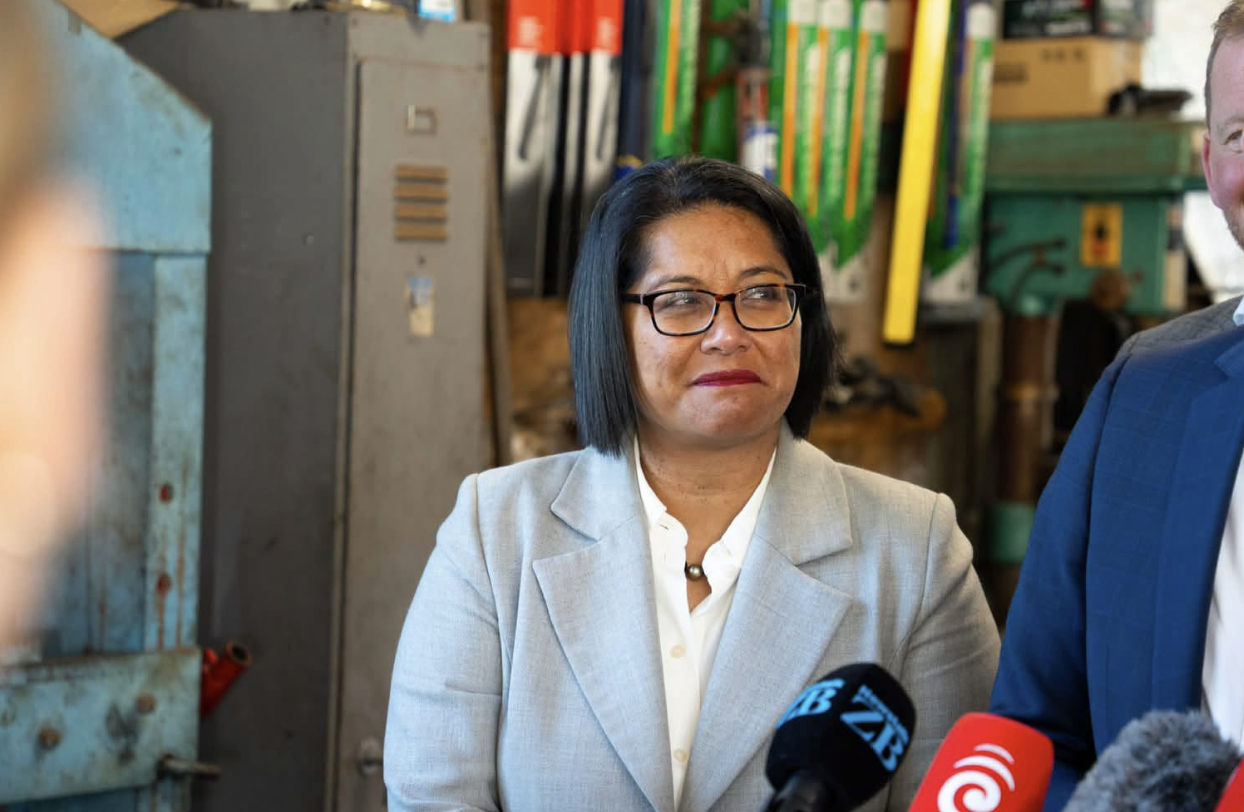
Labour says National cannot claim an economic turnaround after three years in Government, pointing to unemployment, living costs and weak growth as evidence many households are still under pressure.
Finance and economy spokesperson Barbara Edmonds launched the attack following the release of Treasury’s Pre election Economic and Fiscal Update, which showed a substantially improved Government balance sheet but continued pressure across parts of the economy.
“New Zealand can’t afford three more years of cuts, chaos and higher costs,” Edmonds said. She accused National of failing to deliver the economic improvement it promised when it entered Government.
“Behind these numbers are real people. Someone who has lost their job. A small business owner wondering how much longer they can keep the doors open. A family who can’t afford to pay for their groceries or power bill and wondering what else will have to go.”
The latest official figures give both major parties ammunition.
Unemployment reached 5.6 percent in the June quarter, with 171,000 people unemployed, according to Stats NZ.
Annual inflation was also running at 4.1 percent in June, above the Reserve Bank’s 1 to 3 percent target range. Petrol prices were 27.5 percent higher than a year earlier and electricity prices were up 12 percent.
However, the economy is no longer contracting.
GDP increased 0.2 percent in the June quarter after rising 0.9 percent in March, while economic activity was 1.7 percent higher than a year earlier. GDP per person increased 0.1 percent during the latest quarter.
Treasury expects the recovery to strengthen during the second half of this year, forecasting unemployment to gradually fall from 5.6 percent to 4.3 percent by the end of its forecast period.
The Government’s financial position has also improved significantly since the May Budget.
Treasury now expects the operating deficit, excluding ACC, to fall to $6.8 billion this financial year, compared with the $11.4 billion forecast at Budget time.
It is forecast to fall to $800 million the following year before reaching a $4 billion surplus in 2028/29 and $11.7 billion by 2030/31.
Higher tax revenue is the main reason for the improvement.
Treasury has increased its tax revenue forecast by $11.4 billion across the four comparable forecast years, partly because business profits, consumption and employee earnings have been stronger than previously expected.
Higher inflation has also contributed because it lifts nominal incomes, spending and profits, increasing the amount of tax collected.
Treasury said expenditure restraint was also contributing to the improving outlook, with core Crown expenses forecast to fall from 32.1 percent of GDP in 2025/26 to 29.8 percent by 2030/31.
Edmonds said Labour remained concerned about what further spending restraint could mean for public services.
“Kiwis are still none the wiser about what services National plans to cut. Christopher Luxon must come clean on what services he’s going to shut down, where they are and how many jobs will be slashed.”
National has rejected Labour’s characterisation of its economic management.
Finance Minister Nicola Willis said following the Treasury update that stronger business performance, increased tax revenue and spending discipline were improving the Government’s finances.
Treasury itself paints a more complicated picture of National’s first three years.
Its preferred operating balance showed a deficit of $8.8 billion in 2023/24, $9.3 billion the following year and an estimated $8.6 billion in 2025/26.
Treasury said lower Government expenses and improved Crown entity performance during that period were almost entirely offset by weaker tax revenue as economic conditions remained subdued.
After adjusting for the economic cycle, however, Treasury estimates the underlying fiscal position improved more substantially, with the cyclically adjusted deficit falling from 2.5 percent of potential GDP in 2023/24 to 1 percent in 2025/26.
Debt is still expected to increase before falling.
Net core Crown debt is forecast to rise from $186.7 billion in 2025/26 to $223 billion in 2027/28, when it reaches 43.9 percent of GDP.
It is then forecast to decline as a share of the economy, reaching 39.5 percent by 2030/31.
Labour said it would release its full fiscal plan shortly and promised to return the Government accounts to surplus while reducing debt over time.
“This election the choice is clear: more cuts under National or investment in what matters with Labour,” Edmonds said.
Treasury warned there remained considerable uncertainty around its forecasts, with risks weighted towards weaker growth and higher inflation.
It identified ongoing conflict in the Middle East, oil prices, natural disasters, financial market volatility, productivity and migration among factors that could alter the outlook.