Escaped youth tracked by Eagle helicopter, found hiding in New Brighton
The young person who escaped from a youth justice facility in Rolleston has been located...


The young person who escaped from a youth justice facility in Rolleston has been located...

A person has been seriously injured on State Highway 75, Christchurch Akaroa Road. A police...

BodyFix Gym Christchurch in Phillipstown has taken out two major honours at the Exercise New...

Local MPs have found areas of agreement on major Resource Management Act reforms, during a...

A series of public events have been organised across Christchurch and Lyttelton over the coming...

A woman was taken to hospital after a ‘water incident’ at Parakiore Recreation and Sport...

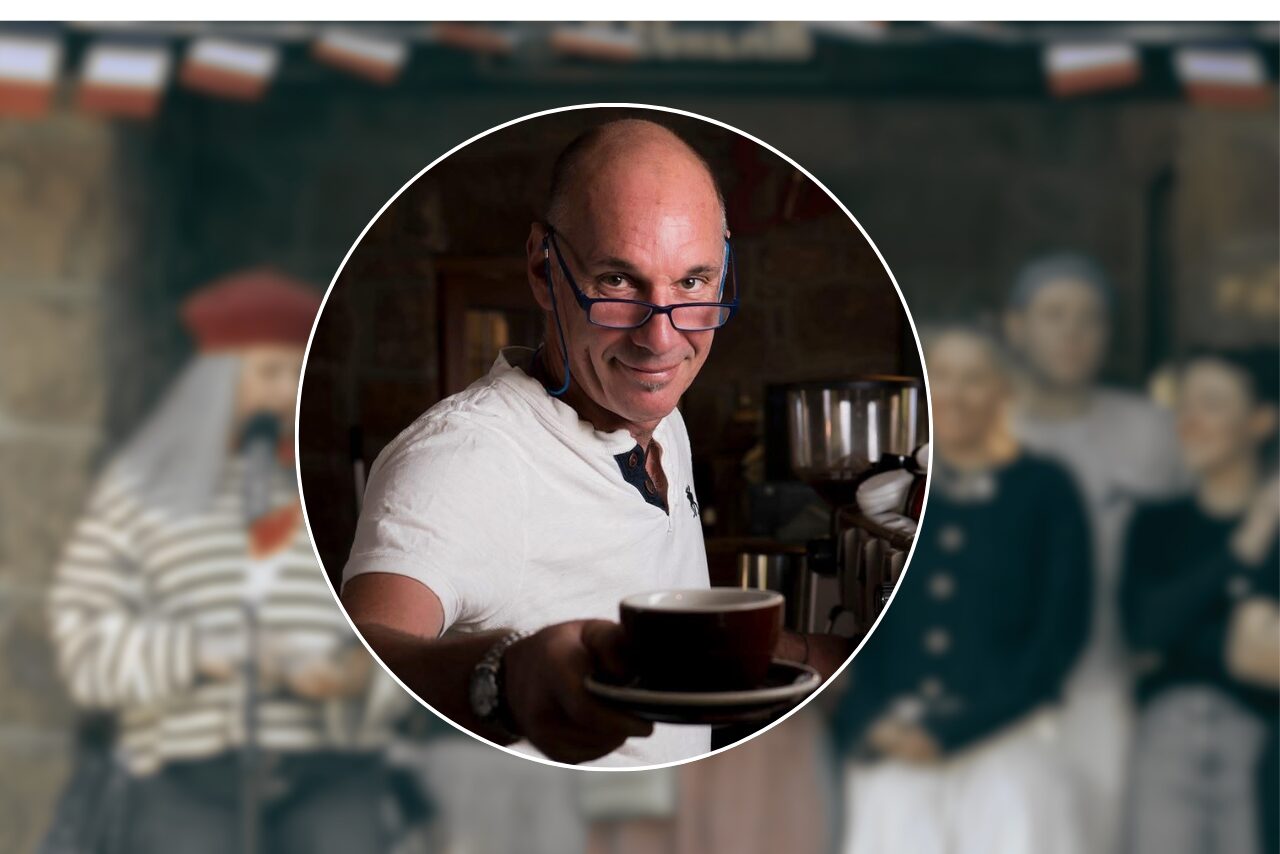
The life of Sign of the Kiwi owner Eric Devos has been celebrated in Christchurch today, at the Port Hills cafe he loved.
Family, friends, staff and regular customers gathered at the historic cafe and bar to farewell Devos, who died last month.
His wife Kimberli told mourners it was not a day the family ever expected, “but here we are all together, just as he would have wanted it.”
“Eric was the love of my life. He loved our two daughters fiercely and was their biggest cheerleader. He was our rock, our protector, and made us feel joy in every day.”
She said his generosity stretched far beyond his own household. “He had a heart so big he was not only able to love us, he was able to love everyone around him. We were not his only family. You were his family. It is a rare thing to see such a pure and gentle heart.”
The couple met in 2001 while working part time at a bar in Sydney, she behind the bar and he, of course, in the French restaurant. “One night, whilst Eric walked past me, I nudged my friend Harriet and asked her, who is that? He caught my eye. Later that evening, he said exactly the same thing to her about me.”
What followed, she said, “blossomed into a journey that I can only ever say was filled with love, laughter, and life. I had found my soulmate.”
The pair moved to New Zealand in 2002, where Devos first became known as “the French food guy” delivering sandwiches to workplaces, before opening a bookings only restaurant. After the earthquakes. he flew to Wellington to collect a “Postman Pat” van, transforming it into a coffee cart.
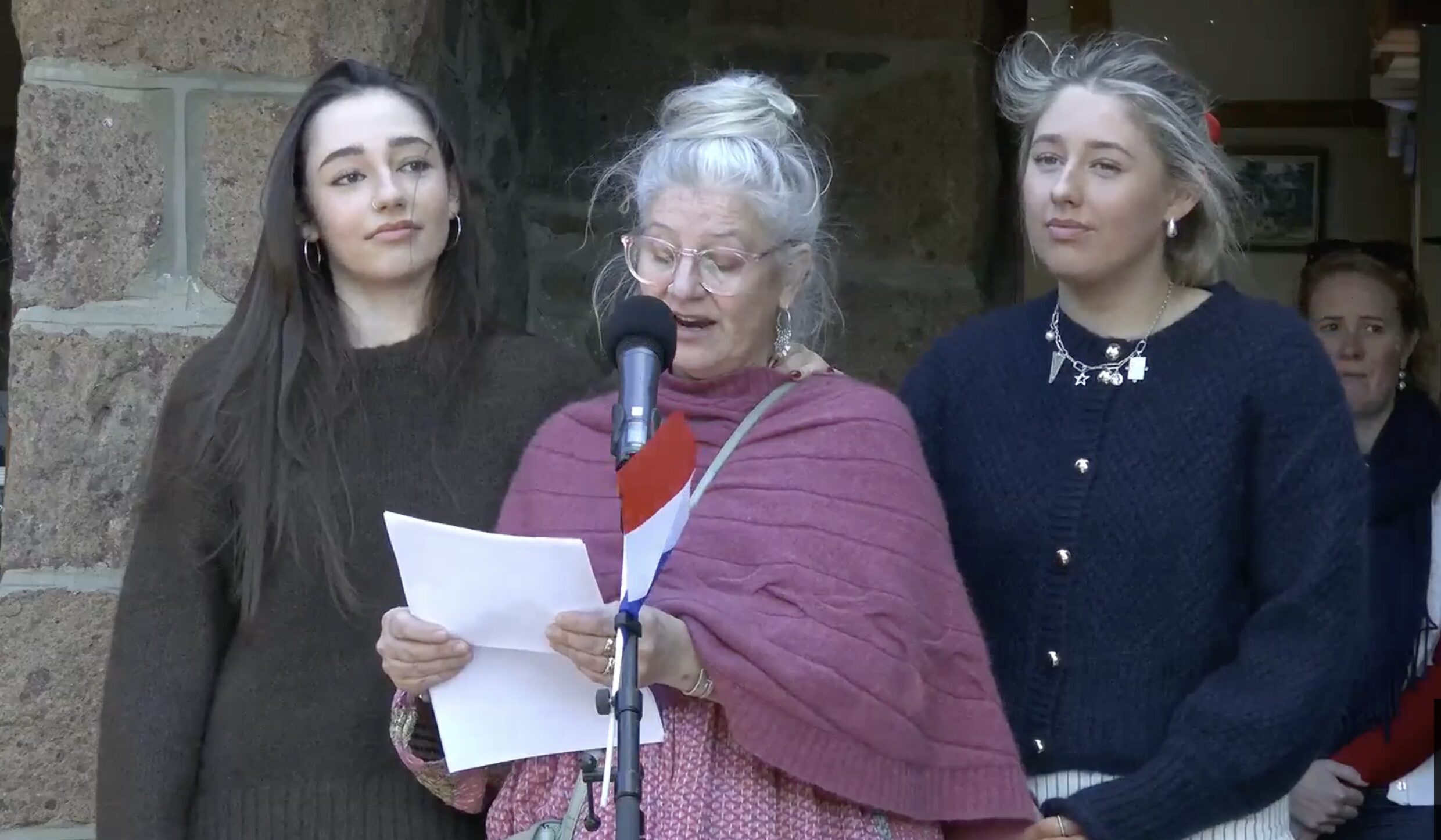
Left to right: Eric’s daughter Amelie, his wife Kimberli, and daughter Madeleine.
“I remember him driving up the drive for the first time in his van, half of his body hanging out the window, arms waving with a huge smile on his face, with the horn blaring.”
In 2017 he became the sole guardian of the Sign of the Kiwi as the restored heritage building welcomed people again. “He was so excited; his dream had finally come true,” Kimberli said.
Devos handmade all the cafe’s tables with friends, hand painted the counter, and placed red geraniums around the cafe in summer to remind him of his home in France.
“We always laugh as the tables are always a bit wonky on the rough stone floors, but he was proud of making them himself.” She said he always told her he had the best office in Christchurch. “I will miss his happy face in this window, and of course, his famous date scones contain within them his secret ingredient that will be held close by those who continue to make them each day.”
Kimberli said the cafe reflected everything her husband believed about people. “A few days ago, one of his customers told me that he said that the Sign of the Kiwi was the United Nations, but one that actually worked. This was typical banter from Eric. His razor sharp humour washed over everyone who met him. You may have been called a geezer or a dodgy Dutchman, to name a few.”
He loved the Sunday morning trampers and the biker boys, who all wore berets and sang La Marseillaise at full volume each Tuesday morning. “You will all have a funny story to remember him by. He was a one of a kind.”
A lover of nature, food, coffee, history, travel, languages, wine and cheese, Devos was an active member of the Alliance Française and the Men’s Shed, was passionate about sailing with Team Slice of Lemon, loved playing tennis and watching sport, and “was the glue that held us all together. He simply loved life.”
“When a table wobbles at the Kiwi, think of him and his laughter. When you see a kererū swoop through the air, think of his spirit flying free. When you have a dream, believe that anything is possible. When you love someone, live and breathe it every day. Take pleasure in the simple things, as they are all that matters.”
His eldest daughter Madeleine also spoke, telling the gathering there were not enough words in the world to explain what her father meant to the family.
“You were our biggest advocate, not just mine but Amelie’s too. You believed in us, even in the moments when we doubted ourselves. You were always in our corner, always reminding us that we were capable of anything.”
“You had this incredible gift of making everyone feel welcome. It didn’t matter where someone came from, what language they spoke, or what their background was. You always found a way to connect with them. You didn’t just collect knowledge for yourself; you used it to bring people together.”
Her favourite memories were the little things: terrible jokes around the dinner table, endless conversations about French politics, and his insistence “that the French were the best at everything, and that you simply couldn’t eat cheese without the bread.”
“I would give anything to roll my eyes at one more joke, hear you explain why the French do everything better, or see one more message pop up on my phone from you.”
She told mourners her father taught her what love looks like. “You showed me that kindness costs nothing, that everyone deserves to be treated with respect, and that life is about the people we share it with. You never judged anyone. You simply loved people for who they were.”
His death, she said, carried a lesson she wished she had not learned so soon: that tomorrow is never promised. “Because of you, I will hold my family a little tighter, tell the people I love that I love them more often, and try to live with the same warmth and generosity that you showed every single day. The love you gave us did not disappear when you left.”
His younger daughter Amelie told mourners she had thought about what she would say to her father if she had one more chance, “one last messenger call, one last argument even. I’ve decided that I can’t use a speech like this to say one final thing to him, because I think I’ll always be talking to him, in some strange way, in my head, in the car. I did get some strange looks when I started doing it in the supermarket, so I have to keep that one to a minimum. Sorry, Papa.”
She said her father “was not an extraordinary man. He didn’t cure cancer or split the atom, but I’m proud to say that he was one of the best natured guys out there, and I hope to have inherited just a sliver of that kindness.”
“He had a very special way of making people laugh and smile, not to serve his own agenda or boost his ego, but because he wanted to make people feel special, and the sheer number of people here today proves just that.”
Her father did not believe in gadgets or systems to make the world a better place, she said, but in real human connection, which is why his work brought him so much joy.
“He was a student of the world. He was proud of himself and his country, and he never apologised for who he was.”
When she told her parents she was moving to Sydney, he was her biggest advocate.
“Just do it, he said. Sometimes I wonder if he just wanted the house back to himself, but I like to believe that he wanted me to grab everything I wanted from life and not look back.”
Amelie said the French language was something sacred the pair shared, and now felt like the most tangible thing she had lost. “I know that I’ll never speak French with the person who taught it to me again. So, those of you who speak French, please speak to me in French.”
“He taught me how to be brave, and now we have to be brave. I’m brave for him, but I’m also brave for my mama, my sister, the family he’s built at the Sign of the Kiwi, and all of you.”
She said her father would still show up in her life, just in different ways. “He’ll show up in my dreams, in retelling silly stories about him asking for his morning coffee. He’ll be laughing at me when I speak with my thick English accent in French, and I’ll see his smile in my own reflection in the mirror. He lives on through me and through all of you.”
“Don’t forget the jokes he told, the love he had for his country, the two pairs of glasses on his head, or his desperation for a long macchiato in the morning.”
During the service, a passage was read from The Little Prince, one of Eric’s favourite books to share with his daughters when they were young.
“In one of the stars, I shall be living. In one of them, I shall be laughing. And so it will be as if all the stars will be laughing when you look at the sky at night.”