Escaped youth tracked by Eagle helicopter, found hiding in New Brighton
The young person who escaped from a youth justice facility in Rolleston has been located...

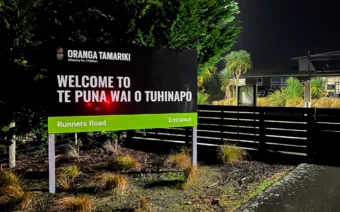
The young person who escaped from a youth justice facility in Rolleston has been located...

A person has been seriously injured on State Highway 75, Christchurch Akaroa Road. A police...

BodyFix Gym Christchurch in Phillipstown has taken out two major honours at the Exercise New...
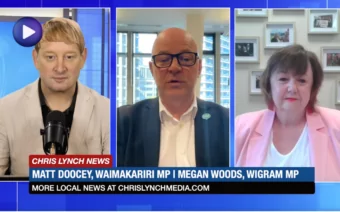
Local MPs have found areas of agreement on major Resource Management Act reforms, during a...

A series of public events have been organised across Christchurch and Lyttelton over the coming...

A woman was taken to hospital after a ‘water incident’ at Parakiore Recreation and Sport...
Opinion article written by E tū Negotiation Specialist Joe Gallagher
The recent wave of redundancies across large New Zealand companies is a major let down for New Zealanders and their communities.
As the COVID-19 crisis causes economic shocks across the globe, it has exposed the extent to which some businesses are not only unprepared for any kind of disruption, but unprepared to support their workforce. Some of our largest corporates have shown themselves to be either unable or unwilling to act in the best interests of their workers or the community.
The announcement of 1000 job cuts across Fletcher Building provides a perfect snapshot of how out of touch our major companies have become and how little care they have shown to their workforce.
In the wake of COVID-19, their workers have suffered through waves of massive pay reductions, reductions in their hours, and now threats of redundancy. However, Fletchers’ actions are only the peak of a trend which has been evident for many years. This is a company that values the profits of its senior management and shareholders above all else.
A comparison of the company’s annual reports from 2001 to 2019 shows a widening gap in remuneration between workers, senior executives, and board members. The interests of these groups are also increasingly unaligned with those of the workers, with both senior executives and board members expected to be shareholders. In 2001-02, the annual remuneration for the lowest paid board members was $60,000 per year. By 2019, this had increased to around $181,000 per year, a 201% increase in compensation. The total paid out to board members also increased by 224% between 2002 and 2019.
How does this stack up against the starting rate for workers at a selection of Fletchers’ companies?
A starting rate for a worker at Fletcher Easysteel was $10.45 per hour in 2001, and $20.43 per hour in 2019 – an increase of 95.5%. Their counterpart at Fletcher company Pacific Coilcoaters was on $9.45 in 2001 and $18.43 in 2019 – another increase of 95%. At Winstone Wallboards, another Fletchers’ subsidiary, the starting rate was $18.93 in 2002, with a 64% increase to $31.13 per hour in 2019.
Not only are these increases incredibly out of proportion to workers’ pay, but so is the effort required from these groups.
Board members are expected to attend 10 or so meetings in a year, including a $1200 per half-day payment for any ad hoc meetings that they may be asked to attend. In contrast, workers typically do full-time hours, week in week out, making the products that bring in the company’s income.
With those in leadership positions also having a financial stake in the company, it means they invariably favour shareholders above all else.
For example, just last year, Fletchers spent $300 million in a hugely costly share buyback.
This increased the value of shares for remaining shareholders, including the large number of senior executives and board members who hold shares.
This is $300m which could have been set aside for unforeseen market changes. Instead, it was paid out to further enrich the holdings of a lucky few. In other words, Fletchers’ executives spent $300m of the company’s money to make themselves richer.
Workers have real reason to be appalled by this, now the company is claiming it must make them redundant up and down the country.
Fletchers also accepted $67.7million in wage subsidies from the Government.
In a statement, Chief Executive Officer Ross Taylor said the company will now be refusing further government assistance, because they “are a strong independent company”.
In refusing further help, Fletchers carries none of the obligations around staff retention attached to this assistance. It simply gives the company the flexibility to make its workers pay the price for its own poor decision making.
Taylor himself also receives an outsized remuneration package. Reported to be valued at over $5.3m for the 2019 year, his earnings are grotesquely out of proportion to the salaries of the company’s workforce.
If he resigned, the company would be able to retain 120 employees by using the funds freed up from his remuneration. One hundred and twenty workers would be able to continue to pay rent, feed their families and be constructive members of our communities.
Companies like Fletcher Building must start to realise the responsibility they have to all New Zealanders. They should be setting an example of how to be responsible corporate citizens who value their workers and the communities of which they are a part. This means allocating their resources in a way that benefits the country rather than extracting from it.
One already wealthy man simply cannot make the same contribution as all these workers and their families do to the New Zealand economy and the company they work for.
In a post-COVID-19 world, ‘make local, buy local, and supply local’ should become a key element of our economy now globalisation has been severely disrupted. A company like Fletcher Building is well-placed to be a part of this future. However, it also has a responsibility to ensure that their workers are brought along for the ride.
Workers and their unions must be valued as key stakeholders, with a right to a say in both governance and management of the company, given the vital contribution they will make to this country as we enter the COVID-19 recovery period.
Opinion article written by E tū Negotiation Specialist Joe Gallagher