Escaped youth tracked by Eagle helicopter, found hiding in New Brighton
The young person who escaped from a youth justice facility in Rolleston has been located...


The young person who escaped from a youth justice facility in Rolleston has been located...

A person has been seriously injured on State Highway 75, Christchurch Akaroa Road. A police...

BodyFix Gym Christchurch in Phillipstown has taken out two major honours at the Exercise New...

Local MPs have found areas of agreement on major Resource Management Act reforms, during a...

A series of public events have been organised across Christchurch and Lyttelton over the coming...

A woman was taken to hospital after a ‘water incident’ at Parakiore Recreation and Sport...
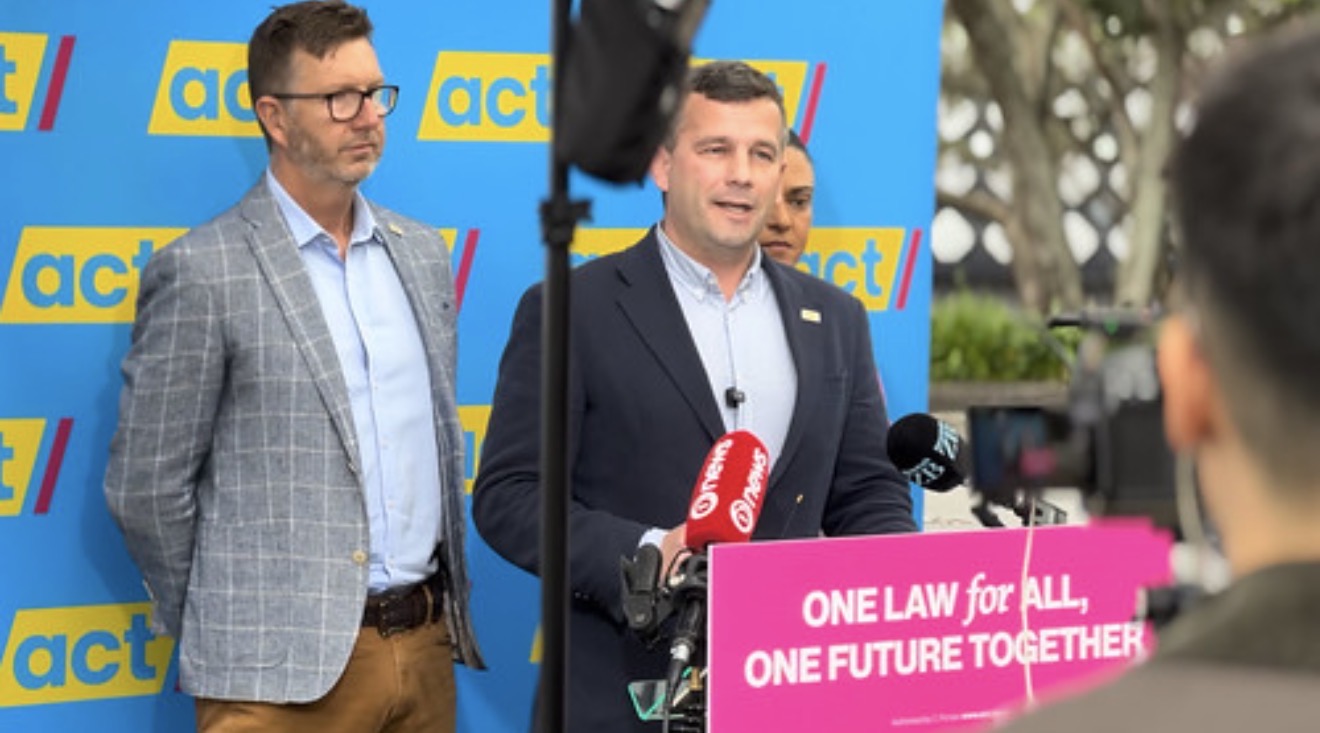
ACT is pledging to ban compulsory karakia and other religious or spiritual observances from resource consent conditions, arguing New Zealand’s planning system should deal with measurable effects rather than spiritual beliefs.
ACT Infrastructure, Energy and Climate Change spokesman Simon Court said people should be able to build homes, solar farms and factories without being required to participate in or pay for a religious ceremony as a condition of consent.
“Planning law should regulate effects that can be identified, measured and tested, and protect rights recognised by law,” Court said.
“It should not require planners, councils or judges to rule on spiritual or religious beliefs.”
Court said ACT was concerned spiritual considerations had increasingly entered the resource management system through litigation and consent conditions.
He cited conditions attached to IKEA’s Sylvia Park development, which he said required invitations to seven mana whenua groups for karakia and ceremonies at specified stages of construction.
Court also pointed to solar farm consents at Ongaonga and Ōpunake, along with the Ōtākiri water bottling case, which reached the Supreme Court.
ACT’s announcement follows the Planning Act and Natural Environment Act receiving Royal assent on Wednesday, beginning the transition away from the Resource Management Act.
Court said the new legislation was a significant improvement but ACT wanted further changes.
“Leaving a requirement out is not the same as ruling it out,” he said.
“Without a clear boundary, people can still bring spiritual matters back in under broader cultural effects provisions, leaving councils and courts to draw the line case by case.”
Under ACT’s proposal, a religious or spiritual belief or claim of spiritual harm could not, by itself, be considered an adverse effect or used to refuse or restrict a consent.
It would also prevent consent conditions requiring people to perform, participate in, arrange or fund a prayer, karakia, blessing or other religious observance.
Voluntary ceremonies would remain unaffected.
ACT is also proposing to replace Te Mana o te Wai with what it describes as measurable freshwater outcomes, requiring councils to work to testable standards covering water quality, ecosystem health and human health.
Court said protections for heritage sites, urupā, archaeological sites, customary physical uses, ecosystems, water quality and rights contained in Treaty settlement legislation would remain.
“The test is simple. Is there an identifiable physical effect, place, resource or legal right? If there is, deal with it,” Court said.
“If the claimed effect exists only as a spiritual proposition, it isn’t the planning system’s job.”