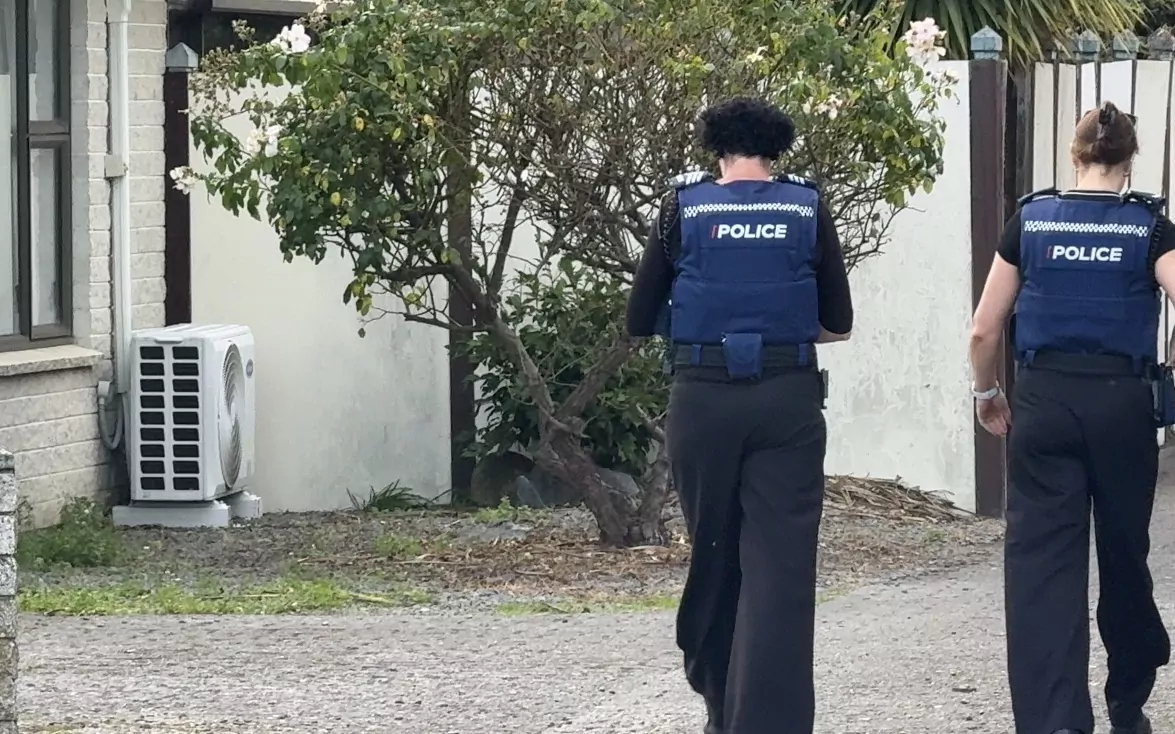
Escaped youth tracked by Eagle helicopter, found hiding in New Brighton
The young person who escaped from a youth justice facility in Rolleston has been located...
Proudly powered by VAST – NZ’s leading digital advertising billboard company. FIND OUT MORE

The young person who escaped from a youth justice facility in Rolleston has been located...

A person has been seriously injured on State Highway 75, Christchurch Akaroa Road. A police...

BodyFix Gym Christchurch in Phillipstown has taken out two major honours at the Exercise New...

Local MPs have found areas of agreement on major Resource Management Act reforms, during a...

A series of public events have been organised across Christchurch and Lyttelton over the coming...
A woman was taken to hospital after a ‘water incident’ at Parakiore Recreation and Sport...
A worker suffered life changing injuries after his hand was pulled into machine rollers at a Christchurch bakery, exposing what WorkSafe described as serious and preventable safety failures.
The incident happened at French Bakery in April 2023 while the worker was cleaning machinery. His index finger was amputated, his thumb was partially amputated, and his middle finger was crushed.
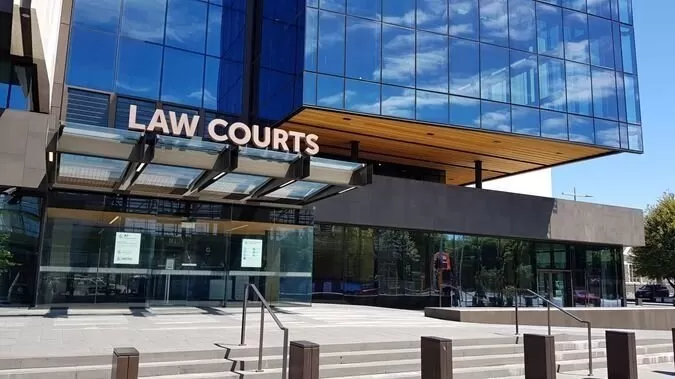
Following an investigation, the company admitted work health and safety breaches and was sentenced in the Christchurch District Court on Tuesday.
In a victim impact statement, the 41 year old father, who has name suppression, said: “This incident did not merely affect my hand. It shattered my livelihood, destabilised my family’s future, and left me with a permanent physical and emotional wound.”
WorkSafe principal inspector Shaun Millar said the case exposed three key failures which remain common across New Zealand workplaces using machinery.
Millar said workers were cleaning and maintaining equipment without any lockout method to prevent machines being turned on while exposed to moving parts.
“Lockout or tagout is not optional. It is a fundamental safety control,” Millar said.
“One worker turned a machine on while another worker had his hand inside it. That is the nightmare scenario proper lockout procedures are designed to prevent.”
The investigation also found French Bakery’s risk assessments failed to identify the crushing hazard posed by rotating parts inside the machine.
“A tick box risk assessment is worse than useless because it creates a false sense of security,” Millar said. “You need to systematically identify every way a worker could be harmed, including during cleaning, maintenance and repairs, not just during normal operation.”
WorkSafe also identified gaps in training and supervision. Despite extensive documentation, workers said they had not seen lockout tags used, did not know where equipment was stored, and had not received essential training.
“This was not a freak accident. This was entirely preventable,” Millar said. “Every business with machinery needs to ask themselves could this happen here. If you cannot confidently answer no, you have work to do. The solutions are not complicated or expensive. The cost of not doing it is measured in workers’ lives and livelihoods.”
French Bakery was fined $200000 and ordered to pay reparations of $45500.
WorkSafe said manufacturing remained one of New Zealand’s most dangerous sectors and continued to be a strategic enforcement focus.