Escaped youth tracked by Eagle helicopter, found hiding in New Brighton
The young person who escaped from a youth justice facility in Rolleston has been located...


The young person who escaped from a youth justice facility in Rolleston has been located...

A person has been seriously injured on State Highway 75, Christchurch Akaroa Road. A police...

BodyFix Gym Christchurch in Phillipstown has taken out two major honours at the Exercise New...

Local MPs have found areas of agreement on major Resource Management Act reforms, during a...

A series of public events have been organised across Christchurch and Lyttelton over the coming...

A woman was taken to hospital after a ‘water incident’ at Parakiore Recreation and Sport...


The Opportunity Party has scrubbed the age of 25 from a policy proposing a major expansion of New Zealand’s youth justice system.
An archived version of the party’s “Smart on Crime” policy, captured on March 5, explicitly promised to “raise the age of the youth court jurisdiction to 25, in line with developmental science”.
The policy now promises only to “raise the age of the youth court jurisdiction, in line with developmental science”. The words “to 25” are gone, but the commitment to raise the age remains.
Asked in an interview this week where that limit should be set, party leader Qiulae Wong was unable to give a figure.
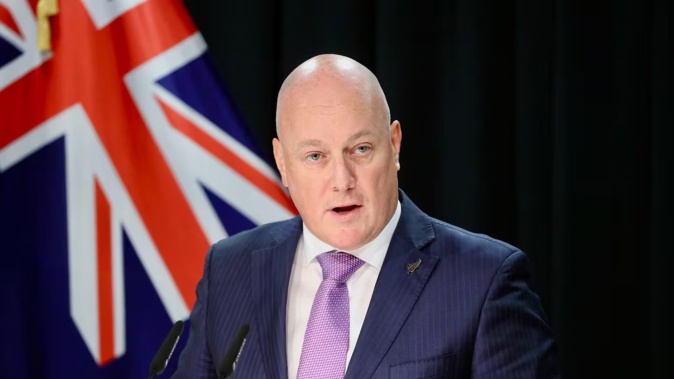
The change follows scrutiny from National campaign chairman Simeon Brown, who highlighted the policy while rejecting suggestions that Opportunity was a centrist party.
“They want to lift the age of criminal responsibility to the age of 25. They are very weak when it comes to law and order. That is a radical policy, and that is not something the National Party supports,” Brown said.
His description is not technically the same as the wording Opportunity previously published. The party proposed raising the upper age of Youth Court jurisdiction, rather than making people younger than 25 exempt from criminal responsibility.
That distinction means offenders aged between 18 and 24 could still be arrested, prosecuted and held accountable. The proposal would allow them to be dealt with through the youth justice system rather than automatically entering the adult courts.
It remains a substantial change from the current system.
Youth Court jurisdiction was extended in 2019 to include most 17-year-olds up until their 18th birthday. Murder and manslaughter are excluded, while some other serious cases can be transferred into the adult jurisdiction.
Opportunity’s deleted wording did not explain whether its proposed extension to 25 would apply to every offence, whether serious and violent crimes would be excluded, or whether the change would be introduced progressively. Its current policy provides no further detail.
The party says its approach is supported by “developmental science” and forms part of a justice system focused on reducing reoffending rather than simply punishing offenders.
The Ministry of Justice operates a Young Adult List for defendants aged between 18 and 25 in several District Courts. It adapts court processes and connects defendants with support intended to encourage rehabilitation and reduce reoffending.
Those defendants remain in the adult jurisdiction. Opportunity’s archived policy went considerably further by proposing that Youth Court jurisdiction itself be extended to 25.
Archived copies show the explicit age was on the party’s website in March. By July 28, it had disappeared.
The policy has not been withdrawn, and the party has not publicly replaced 25 with another proposed age.
Opportunity did not respond to two requests for an interview about whether 25 was still its policy, why the age had been removed from its website, or when the wording was changed.
For now, Opportunity is asking voters to support an increase in the Youth Court age without telling them how far that increase would go.