Escaped youth tracked by Eagle helicopter, found hiding in New Brighton
The young person who escaped from a youth justice facility in Rolleston has been located...


The young person who escaped from a youth justice facility in Rolleston has been located...

A person has been seriously injured on State Highway 75, Christchurch Akaroa Road. A police...

BodyFix Gym Christchurch in Phillipstown has taken out two major honours at the Exercise New...

Local MPs have found areas of agreement on major Resource Management Act reforms, during a...

A series of public events have been organised across Christchurch and Lyttelton over the coming...

A woman was taken to hospital after a ‘water incident’ at Parakiore Recreation and Sport...

Two phases of investigation, 1800 pages of reporting and submissions from more than 44,000 New Zealanders have produced a single blunt conclusion. The country’s COVID-19 response saved lives at the start and then lost its way.
The Government today released its formal response to the Royal Commission of Inquiry into COVID-19 Lessons Learned, accepting all 63 of the Inquiry’s recommendations in some form. Twenty one have been accepted in full, 36 in principle and the remaining six partially.
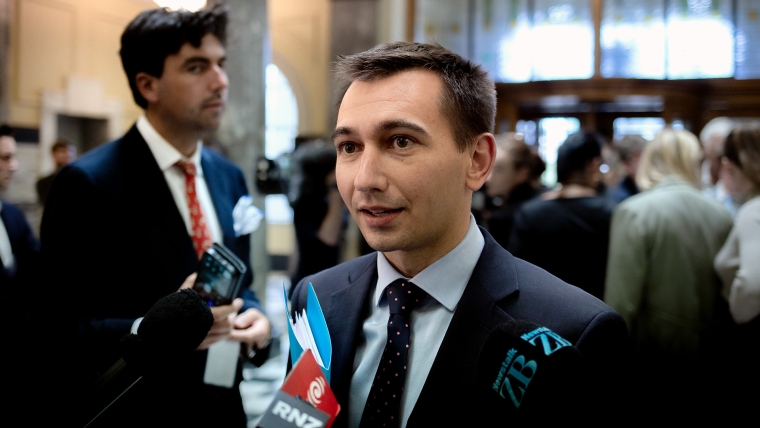
Health Minister Simeon Brown framed the release as an accounting exercise as much as a policy one.
“New Zealanders placed enormous trust in their government and made real sacrifices to protect one another. They deserve a clear account of what happened, and this response is about learning from it,” Brown said.
The Commission was established in December 2022 and ran in two phases, each with its own terms of reference. Phase One, published in November 2024, set out six lessons and 39 recommendations covering border controls, vaccination, lockdowns, essential services and economic support. Phase Two, published in March 2026, examined decisions taken between February 2021 and October 2022 and added four lessons and 24 recommendations.
The Inquiry delivered its final reports to the Governor-General on 26 February 2026. They were tabled in Parliament on 10 March.
Its findings on the later stages of the response are the sharpest. Restrictions extended beyond what public health advice recommended. Auckland was kept in lockdown and separated from the rest of the country for longer than officials advised was necessary. The wider costs to businesses, education, mental wellbeing and social cohesion were not consistently weighed against the health objectives.
The Government’s response document accepts those findings and the lasting consequences that followed.
The economic findings carry the largest price tag.
Treasury advised from the outset that emergency support should be timely, temporary and targeted. The Inquiry found much of what followed failed those tests. Around half of the $60 billion COVID-19 Response and Recovery Fund was spent across more than 800 programmes that were not directly related to the pandemic.
That spending, the response document states, added to the debt New Zealand now carries and to cost of living pressures still being felt. It also reduced the country’s capacity to absorb the next shock.
Brown was direct about where he lays responsibility.
“Having learnt from the previous Labour Government’s mistakes, we are restoring fiscal discipline and making sure that when support is needed it reaches those who need it most, rather than spraying tens of billions of dollars across hundreds of programmes with little to show for it,” he said.
The response commits Treasury to clarifying the respective roles of fiscal and monetary policy in a severe downturn, publishing analysis on debt buffers, and completing analysis of the tools available to respond to shocks. An independent review of monetary policy decision-making during the pandemic is already underway and is due to report in August 2026.
The most concrete new obligation concerns transparency.
Cabinet has agreed that in a future pandemic, key advice behind key decisions affecting people’s rights will be proactively released within a maximum of five working days of the decision being taken, subject to existing considerations under the Official Information Act 1982.
The Public Service Commission and the Ministry of Justice will develop a Cabinet Office Circular setting out how the requirement applies across government. That work is due by 30 September 2026.
The Inquiry found that during COVID-19, major decisions limiting people’s rights were sometimes taken without the supporting advice being made public, and in some cases ran counter to the public health advice of the day. New Zealanders were often unable to see the basis for decisions that significantly affected their lives and freedoms.
One of the Inquiry’s findings is contested by officials.
The Commission found Ministers were given a briefing in December 2021, not considered until January 2022, stating that the COVID-19 Vaccine Technical Advisory Group had raised concerns about vaccine mandates requiring those under 18 to be fully vaccinated. It further found that more fulsome advice was not provided to Ministers.
The Ministry of Health has since advised that this finding is incorrect. Fuller advice on the advisory group’s position regarding two dose mandates for those aged 12 to 17 was referenced in a Cabinet paper in March 2022.
In March, Brown wrote to the Director-General of Health seeking the proactive release of all advice from the advisory group. That advice has now been published.
The Ministry has also committed to ensuring Ministers formally acknowledge receipt of clinical advice, so there is a clear record of when it was received and considered.
The Inquiry recommended New Zealand develop standing primary legislation for pandemics, passed through ordinary transparent processes rather than rushed through under urgency during a crisis.
The Government has accepted the intent but not the mechanism. Rather than a dedicated pandemic act, the Ministry of Health will review the Health Act 1956 in its entirety, with the Epidemic Preparedness Act 2006 reviewed alongside it as a single programme.
The Ministry’s position is that existing powers under section 70 of the Health Act do not cover the full range of measures a future response might need, and allow substantial rights limiting measures to be exercised by non elected officials without ministerial oversight.
The review is the largest single commitment in the response. It has not yet started and is scheduled for the 2028 financial year or later.
The 63 recommendations have been grouped into seven action areas covering economic and fiscal resilience, communication and public trust, governance and strategic capability, pandemic plans and exercises, legal powers and democratic accountability, health system resilience, and continuity of essential services and social supports.
The Ministry of Health has been assigned as Strategic Coordination Agency for pandemics and other communicable disease outbreaks, and as Lead agency for managing a response. The Department of the Prime Minister and Cabinet retains stewardship of the wider National Resilience System.
The Minister of Health will oversee implementation. The Ministry will coordinate delivery across agencies and Crown entities and publish periodic progress updates. Where possible, actions will be completed within 12 months of the response being published, though several major items, including the Health Act review and the 10 year Health Digital Investment Plan, run well beyond that.
“No one can say what the next shock will be, or when it will land,” Brown said. “This Government is committed to building New Zealand’s future, and strengthening our resilience to future shocks is a key part of that.”