Escaped youth tracked by Eagle helicopter, found hiding in New Brighton
The young person who escaped from a youth justice facility in Rolleston has been located...
Proudly powered by VAST – NZ’s leading digital advertising billboard company. FIND OUT MORE

The young person who escaped from a youth justice facility in Rolleston has been located...
A person has been seriously injured on State Highway 75, Christchurch Akaroa Road. A police...

BodyFix Gym Christchurch in Phillipstown has taken out two major honours at the Exercise New...
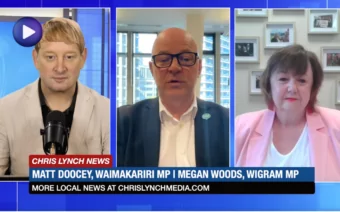
Local MPs have found areas of agreement on major Resource Management Act reforms, during a...
A series of public events have been organised across Christchurch and Lyttelton over the coming...

A woman was taken to hospital after a ‘water incident’ at Parakiore Recreation and Sport...
A proposal to consult Christchurch residents on further ratepayer funding for the Christchurch Cathedral rebuild has reignited debate, with politicians questioning whether additional public investment is justified.
Christchurch City Council has announced consultation on whether residents would support contributing more funding to help close a $40 million to $45 million gap in the cathedral project.
Minister for the South Island James Meager said the decision on ratepayer funding ultimately rested with Christchurch residents and the council, while the Government remained cautious about further financial support.
“We’ve had relatively regular conversations with the cathedral team about their requests and they’ve got a plan to do a staged reopening which we think is actually not a bad plan,” Meager said.
“Whether the council wants to dip into their pocket to assist with that really is up to them. The Government’s been pretty clear the economic case would need to be strong and would need to justify investment over and above other priorities such as hospitals, schools and police stations.”
List MP for Banks Peninsula Tracey McLellan said consultation was appropriate given the scale of the funding question and uncertainty about public sentiment.
“It’s got to stack up hasn’t it, and when these questions arise there is an obligation to go out to the public and actually ask them what they think and what their priority is,” McLellan said.
She said feedback from residents suggested support for further funding may be limited, though consultation would provide clearer insight into community views.
The discussion also extended to other major projects, including the Canterbury Museum redevelopment, which is seeking additional funding amid rising costs.
Meager said while both projects held cultural significance, the museum potentially delivered broader regional benefits.
“If you had to pick between one or the other I think you would look at the museum as having probably more of a wider regional benefit. It does contain and carry a lot of our region’s history,” he said.
McLellan agreed the museum presented a strong case but said both projects needed to demonstrate value against competing pressures such as health, housing and the cost of living.
“It’s a lot of money and again it’s one of those it’s got to stack up. There are so many major cost pressures across health, housing and just with the high cost of living at the moment,” she said.