Escaped youth tracked by Eagle helicopter, found hiding in New Brighton
The young person who escaped from a youth justice facility in Rolleston has been located...


The young person who escaped from a youth justice facility in Rolleston has been located...

A person has been seriously injured on State Highway 75, Christchurch Akaroa Road. A police...

BodyFix Gym Christchurch in Phillipstown has taken out two major honours at the Exercise New...

Local MPs have found areas of agreement on major Resource Management Act reforms, during a...

A series of public events have been organised across Christchurch and Lyttelton over the coming...

A woman was taken to hospital after a ‘water incident’ at Parakiore Recreation and Sport...

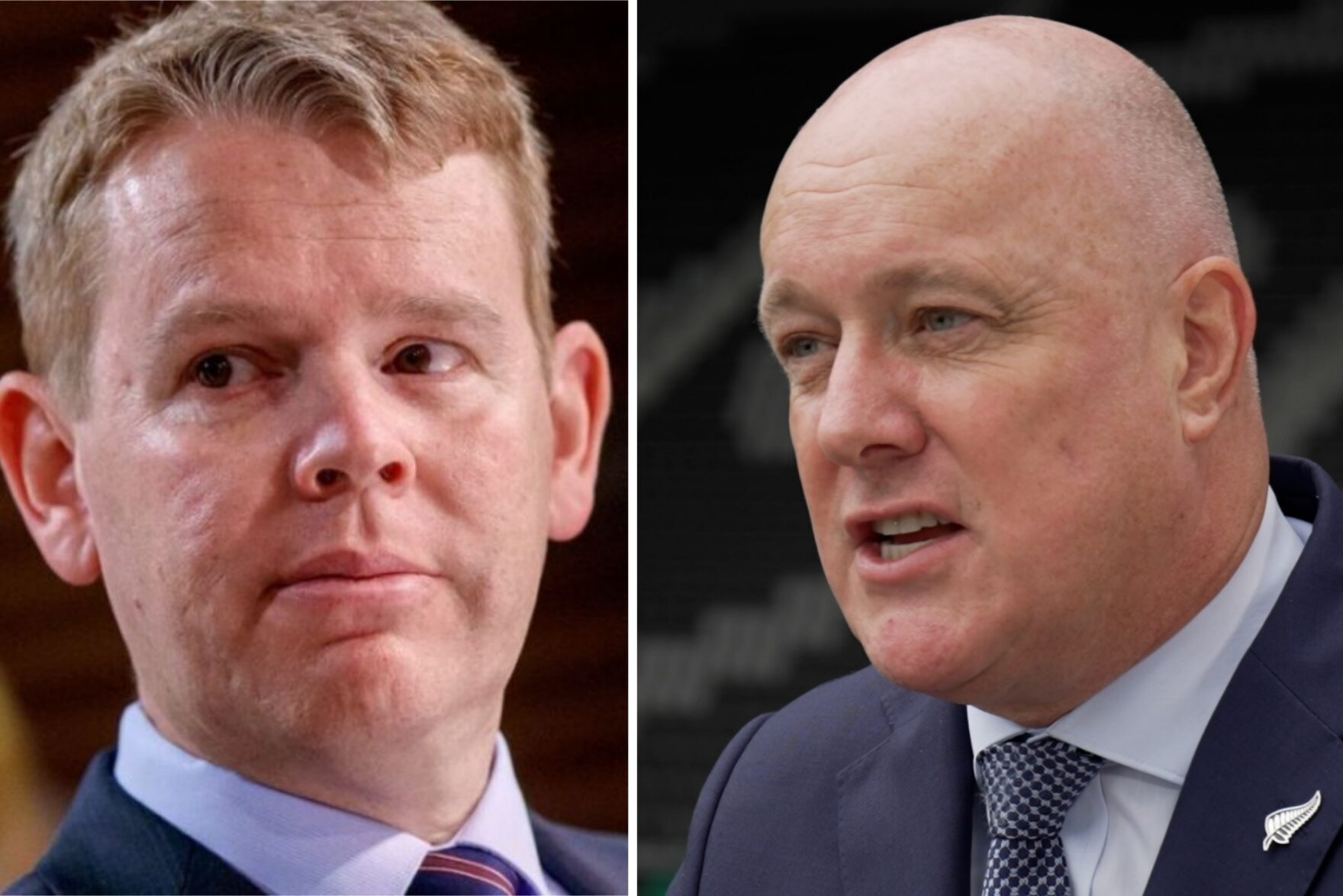
OPINION: If anyone tuned into the TVNZ leaders’ debate hoping for a knockout blow, they would have gone to bed disappointed.
There were no great surprises from either Chris.
Christopher Luxon and Chris Hipkins both looked nervous during the opening stages. Neither seemed particularly comfortable and both appeared conscious of the consequences of saying the wrong thing.
Then something changed. As the debate progressed, both relaxed and gradually became the politicians we have become accustomed to watching. Hipkins, unsurprisingly, had more fire in his belly.
He is the more seasoned political performer and you could almost see him restraining himself at times from becoming too wound up. There is a natural combativeness to Hipkins that works well in a debate, particularly when he can turn an answer into an attack.
Luxon is different. He is more measured and managerial, but that can also make him look cautious when the moment demands some political aggression.
There were several opportunities where I thought Luxon could have gone much harder. Co governance was one of them.
Hipkins gave an answer that deserved more scrutiny, particularly after the debate over co governance and public services that consumed so much political oxygen during Labour’s previous administration.
Rather than simply revisiting the slogans surrounding the issue, I wanted to hear Hipkins explain what Labour had learned. Does he accept that many New Zealanders became uncomfortable with the increasing use of ethnicity in decisions about how public services were structured and delivered?
And if Labour returns to government, what exactly would it do differently? Those questions were never really prosecuted.
Luxon also had an obvious opening on health. Labour embarked on an enormous restructuring of the health system. Luxon could have asked Hipkins to explain, in practical terms, what patients received from it.
Forget the bureaucracy, structures and political language. Did someone waiting for surgery get treated faster? Did someone sitting in an emergency department get seen sooner? Did access to a GP become easier? That would have been a much more useful argument.
One of the more peculiar exchanges came when both leaders were asked what made them proud of New Zealand. Luxon gave an example involving Kiwis helping Ukrainian soldiers. Hipkins talked about the way New Zealanders came together following the Christchurch mosque attacks.
Without diminishing for a moment the horror of what happened in Christchurch or the extraordinary compassion shown afterwards, I found both answers a little off.
Surely there are uplifting examples from our recent history that celebrate what New Zealanders have achieved. Scientific breakthroughs, sporting achievements, businesses succeeding internationally, communities rebuilding. I don’t know, maybe I’ll go back and have another watch.
But perhaps the most revealing difference between the two leaders came when they talked about the cost of living.
This remains one of Luxon’s biggest political problems. He is successful and wealthy. There is absolutely nothing wrong with that. We should hardly criticise somebody for succeeding. But politics is not always fair.
When you are asking somebody struggling with their grocery bill to believe you understand their life, personal experience and relatability matter. Hipkins instinctively understands this.
His answer about watching people reach the supermarket checkout and put items back because they could not afford them was one of his strongest moments of the debate.
Whether that line was carefully prepared or completely spontaneous almost does not matter. It felt genuine. More importantly, it described something thousands of New Zealanders will recognise. People see it. Some live it.
That is powerful political communication because it turns an economic argument into something human.
Luxon has always struggled more with that. His instinct is to explain the economy like a chief executive explaining the quarterly numbers. There is logic behind what he says, but politics requires something more than competence. People need to believe you understand what their lives actually feel like.
That remains a vulnerability for him. Yet for all the exchanges, interruptions and rehearsed lines, I cannot imagine many New Zealanders changing their vote because of this debate. One News tried to convince itself it brought along a gaggle of undecided voters, which was about as sincere as the reporter’s enthusiasm for National.
If anything, it reinforced just how far apart the two major parties now are philosophically. Labour wants government to do more, spend more and provide more.
National wants greater restraint and a larger role for economic growth, personal responsibility and private enterprise.
The bigger problem for both parties may be that plenty of voters seem thoroughly bored by the choice. So where do they go? The Greens increasingly appear more interested in social media hits than persuading anyone beyond the people who already agree with them.
Then there is The Opportunities Party. At times it appears to be charging down LinkedIn’s well worn path of capturing guilt ridden middle class professionals seeking moral validation among the suffocating ranks of “change makers” and “thought leaders”.
Dear God.
There is clearly dissatisfaction with the major parties.
But being dissatisfied with National and Labour does not automatically make the alternatives more convincing. And perhaps that was the real message from tonight.
Hipkins was the better natural politician. Luxon looked like the more restrained manager. Both had good moments. Both missed opportunities.
Neither delivered the moment people will still be talking about in a week. There was no knockout blow.
And I suspect most people finished the debate feeling exactly the same way about both men as they did when it started… it was all just a bit dull.