Escaped youth tracked by Eagle helicopter, found hiding in New Brighton
The young person who escaped from a youth justice facility in Rolleston has been located...


The young person who escaped from a youth justice facility in Rolleston has been located...

A person has been seriously injured on State Highway 75, Christchurch Akaroa Road. A police...

BodyFix Gym Christchurch in Phillipstown has taken out two major honours at the Exercise New...

Local MPs have found areas of agreement on major Resource Management Act reforms, during a...

A series of public events have been organised across Christchurch and Lyttelton over the coming...

A woman was taken to hospital after a ‘water incident’ at Parakiore Recreation and Sport...

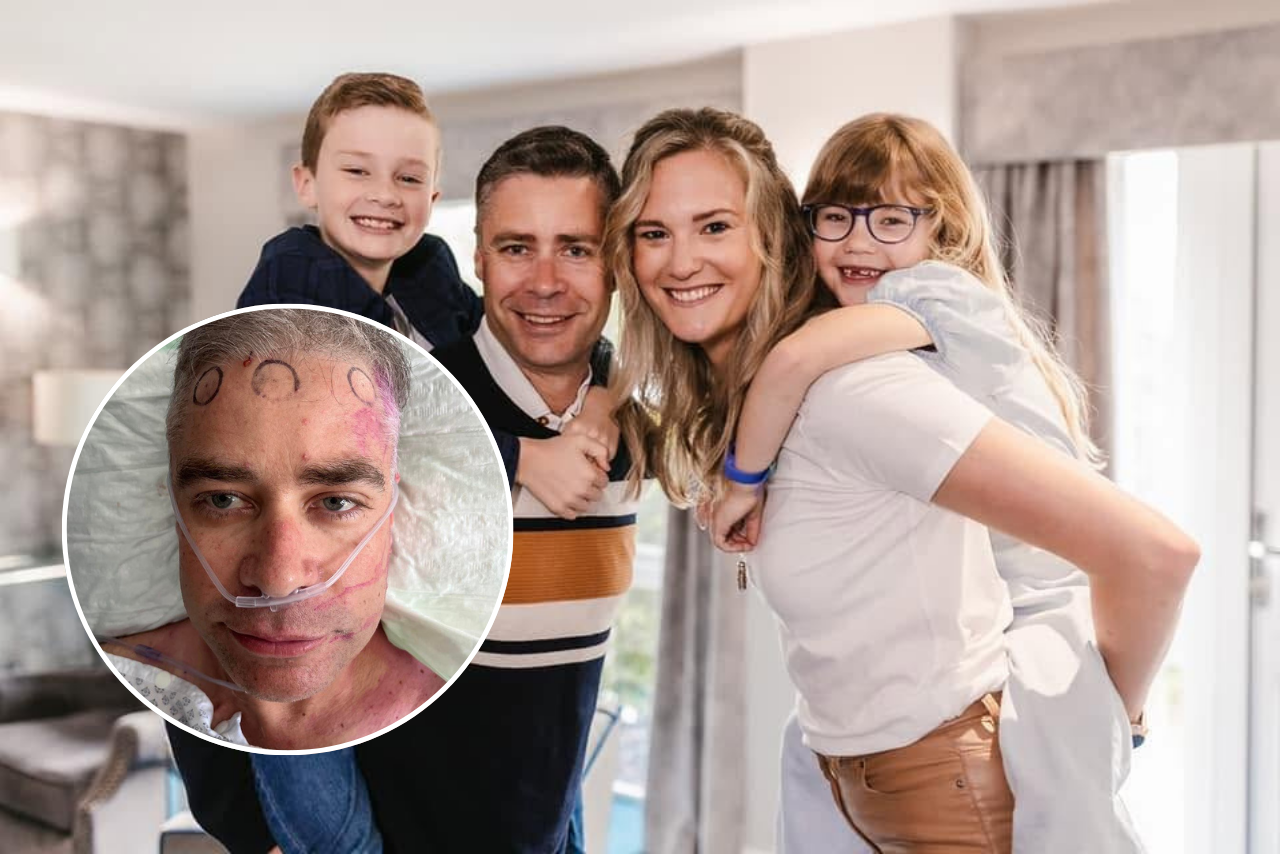
Mike Hrynkewycz thought he had pulled something painting the house. A week later, scans found tumours in his brain, lungs and his bowel.
The Christchurch father of two, who is in his 40s, has since had two brain surgeries, whole brain radiation, months of chemotherapy and a stoma fitted. His next treatment will cost his family about $17,000 a month.
That drug is funded in New Zealand hospitals. Mike cannot get it funded, because his cancer began in his bowel and not his breast.
His wife Harriet has started a Givealittle page to keep him in treatment, and the family is now looking at options overseas.
The back pain had not gone away. On the evening of 11 September 2025, Mike had a focal seizure down his right side and lost all sensation in his leg. Harriet was out. His mother was at the house and called an ambulance.
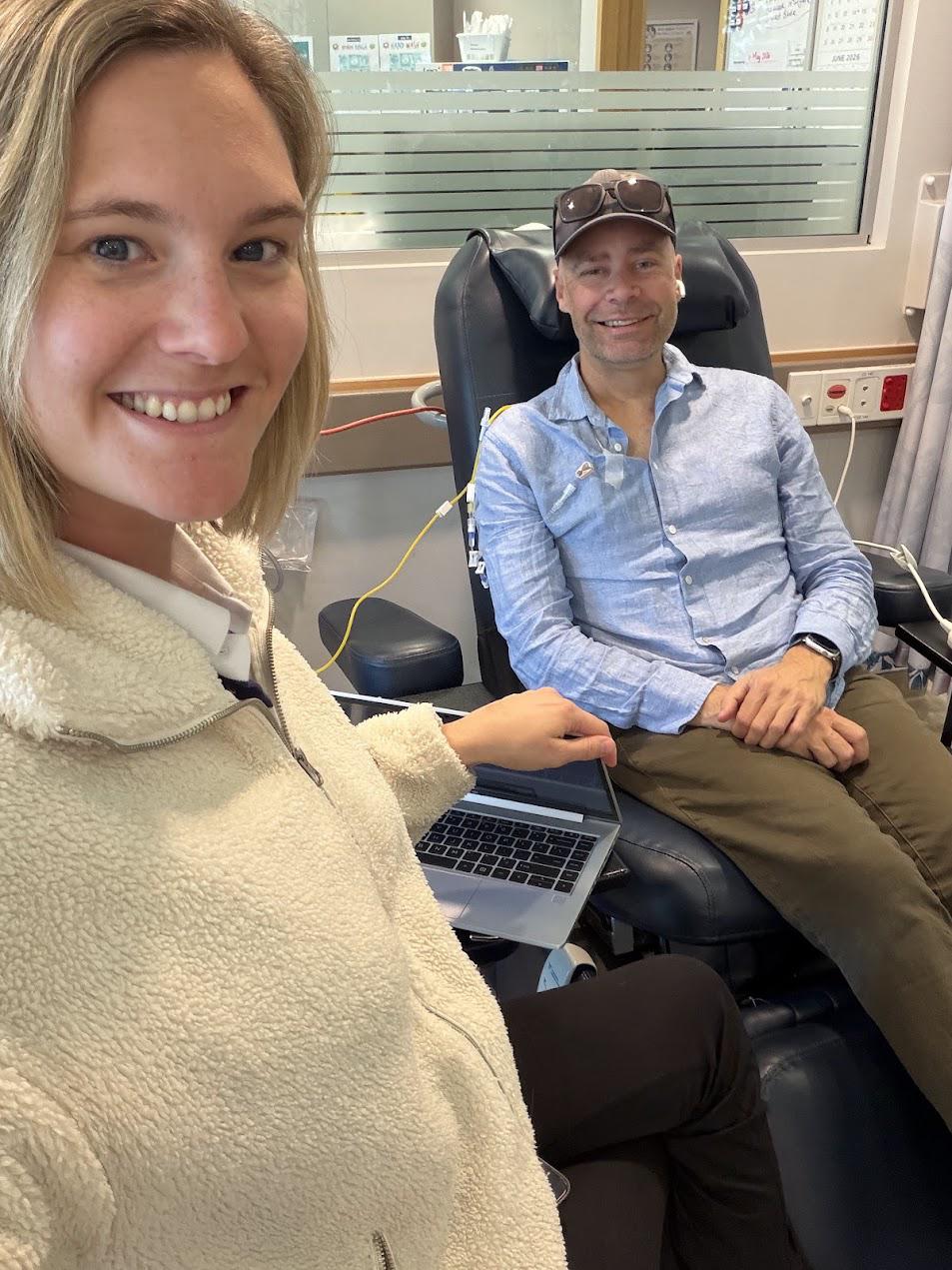
Photo: Harriet Hrynkewycz
Even at the hospital, the family expected to be told he had a slipped or bulging disc. Staff initially indicated no scans would happen that night.
A senior clinical nurse looked at Mike and changed the course of the night.
“It’s not your back. I need to go get my supervisor, because I don’t think it’s your back,” Harriet recalled him saying.
A head CT was ordered, and a full body scan followed. Nobody used the word cancer that day, Harriet said. The questions the family were being asked told them enough.
“What insurances do you have?”
The family had private health insurance, and Harriet said that from the moment that was known, they felt pressure to move out of the public system. An urgent colonoscopy they were promised in hospital never happened.
Harriet used her own contacts, including two doctors she knew, to get Mike in front of a colon specialist privately. That colonoscopy, about two weeks later, confirmed the colon as the primary site.
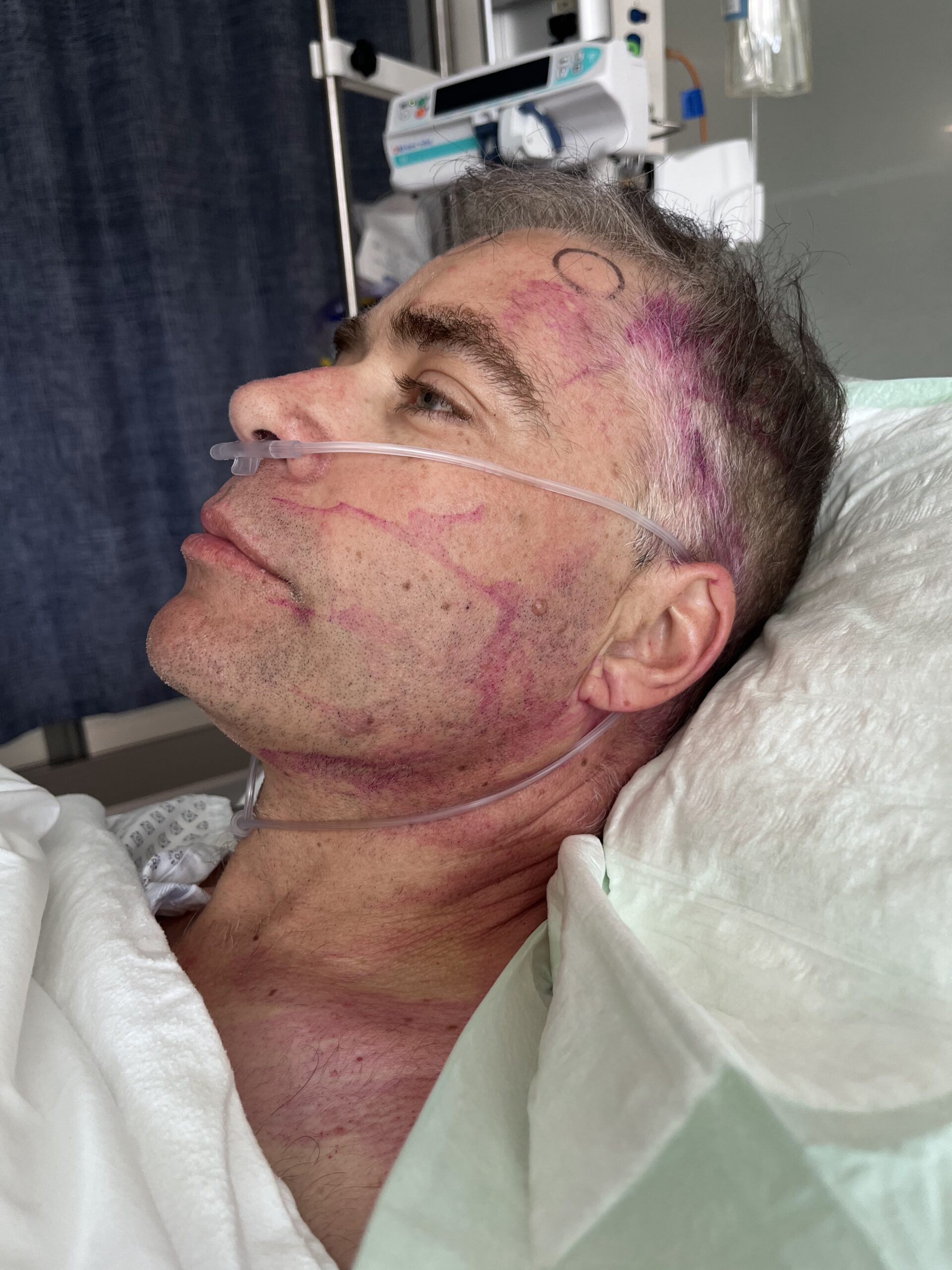
Photo: Harriet Hrynkewycz
By the time the family’s first appointment in the public system was due, Mike had already had three courses of cetuximab and FOLFIRI chemotherapy, and had already had a brain tumour removed privately after it doubled in size.
“Waiting could have been detrimental, and a very different story,” Harriet said. She was careful to separate the system from the people working in it. The oncologists at St George’s Cancer Care work across public and private, and she said the clinicians and nurses had been extraordinary throughout.
The first brain tumour was removed in November. It was five centimetres, and sat close to the area controlling movement on Mike’s right side. He still has difficulty walking and has lost dexterity in his hand.
Every surgery and every course of radiation forces a pause in treatment, because starting again too early risks tissue necrosis.
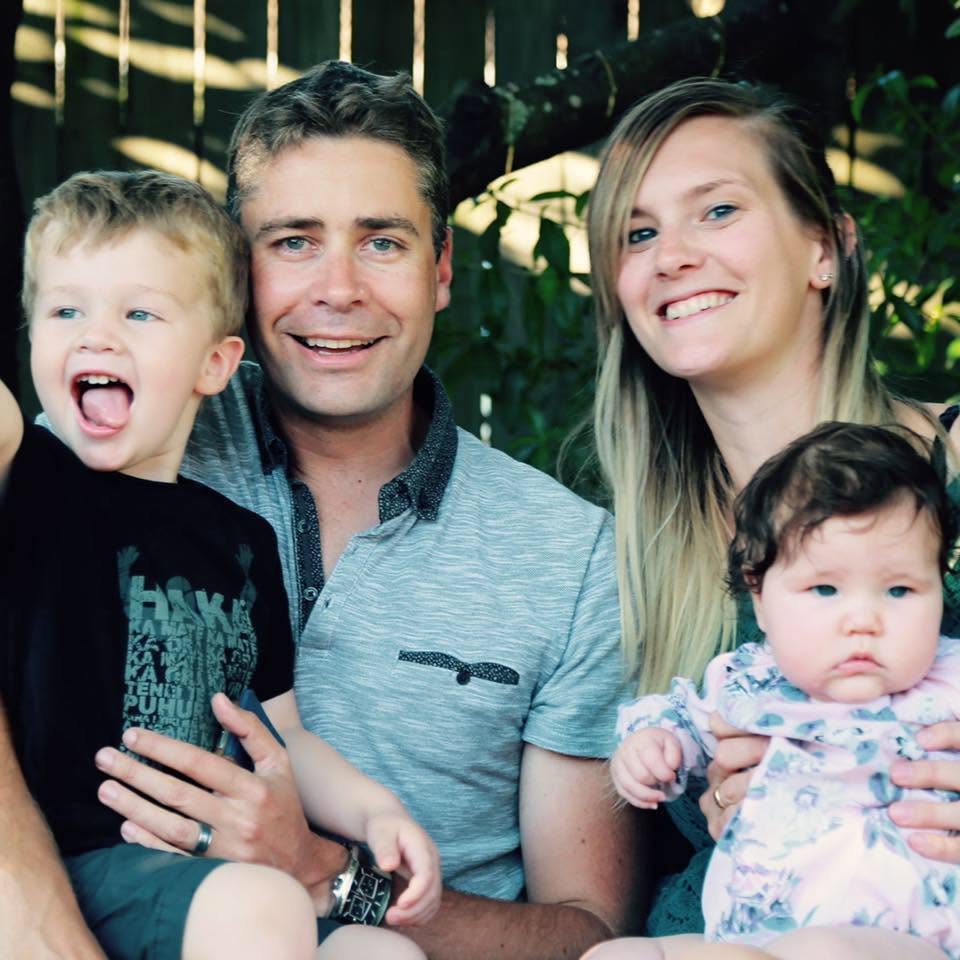
Photo: Harriet Hrynkewycz
Mike restarted treatment in January. The family had already been told there might be a second growth in his cerebellum, the part of the brain governing balance and speech, measuring a millimetre or two.
In early February he could not get off the couch. “It was like the worst case of vertigo you can ever have, where there’s no reprieve,” Harriet said.
The second tumour had grown to around 27 millimetres and was pressing hard enough to need removing. After that surgery Mike had whole brain radiation, because more growths were appearing at the front of his brain.
It was the way the disease was behaving, rather than any expectation, that led doctors to run further blood work. Those tests found Mike is HER2 positive.
HER2 is far better understood in breast cancer than in bowel cancer, but it opened a line of treatment for Mike that conventional bowel cancer drugs could not, because HER2 targeted medicines can cross into the central nervous system where his tumours are.
Roughly one to three percent of colon cancer patients develop brain metastases, Harriet said, and only about five percent of those are HER2 positive.
Mike has since had five rounds of tucatinib and trastuzumab, at about $12,000 every three weeks, which works out at roughly $17,000 a month. Tucatinib is not yet approved by Medsafe for use in New Zealand.
His next treatment is trastuzumab deruxtecan, sold as Enhertu and also known as T-DXd. It carries the same price tag.
Pharmac has funded Enhertu since 1 January 2025. Its criteria restrict it to HER2 positive metastatic breast cancer, and require prior trastuzumab and chemotherapy. There is no criterion covering bowel cancer or any other solid tumour. Pharmac estimated about 120 people would receive it in the first year.
Elsewhere, the same drug is approved for tumours like Mike’s. The United States Food and Drug Administration granted accelerated approval in April 2024 for HER2 positive solid tumours regardless of where the cancer started, the first approval of its kind. Japan followed in March this year. Both decisions drew on a trial in HER2 positive bowel cancer patients, which found almost 47 percent responded to the drug.
The family sought individual funding from Pharmac for the tucatinib and trastuzumab, under the Named Patient Pharmaceutical Assessment process.
“We were told as we applied for assistance that no one really ever gets told yes,” Harriet said.
Mike has spoken to clinicians at UCLA in the United States, and the family consulted an Australian specialist about laser surgery, which is not currently an option because Mike has multiple lesions in his brain.
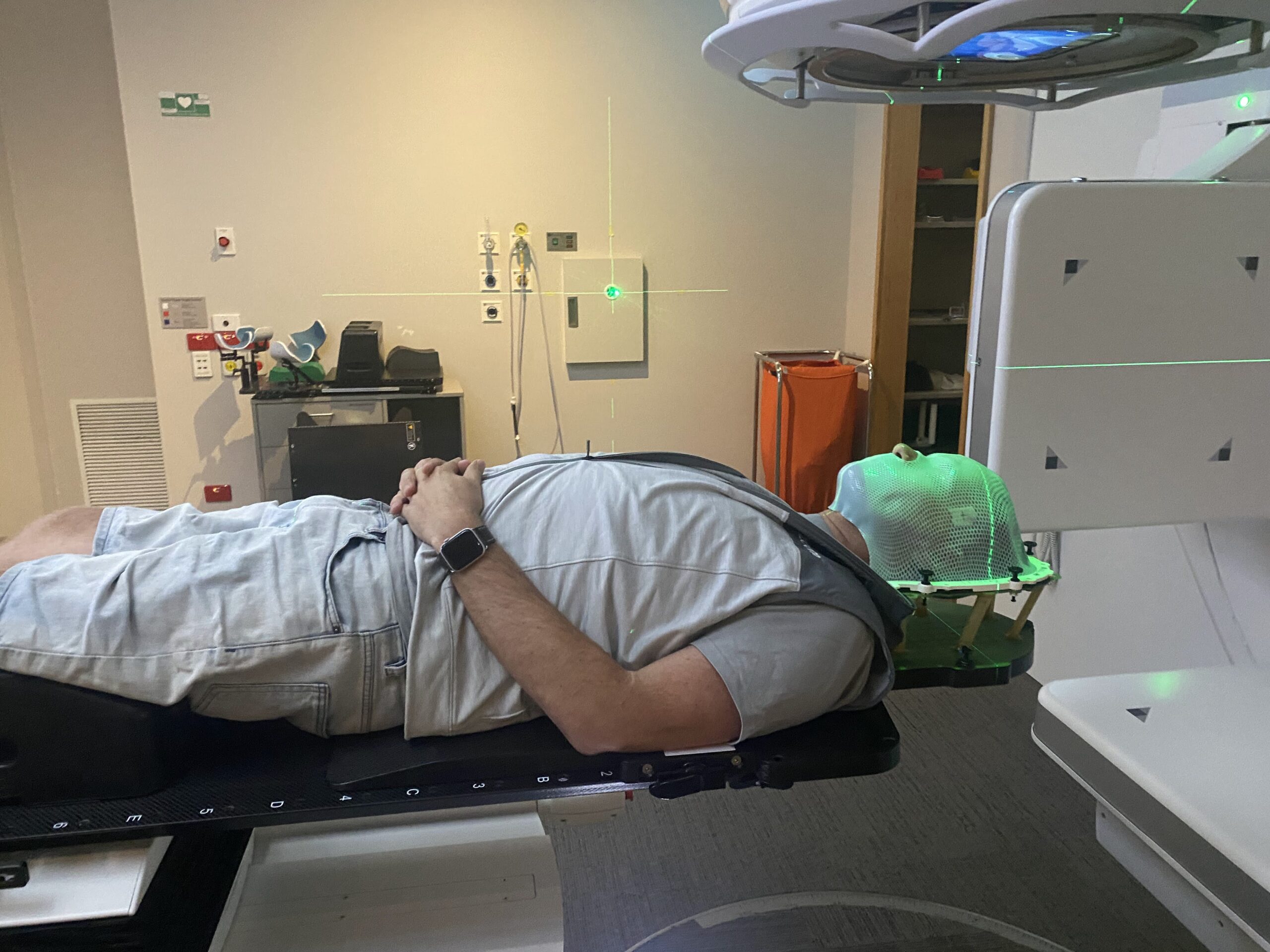
Photo: Harriet Hrynkewycz
“Everybody’s telling us this is the way forward, and everyone’s excited,” Harriet said. “We’re sitting there going, yeah, it’s great, it gives us options, but at what cost to us? If we don’t have that money, what does that mean for Mike?”
Before his diagnosis Mike was a technical sales architect. He had worked at Zoom and had been in a new role at a company called Liquid Voice for six or seven weeks when he became unwell. The job involved presenting to clients and travelling around New Zealand and overseas.
He has not worked since. He cannot walk easily, and typing is difficult because of the loss of dexterity in his hand.
The couple’s children, Patrick and Elaina, are 12 and 9.
“Kids are really resilient, until they have a moment of un-resilience,” Harriet said. “When overnight your dad loses the ability to do everything that he was able to do with them before, they’ve experiencing their own mourning that’s happening, from the life that they had.”
Harriet said no one had been able to tell the family why Mike got bowel cancer, and that microplastics had been raised once, early on.
“You’ve got to question why this is happening to people younger and younger.”
Her sister-in-law has written to Associate Health Minister David Seymour, who is responsible for Pharmac.
“What voice can we give so that people actually can get funding for unusual situations?” Harriet said. “There’ll be other people in the future that will have a similar situation. How can we be the loudest voice to help advocate for other people as well, moving forward?”
“Are we going to find a cure? Realistically, probably no. Maybe one day there’ll be one, but not for us.”
In June, Mike was admitted to hospital with complications from a medication, including psychosis. A doctor told the couple that Mike was his own biggest advocate.
“Everyone talks about it being a journey, and all of the annoying words that you use when you talk about cancer,” Harriet said. “But I will say, it’s been more of a roller coaster than a journey. And I love roller coasters. But I definitely would like to get off this one.”
In a statement, Pharmac chief medical officer David Hughes said the agency understood how hard it was living with a condition that required unfunded medicines, and that some families had to make difficult decisions about seeking treatment overseas.
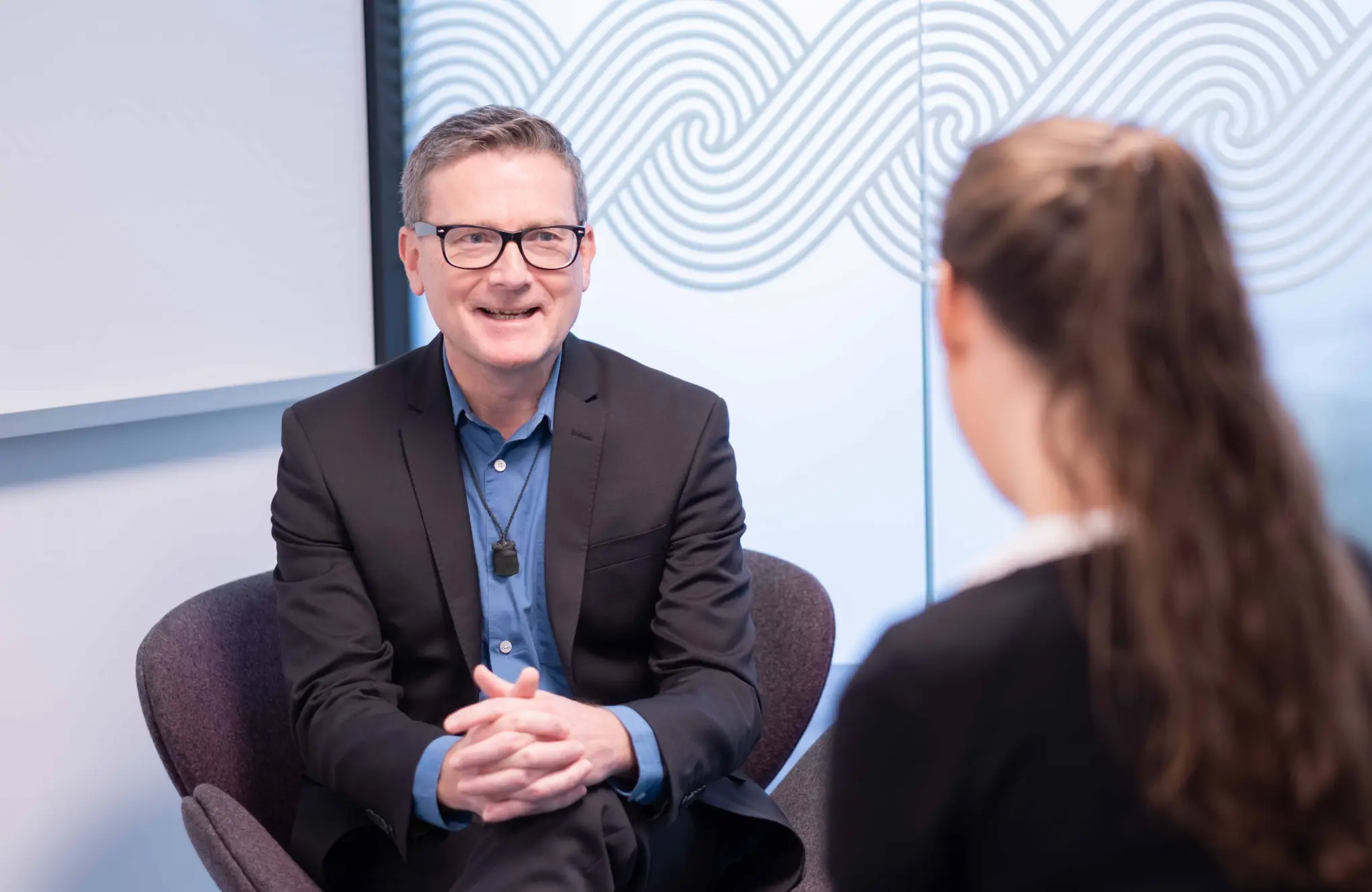
Pharmac chief medical officer David Hughes
Pharmac assessed medicines for funding based on applications from pharmaceutical companies, clinicians or members of the public, and those applications focused on a specific condition because a medicine’s effectiveness could differ depending on what it was used for, Hughes said.
“Pharmac has not received an application to fund trastuzumab deruxtecan for HER2 positive bowel cancer, nor have we received an application to fund trastuzumab deruxtecan for all HER2 positive cancers, regardless of where the cancer occurs. We would welcome an application to consider these medicines for potential funding.”
Pharmac was considering two further applications for the drug, both for breast cancer with low HER2 expression and for advanced gastric cancer, he said.
“Pharmac can consider applications for medicines regardless of where the cancer is located.”