Escaped youth tracked by Eagle helicopter, found hiding in New Brighton
The young person who escaped from a youth justice facility in Rolleston has been located...


The young person who escaped from a youth justice facility in Rolleston has been located...

A person has been seriously injured on State Highway 75, Christchurch Akaroa Road. A police...

BodyFix Gym Christchurch in Phillipstown has taken out two major honours at the Exercise New...

Local MPs have found areas of agreement on major Resource Management Act reforms, during a...

A series of public events have been organised across Christchurch and Lyttelton over the coming...

A woman was taken to hospital after a ‘water incident’ at Parakiore Recreation and Sport...

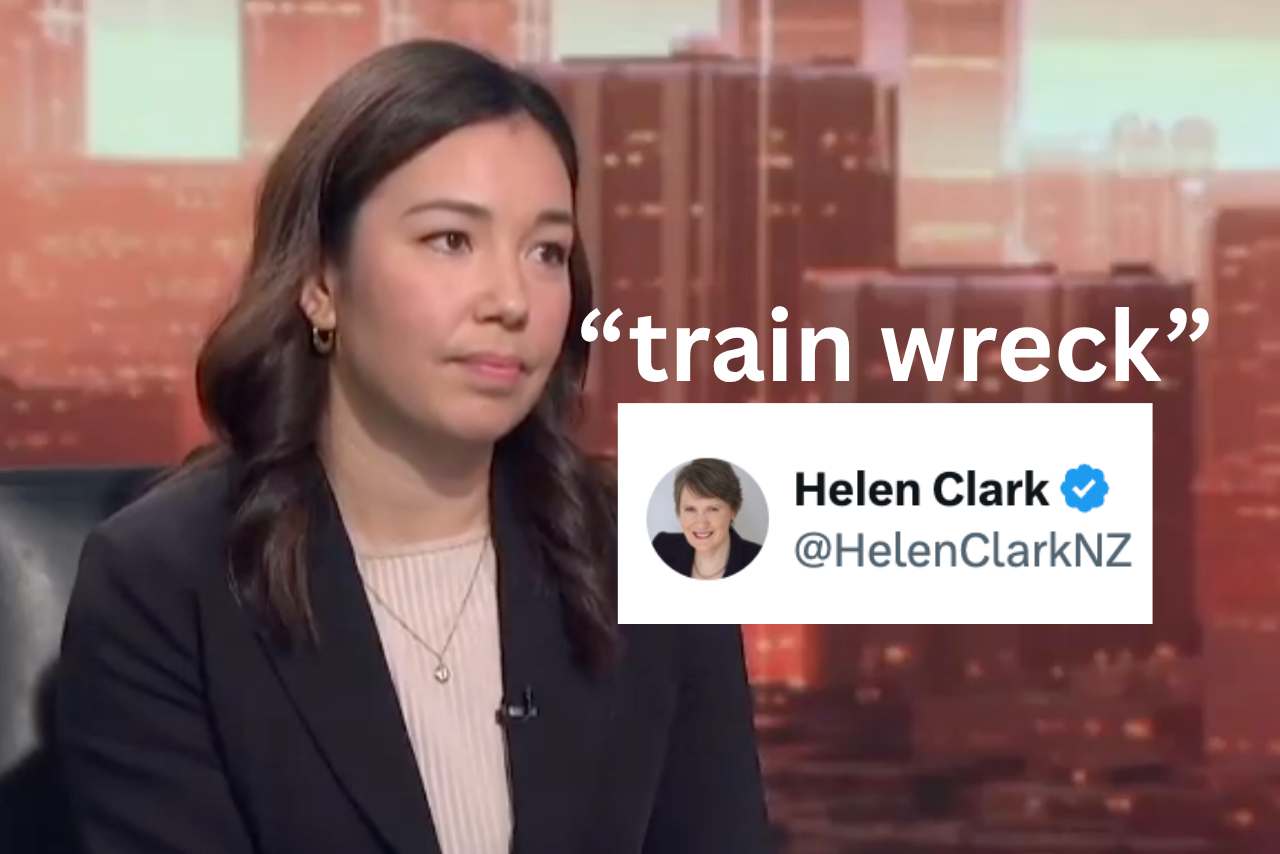
Former New Zealand prime minister Helen Clark has described Opportunity Party leader Qiulae Wong’s Q+A interview as a “train wreck” after she defended accepting donations her party wants banned.
“TOP leader was a train wreck. Simplistic responses trying to defend land tax, higher income tax, & job cuts in public sector. Fantasy posing as policy,” Clark said.
The criticism followed a bruising interview in which Wong conceded the party board, which includes a member linked to more than $221,000 in donations this year, could overrule decisions made by any future elected MPs.
Wong appeared on Q+A to launch a package of policies aimed at cleaning up politics through stricter rules covering donations, lobbying and transparency.
The party wants to prohibit individual donations above $30,000 and ban donations from companies, unions and trusts.
Wong said large donations allowed some parties to buy more advertising and attract greater attention.
“We should be making this a contest of ideas, not who can put the most billboards out there or pay for as many social media ads as possible,” Wong said.
However, Q+A host Jack Tame pointed out Opportunity had accepted six donations above $30,000 this year, worth more than $400,000.
“If big donations are undermining the integrity of our democracy, why are you accepting so many for your campaign?” Tame asked.
Wong said the issue had presented a challenge for the party, but argued Opportunity needed to compete under the current system before it could change the rules.
“We can either tie two hands behind our back and play this game and try to get into Parliament and hold ourselves to a higher moral ground and limit our chances of getting in, or we can play the game with everyone else and then get in there and change the rules as quickly as possible,” Wong said.
While civility was maintained throughout, objectively this Q&A
interview with the TOP leader was a train wreck. Simplistic responses trying to defend land tax, higher income tax, & job cuts in public sector. Fantasy posing as policy. https://t.co/eayFdxIGpX via @YouTube #nzpol pic.twitter.com/fARgjDnOGU— Helen Clark (@HelenClarkNZ) August 16, 2026
The contradiction became more pronounced when the interview turned to Opportunity board member Alan Wilderland.
Electoral Commission records show Wilderland donated $180,000 to the party through three payments made under his own name.
He donated $25,000 on 25 May, $80,000 on 29 June and $75,000 on 30 June.
Alajamber Limited, a company solely owned and directed by Wilderland, donated a further $20,020 on 1 April and $21,140 on 8 July.
The combined donations made by Wilderland and his company totalled $221,160.
Wilderland is listed on the Opportunity Party website as a board member.
The donations were legally declared and there is no suggestion any law was broken. The payments are recorded in the Electoral Commission’s public register.
Tame questioned Wong about the party accepting money through Alajamber while campaigning under the declaration that “votes belong to people, not entities”.
Wong said Wilderland agreed with that principle.
“We are working within the system that exists right now, and we want to change that for the benefit of everybody, including ourselves, after the election,” Wong said.
Tame said some voters could regard the position as sanctimonious, given Opportunity had accepted close to half a million dollars in large donations while arguing big money was damaging politics.
Wong said Opportunity would have less chance of changing the system if it restricted its fundraising and failed to enter Parliament.
The interview then exposed the power Wilderland and other board members could hold over any Opportunity MPs elected in November.
Asked whether there was any scenario in which the board could overrule decisions made by the party caucus, Wong initially denied it was possible.
“No, that’s not possible,” Wong said.
However, rule 11.4 of the party’s constitution states the board may overrule a caucus decision with a 75 percent majority if it considers the decision would clearly prejudice the party charter.
When Tame pressed Wong on whether the board could intervene in that circumstance, she conceded it could.
“Clearly, yes,” Wong said.
The constitution gives the board further control over any future parliamentary caucus.
Any coalition agreement or confidence and supply agreement negotiated by Opportunity MPs must receive the approval of 75 percent of the board before it can take effect.
The board can also appoint or remove the party leader with a 75 percent majority.
Tame asked how that structure supported democratic accountability when board members who were not elected by the public could veto decisions made by MPs, particularly when one member was linked to hundreds of thousands of dollars in donations.
Wong said board members were elected by party members and argued the caucus must make decisions consistent with the party charter.
“If the caucus is not doing that, there does need to be some accountability,” Wong said.
Despite launching the package as fundamental to cleaning up politics, Wong would not confirm it would be a bottom line in any coalition negotiations.
“We will be announcing bottom lines closer to the election,” she said.
Opportunity reached 8 percent in the latest 1News Verian poll, placing it above the 5 percent threshold required to enter Parliament without winning an electorate seat.