Escaped youth tracked by Eagle helicopter, found hiding in New Brighton
The young person who escaped from a youth justice facility in Rolleston has been located...


The young person who escaped from a youth justice facility in Rolleston has been located...

A person has been seriously injured on State Highway 75, Christchurch Akaroa Road. A police...

BodyFix Gym Christchurch in Phillipstown has taken out two major honours at the Exercise New...

Local MPs have found areas of agreement on major Resource Management Act reforms, during a...

A series of public events have been organised across Christchurch and Lyttelton over the coming...

A woman was taken to hospital after a ‘water incident’ at Parakiore Recreation and Sport...
Pharmac is removing ethnicity as a standalone eligibility pathway for three funded type 2 diabetes medicines while widening clinical access for other patients.
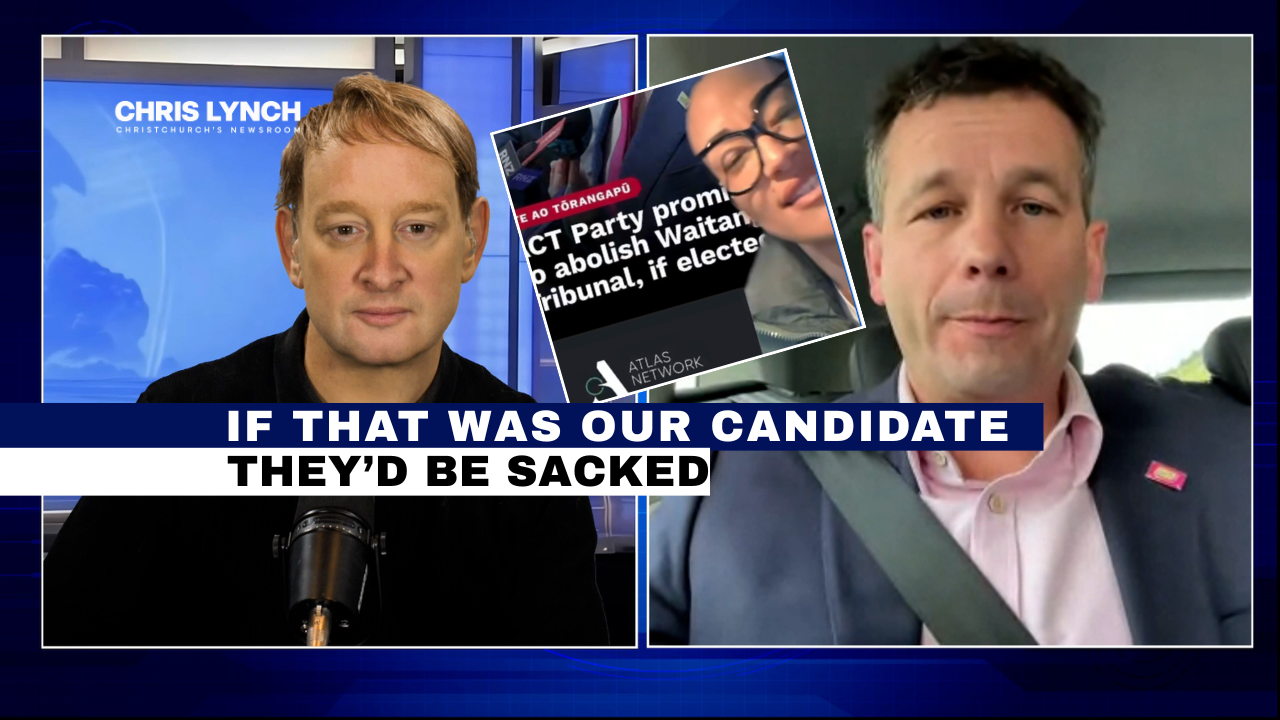
Deputy Prime Minister David Seymour, the minister responsible for Pharmac, outlined the change in an interview with Chris Lynch Media.
The medicines are dulaglutide, liraglutide and empagliflozin.
“At the moment, the criteria say if you are either Māori or Pacific, or if you have a specific diagnosis. So if you’re Māori or Pacific, you just get it. If you’re not Māori or Pacific, you have to get the diagnosis. And there’s people that could benefit from the medicine, but are just short of the diagnosis,” Seymour said.
“They’ve had to sit in the doctor’s office, and the doctor says, yeah, this would be free for you if you were Māori or Pacific, but because you’re not, I can’t give it to you taxpayer funded. You’re going to have to pay $10,000. This is crazy. It’s just outright racism, and we’ve stopped it.”
The new rules take effect on 1 September. They remove ethnicity-based eligibility and lower the clinical threshold at which some patients can qualify for funded treatment.
“The only criteria for Pharmac funding these medicines will be: do you have elevated blood sugar over a sustained period? In which case, you can get the medicine if your doctor thinks you should have it. It will be funded.”
Asked who allowed the criteria in the first place, Seymour said: “Ultimately, the previous government, but it was Pharmac’s previous board and chief executive, and frankly, it was the people that the previous government put on the board and the letters of expectation.”
“Since I’ve been the minister responsible for Pharmac, we’ve got a new board who are focused on being the best health technology assessment agency in the world. That’s what I want them to do. Best in the world, not trying to embed the principles of a treaty.”
“I’ve written them letters publicly saying forget about all that embedding the principles of a treaty. That’s not actually your job. Captain Hobson did not promise medicines. There were no medicines in 1840 that you’d want anyway. The treaty is not Pharmac’s job.” One board member resigned after receiving the letter.
“I said good riddance. I don’t know what happened to that guy, but he’s off. Since then, Pharmac have been changing the way they operate so that they can remove these racist policies. So I’m very proud of that.”
Unemployment at an 11-year high
Unemployment has reached its highest level in nearly 11 years, with 171,000 people out of work. Seymour was asked at what point the Government accepted responsibility rather than continuing to promise that growth and new jobs were coming.
“There’s no question that right now economic conditions are tough, and they’re made tougher by the fact that after making a lot of sacrifices, people still feel like the light’s always far away at the end of the tunnel. That’s the reality. You can’t sugarcoat that.”
“The question is why, and it is in large part due to the inflation, interest rate, recession, unemployment cycle that began back in the early 2020s when we basically borrowed $100 billion, we had official policies of the Reserve Bank printing money.”
“We’ve been trying to put a lid on that for the last five years, and I think we had, but we now face another issue, which is that last year Donald Trump started a trade war that really knocked off the recovery. This year he started an actual war, which has put people’s petrol prices up and diesel, and then put another round of inflation hitting 4.1.”
“I don’t want to sound like we’re just making excuses, but you do actually have to ask why is this happening and whose decisions have caused it?” He said the Government’s contribution had been spending restraint and regulatory reform.
“We’ve done a lot of what you might call microeconomic reform: the Holidays Act, the RMA, anti-money-laundering, just red-tape cutting everywhere. Try and make it easier for people to do business.”
“A lot of those things haven’t come into effect yet. The Holidays Act passed last week. The RMA will pass next month. But in terms of what has this Government been doing, controlling spending, deregulating, that’s making things better, but we’ve still got massive hangovers from things that have come from either the past or overseas.”
Cancelled projects and the credit rating
Labour has said the Government cancelled several major infrastructure projects and that the books would look better had it not. “There’s some truth, but there’s a much bigger story,” Seymour said.
“When we came in, there were things like the iReX project to build the new ferry terminals at either end of the Cook Strait and buy these new ferries from Korea that were too big to fit in the channel. There certainly were some projects that we needed to cull.”
“We were spending $1.2 million to get a classroom. When you think about that, a classroom is really pretty similar in size to a house. It doesn’t cost $1.2 million to build a medium-sized house, but that’s what it was costing. We got classrooms down to $600,000 a classroom.”
“That means that we had to cancel stuff that was totally unaffordable and start again on things that New Zealand actually can afford, and yes, turning that ship around creates disruption. No question.”
“We’ve already had warnings from the bond rating agencies. Standard and Poor’s and Moody’s have both said there’s a problem with New Zealand’s credit rating. If they start moving on us, we’re going to pay higher interest, not only as a government but as mortgagees and anyone in New Zealand borrowing.”
“If we’d carried on with their kind of spending, we’d have much bigger problems. They’re telling half the story, but we have to tell the whole story and be responsible.”
Council mergers
Christchurch and Selwyn have both rejected mergers with neighbouring councils.
“We’re going to get these decisions coming through Cabinet in the next couple of months. There’s a deadline round about now for the councils to put forward their proposal.”
“As a member of the Government, I’ll be looking to see what the final proposals are, and who actually wants them and who doesn’t want them, and what’s ultimately fair.”
“I think the number one thing people need is affordable services from a responsive council that’s not wasting its time pursuing crazy goals and tying them up in red tape and stupid rules. I’ll just be looking at what’s the outcome at the end of the day for the consumer.”
ACT’s wider medicines policy
ACT says Australia funds 142 modern medicines that New Zealand does not, including dozens of cancer treatments. The party wants medicines spending lifted by one percentage point of the health budget each year until it matches Australia’s level in 2033. Seymour was asked why it would not start immediately.
“You’ve got to be able to close the gap without the inevitable question. Well, what are you going to cut? How many doctors are you going to fire? How many hospitals are you going to close?”
“Because if you say we’re going to take 7% of the health budget tomorrow and put it into medicines, that means that you’re going to have to cut 7% of the health budget, and no one’s really up for that.”
“The health budget for the last five years has gone up about 8% a year. So all we’re saying is that 1% should be ring-fenced for new medicines. That means that next year the health budget will go up maybe 8%. One of those percents is ring-fenced for medicines.”
“Instead of spending 5% of our health budget on medicines, a whole extra percent will go on medicines, and we’ll be at 6%. The year after that, the rest of the health budget will go up, but we’ll make sure that the Pharmac portion grows faster than the rest, and maybe then it’ll be 7%.”
“Come 2033, we’ll be spending 12% of our health budget on medicines. And why? That’s what Australia spends, and it means Kiwis won’t, if they’re sick, at least they won’t have to feel bad for being a Kiwi.”
“The university has lost its way”
Radio New Zealand reported a new $300,000 University of Auckland grant for two researchers studying the effect of kapa haka on heart health. The researchers said they were baffled at the lack of research and described the health system as very Pākehā.
“I haven’t seen the application. The only thing I would say is that there’s always a catch-22 because we believe in academic freedom. We believe that research should be done on its merits. But then you see something like this, and you think seriously, what do you then do? Do you have politicians go in and say fund that, don’t fund that? Because you’ve always got to think: would you want the politicians you don’t like making those decisions? Probably not.”
“This just tells me that the university has lost its way. The people on the council are not upholding the standards of a proper organisation, and we have got to ensure that we have at least one absolutely world-class university that is doing the best research in the world.”
“It’s kind of hard to believe that the effects of kapa haka on heart health is a valid or useful area of research.”
Seymour went further when asked whether the grant amounted to identity-framed research. “It seems to me like a religion. If you think about this whole movement of anti-colonisation, there was an original sin of colonisation. There are good and bad people in the story, but there is also the opportunity for salvation if you wear the adornment of the pounamu and you go through the ritual of the karakia before every meeting, and if you apologise and say that you are not worthy and that the sin was bad, then you can seek atonement.”
“The story of this kind of anti-colonisation movement is very much a religious movement, a modern religious movement, particularly in the public service, that doesn’t answer to any sort of reason. And of course, like a lot of religious movements in the past, this movement says if you’re a non-believer, then you’re a bad person.”
“Don’t take this as a swipe at religion generally. A lot of religion has done a lot of good. But of course, religion has always been close to money.”