Escaped youth tracked by Eagle helicopter, found hiding in New Brighton
The young person who escaped from a youth justice facility in Rolleston has been located...


The young person who escaped from a youth justice facility in Rolleston has been located...

A person has been seriously injured on State Highway 75, Christchurch Akaroa Road. A police...

BodyFix Gym Christchurch in Phillipstown has taken out two major honours at the Exercise New...

Local MPs have found areas of agreement on major Resource Management Act reforms, during a...

A series of public events have been organised across Christchurch and Lyttelton over the coming...

A woman was taken to hospital after a ‘water incident’ at Parakiore Recreation and Sport...

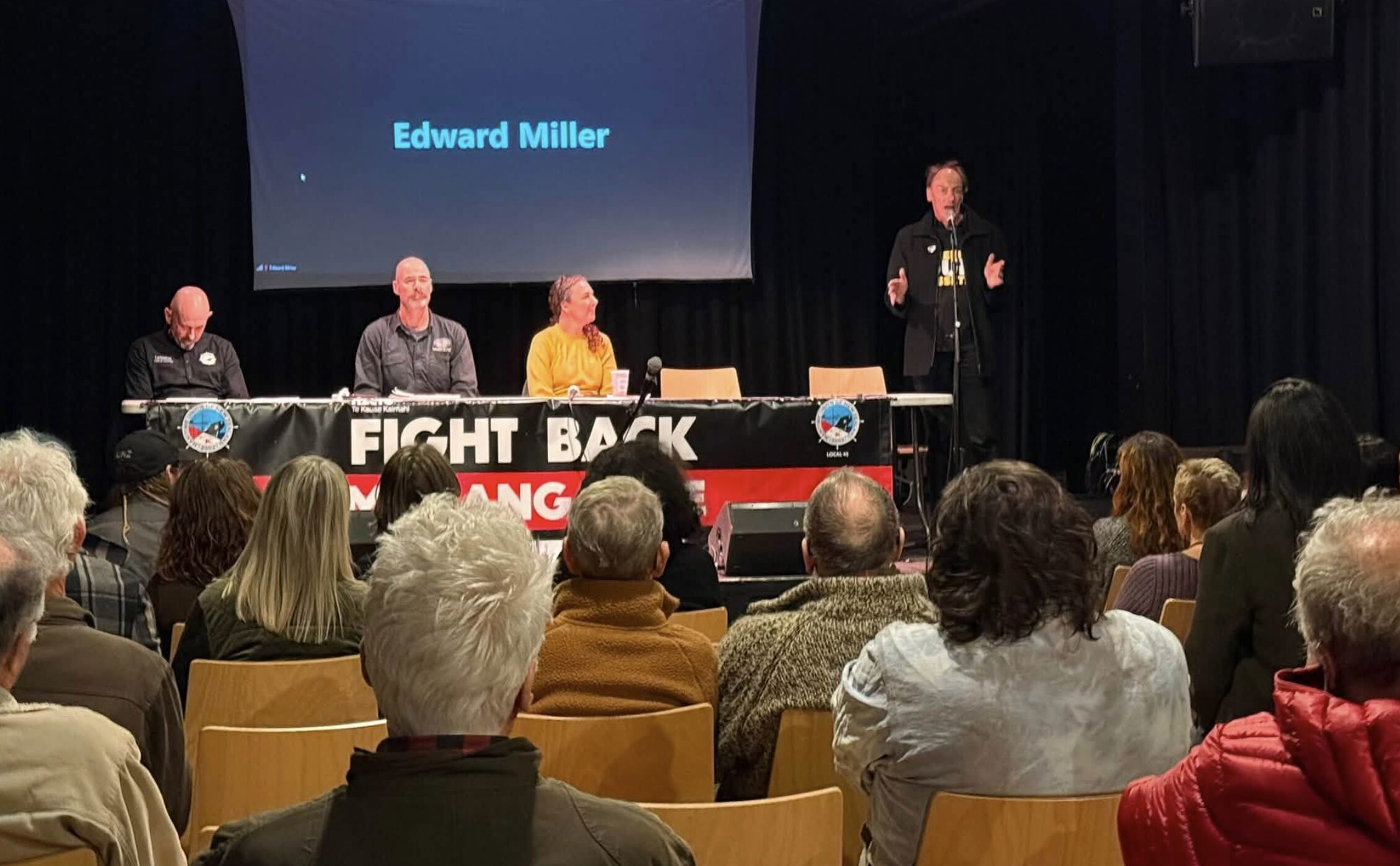
Lyttelton residents packed a public meeting last week to send a clear message that there is no public mandate to privatise the town’s port, as a growing campaign moves to block a bid involving Dubai-based operator DP World.
The meeting, on Friday, part of the Keep Our Port Public campaign, filled the Maritime Unions Hall on Canterbury Street. It was organised by New Zealanders for a Democratic Economy and billed as “Real Information from Real People”, featuring community advocates, trade unions, environmental groups and researchers from the international tax and corporate responsibility group CICTAR.
Speakers included Lyttelton identity Gary McCormick, John Minto of Keep Our Assets, Mark Wilson of the Rail and Maritime Transport Union, Gerard Loader of the Maritime Union of New Zealand, Ed Miller of CICTAR and Lyttelton environmental advocate Sara Campbell.
The meeting resolved a set of priorities aimed at keeping the port in full public ownership and control. They include calling on the council to amend the draft Christchurch City Holdings Statement of Intent to reflect its Letter of Expectations, building a relationship with Ngāti Wheke and other Papatipu Rūnanga, reforming port governance to recognise mana whenua and the combined unions as strategic partners, and keeping DP World out of New Zealand entirely.
At the centre of the concern is an unsolicited proposal to Christchurch City Holdings, which owns the shares in Lyttelton Port on behalf of Christchurch City Council. Campaign organiser Harry Robson said a deal would be disastrous for Lyttelton, the wider Canterbury region and the rest of the country.
“The proposal from the Dubai Government’s subsidiary to CCHL means they control what happens at the port for decades,” Robson said. “It’s deceptive to propose privatisation by lease or some other financial arrangement, because if they can say they’re not selling it, then it may mislead the public to think they are not losing public control and security, but they are.”
Robson pointed to what he described as DP World’s troubling record overseas.
“DP World operates ports all over the world and has an allegedly ruthless reputation,” he said. “It has avoided paying tax on $4.5 billion of income over eight years in Australia and fails to comply with employment law.” He cited the company’s unlawful sacking of its entire P&O British workforce, which he said was carried out by abruptly suspending operations and removing staff using former military security guards.
NZDE co-chair Dr Nathan McCluskey said local concerns extended to the environment, citing statements from members of Ngāti Wheke about the likely destruction of mahinga kai, or customary fisheries, through reclamation at Te Awaparahi Bay.
The campaign said it acknowledged the frustrations of Ngāti Wheke, noting that Lyttelton Port Company chief executive Graeme Sumner had been criticised for shutting unions, community and Papatipu Rūnanga out of engagement.
McCluskey said that while DP World’s proposal involved a partnership with Te Hapū o Ngāti Wheke, Te Ngāi Tūāhuriri Rūnanga and Te Taumutu Rūnanga through the Tōnui consortium, mana whenua concerns about being shut out by the current port executive were legitimate.
“We should give some consideration to having a quadripartite model between port management, council, the unions and rūnanga to ensure robust democratic oversight of the port,” he said.
McCluskey argued the port’s proposed expansion was unnecessary and that South Island supply chain security would be better served by a national strategy integrating all of New Zealand’s ports under government direction.
“Flogging off our strategic infrastructure to a subsidiary of the Dubai Government is not a rational policy choice,” he said.
McCluskey said the decision should rest with Christchurch’s elected councillors, who he argued were returned to office last year on a mandate to keep public infrastructure in public hands. He pointed to a Talbot Mills survey that found nearly three-quarters of Christchurch residents oppose asset sales in any form.
“Should the Mayor and councillors of Christchurch wish to maintain the credibility and legitimacy of their office, they will block this proposal from DP World,” McCluskey said.
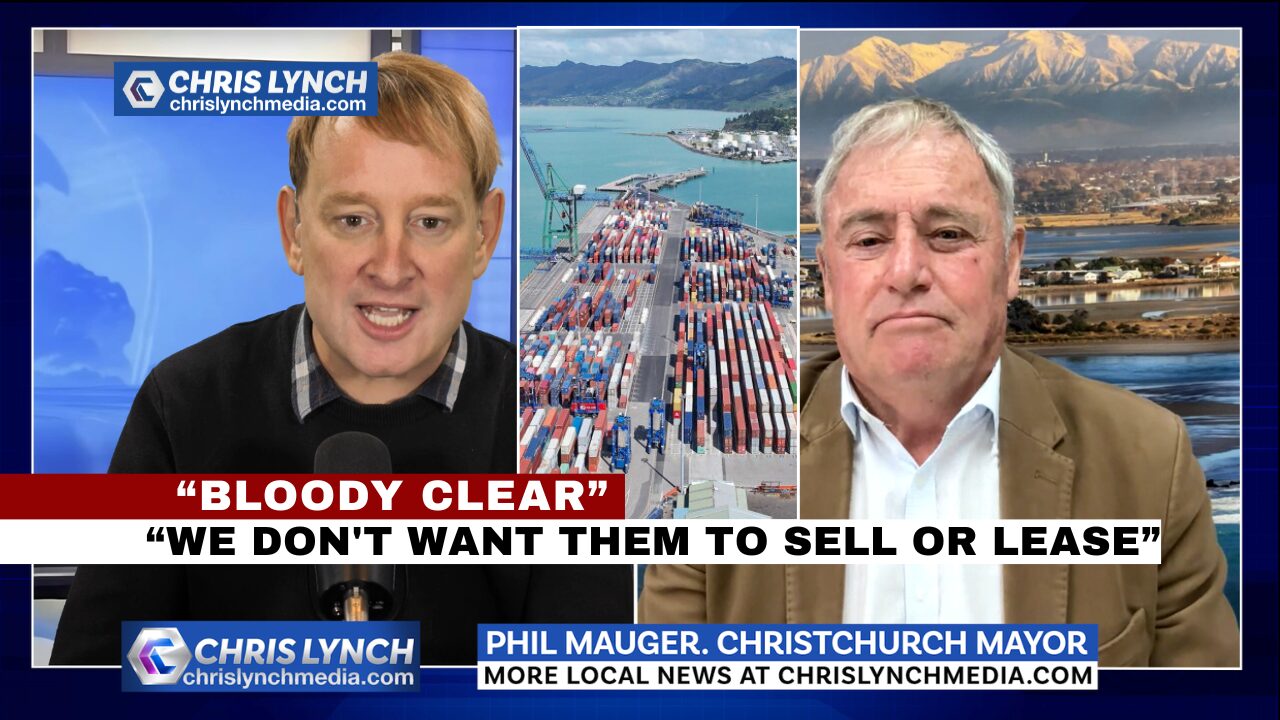
Christchurch Mayor Phil Mauger, speaking this week, moved to reassure residents there was no deal in place. He confirmed the unsolicited bid from DP World and three rūnanga was sitting with Christchurch City Holdings, which would consider it at a board meeting at the end of the month.
“Our letter of expectation is bloody clear. We don’t want them to sell it or lease it out,” Mauger said. “I stood in my campaigning saying we shouldn’t lease it out, we shouldn’t sell it, and that stuff still stands in my head.”
Mauger said he was aware of the Lyttelton meeting but did not see the bid as a cause for concern, while acknowledging he had to be careful not to appear predetermined. Put to him that DP World appeared to be seeking social licence through a partnership with local iwi, he said that was probably true and that he expected the proposal would face a difficult path.
“I think it would be a very hard road to hoe to get that across the line,” he said.
A new website has launched allowing people to sign a petition against the privatisation of Lyttelton Port and email the offices of the Mayor and the chair of Christchurch City Holdings directly.
The campaign has planned a public activation outside the Christchurch City Holdings offices at 151 Cambridge Terrace on Friday 31 July from 8am, along with community activations in Lyttelton on 25 July and 1 August.