Escaped youth tracked by Eagle helicopter, found hiding in New Brighton
The young person who escaped from a youth justice facility in Rolleston has been located...


The young person who escaped from a youth justice facility in Rolleston has been located...

A person has been seriously injured on State Highway 75, Christchurch Akaroa Road. A police...

BodyFix Gym Christchurch in Phillipstown has taken out two major honours at the Exercise New...

Local MPs have found areas of agreement on major Resource Management Act reforms, during a...

A series of public events have been organised across Christchurch and Lyttelton over the coming...

A woman was taken to hospital after a ‘water incident’ at Parakiore Recreation and Sport...

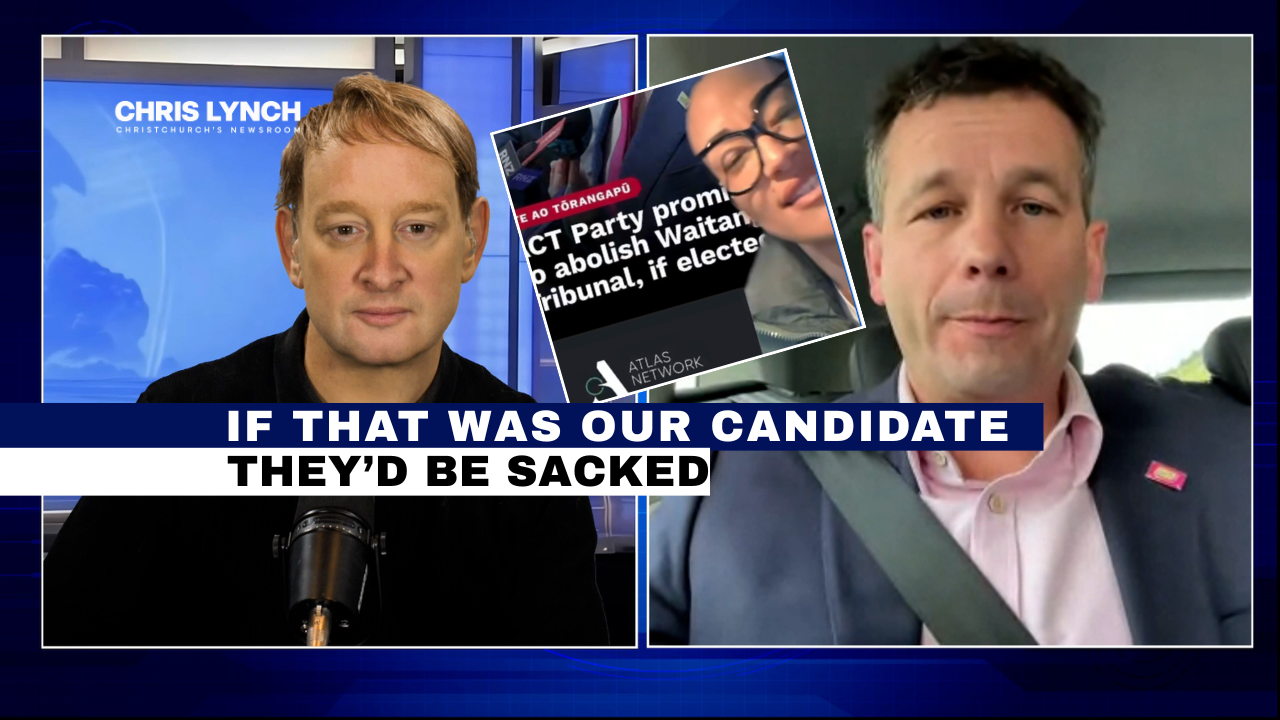
Deputy Prime Minister and ACT leader David Seymour has attacked Labour’s proposed cap on public transport fares, warning it would remove any incentive for operators to attract passengers and leave commuters worse off.
The policy would cap fares at around $20 in Christchurch and other main centres and $10 across much of the rest of the country.
Seymour said operators such as councils and transport agencies currently competed for passengers on service, reliability and frequency, and that a fixed pot of government money would remove that pressure.
“If the government is basically giving you all the money you’re going to get, because you can’t increase your fares beyond $10 or $20 a passenger, then you’re just going to say, you know what, getting more passengers is not our priority.”
He said the likely result was a decline in quality. “Service levels will decline, people will be worse off.”
Seymour said the policy put the wrong people in charge of operators’ income. “This policy means that politicians, rather than passengers, are going to be in charge of a bus company’s revenue.”
He described the policy as cynical and said it was pitched at voters worn down by several years of disruption, from Covid and the cost of living crisis to overseas conflict. He said people were “frazzled and they’re desperate,” but argued cheap fares were a short term fix.
“Just giving people a few bucks, that’s going to get us through, and that might win us the election, and then we’re back in the limousines.”
Seymour said the country faced bigger questions about balancing the books, cutting red tape and lifting productivity, and that those would not be solved by what he called bumper sticker policies. He pointed to the Ministry for Regulation and the deregulation of the hemp sector as examples of the approach he favoured.
Charter schools
Seymour said first year results showed two Christchurch charter schools, Christchurch North College and Mastery, had missed some of their targets.
He said Christchurch North College had been set up by four state school principals to reach disengaged students who were not attending or learning, and praised them for embracing a model many in the state sector reject.
“A lot of people in the state sector thinks that charter schools are the devil and would never embrace it,” he said. “It doesn’t matter if the cat is black or white, so long as it catches mice.”
Seymour said the school had not met its attendance target but was steadily enrolling former non attenders and getting them to turn up. He said Mastery had missed an academic achievement target but was set up almost exclusively for students with learning challenges, with 60 percent having dyslexia or another diagnosed condition.
He said success was measured against a school’s equity index band, with three levels of disadvantage, and that charter schools were required to do better than state schools with similar student populations. He said six other charter schools had mostly exceeded their targets.
Seymour defended the accountability built into the model, saying charter schools could be told to explain poor results by the authorisation board and could ultimately be closed.
“No other schools can be intervened in and shut down for attendance and achievement problems,” he said, predicting one or two charter schools would eventually be closed.
Climate and Paris
Seymour said ACT wanted methane treated differently from carbon dioxide because the two gases behaved differently, with carbon dioxide remaining in the atmosphere for centuries while methane broke down within years. He said New Zealand farmers were being penalised as though their methane emissions were equivalent to carbon dioxide.
He pointed to Uruguay, which he said had a similar emissions profile to New Zealand and had negotiated an approach recognising that its methane was not the same as carbon dioxide.
Seymour said ACT wanted a new nationally determined contribution and was prepared to leave the Paris Agreement if it was not accepted. “Go back to the people at Paris and say this is how it’s going to be, and if they don’t accept that fair offer, then I think we should just say we’re out.”
Rural workforce visa
Seymour rejected criticism that ACT’s new rural workforce visa would open immigration floodgates while New Zealanders looked for work, citing what he called the lump of labour fallacy.
“There is such a thing as the lump of labour fallacy, that is the false belief that there are only so many jobs to go round, and if an immigrant comes, a New Zealander will lose their job.”
He said the country’s population had grown from a million people to more than five million over the past century while the number of jobs had continued to rise. He said a migrant who filled a role would earn and spend money, creating demand and further work elsewhere in the economy.
Seymour said New Zealanders were among the hardest working people in the world, but that 300,000 to 400,000 people were on a benefit and ACT would campaign again on welfare reform. He praised Filipino farm workers in Canterbury as highly motivated and said the answer lay in fixing the welfare system rather than penalising employers.
Super Round costs
On Christchurch’s Super Round, Seymour dismissed an economic impact report that found the event delivered $13.1 million in visitor spend, arguing it ignored what people would otherwise have done with their money.
He said the report failed to account for the counterfactual, with that spending either saved or spent elsewhere on another weekend. He said ratepayers were nonetheless entitled to know the full public cost of securing the event.
“Should the public be apprised of where their money that’s forcibly taken off them, and rates and taxes… Absolutely, they should.”
He said he was not criticising the event itself, which he accepted had generated a genuine buzz in the city, and his objection was to misleading economic reports and to public finances that were not open and transparent.